2025 Central Asia Adventure – Samarkand Uzbekistan
Today’s Huntington’s Disease report is about variable expressivity, where the same CAG-repeat length in the HTT gene can produce wildly different symptoms and progression rates among individuals, even within the same family, making one person battle severe chorea while another faces primarily cognitive or psychiatric decline. This unpredictability, driven by genetic and environmental modifiers, complicates prognosis and fuels research into personalized treatments to target the unique ways HD manifests. Despite being a single-point genetic disease, from my posts you can see why it is so hard to come up with effective treatments for symptoms and hopefully eventually a full cure.
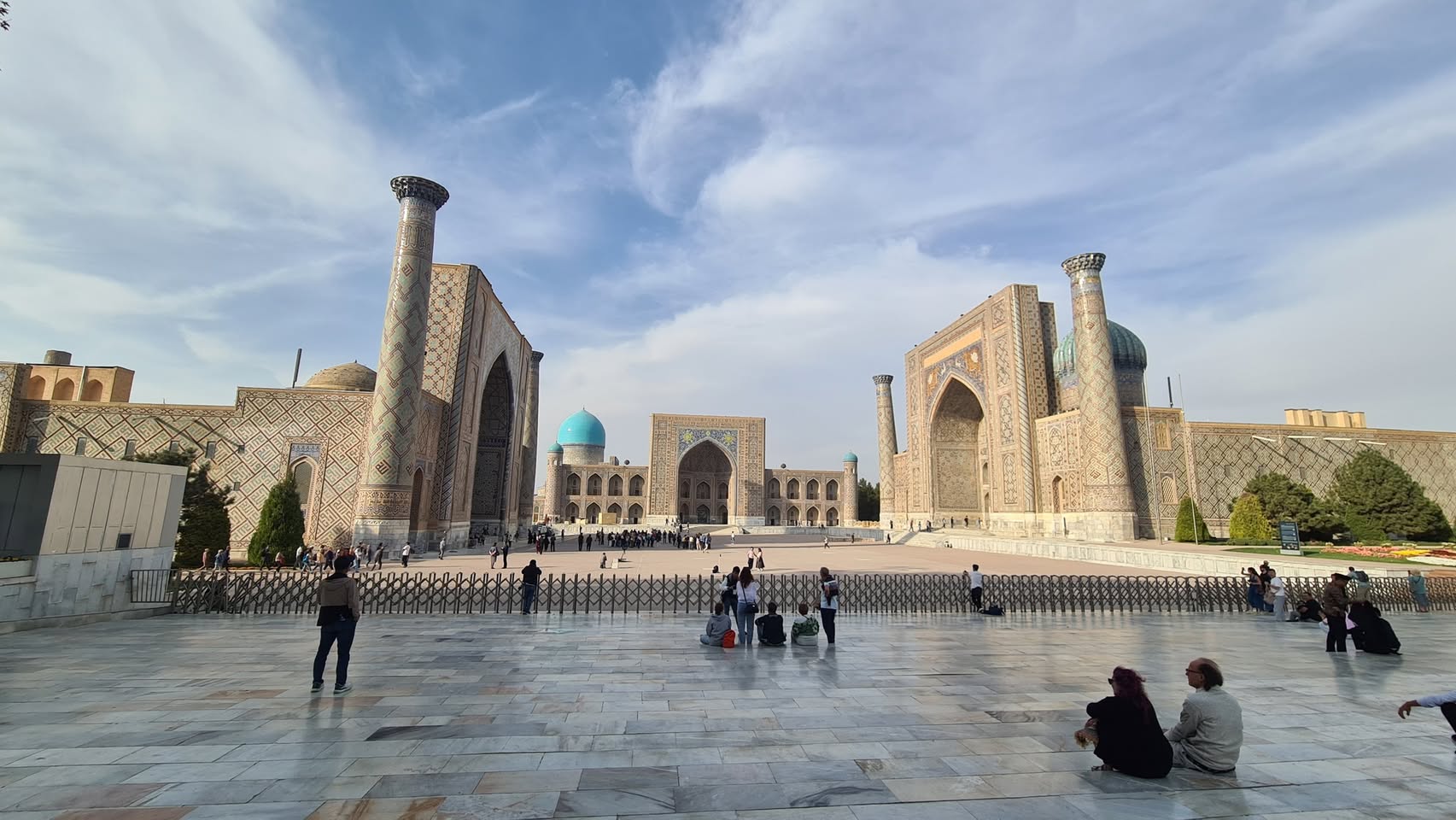
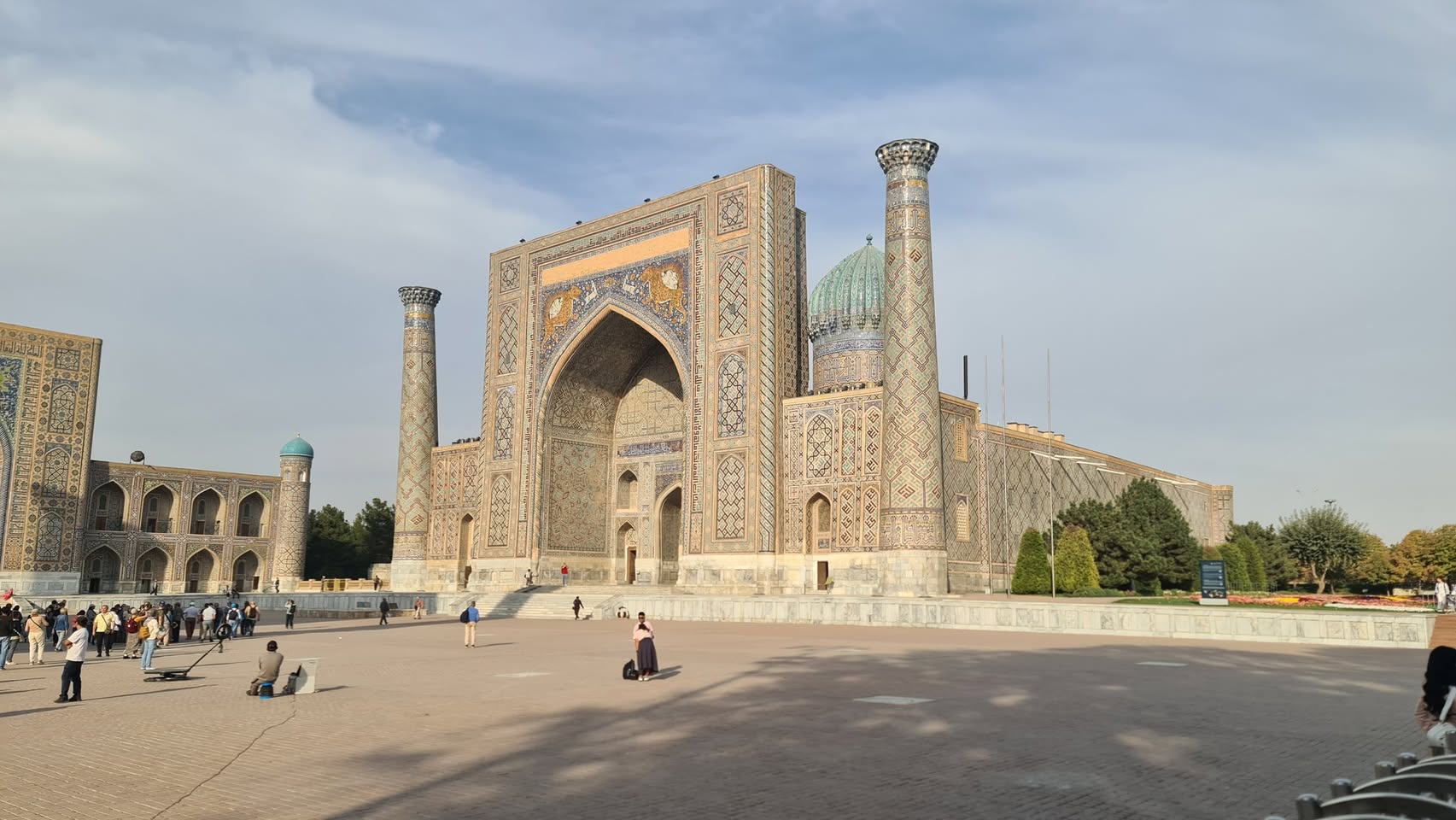
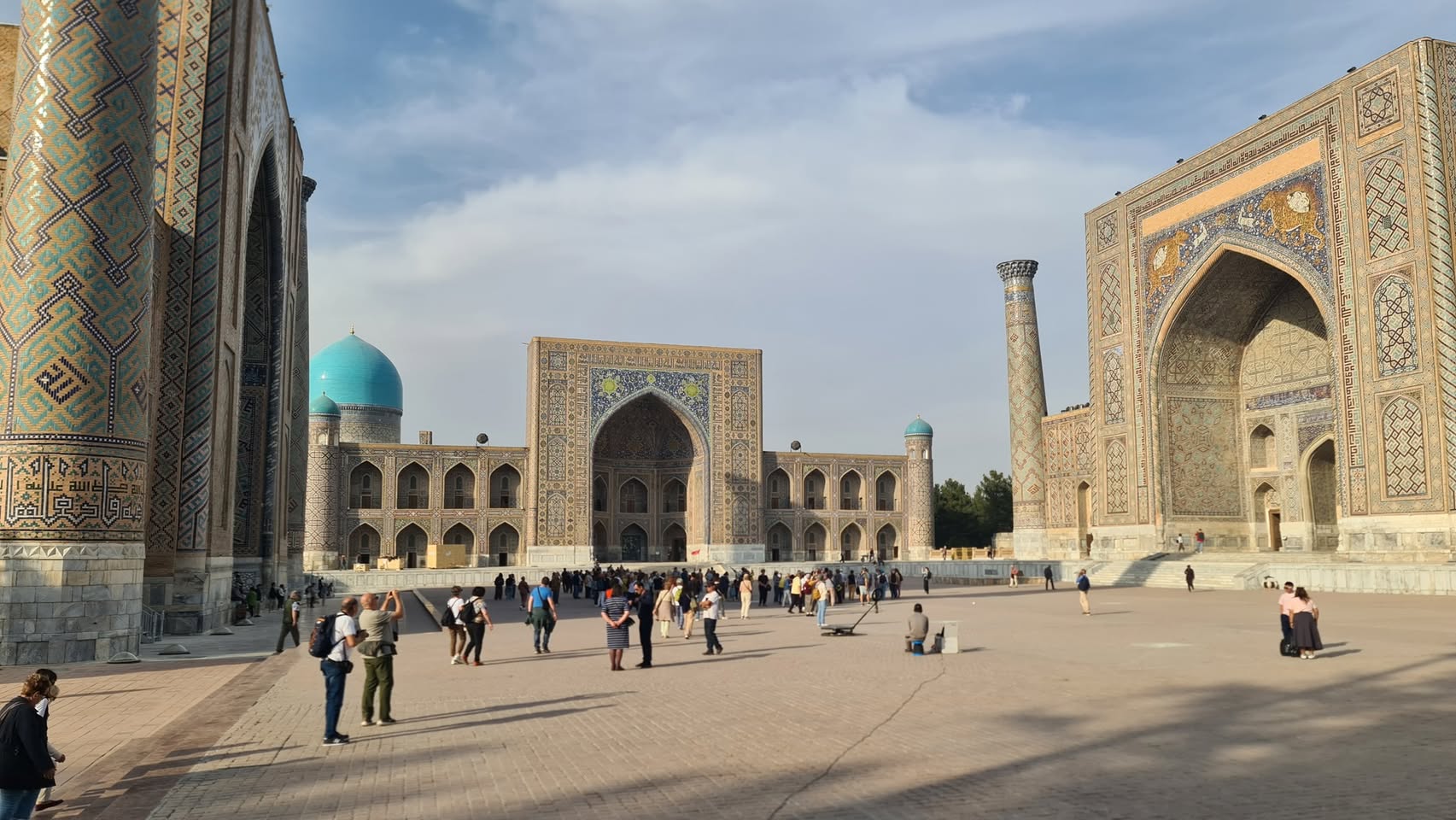
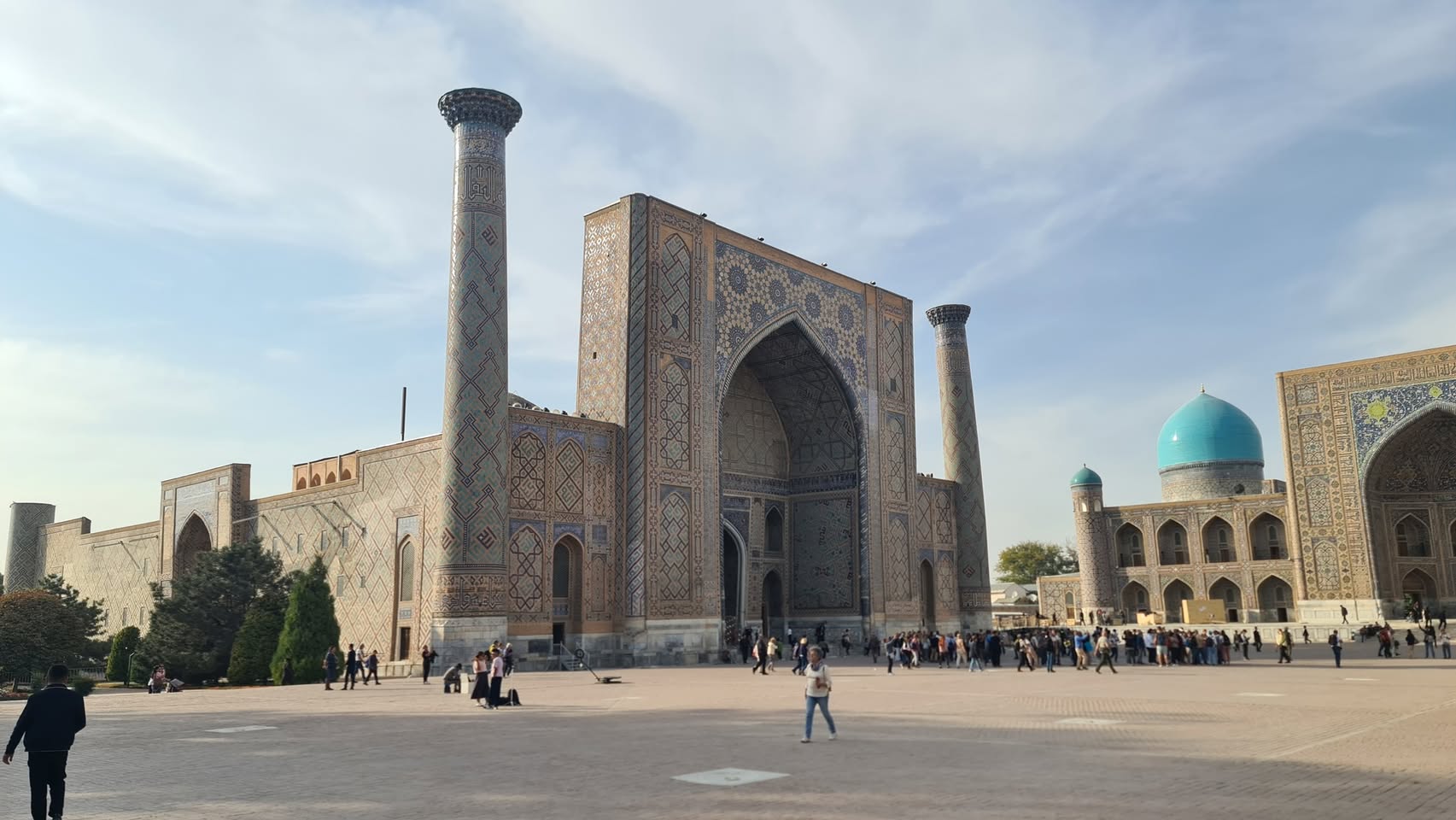
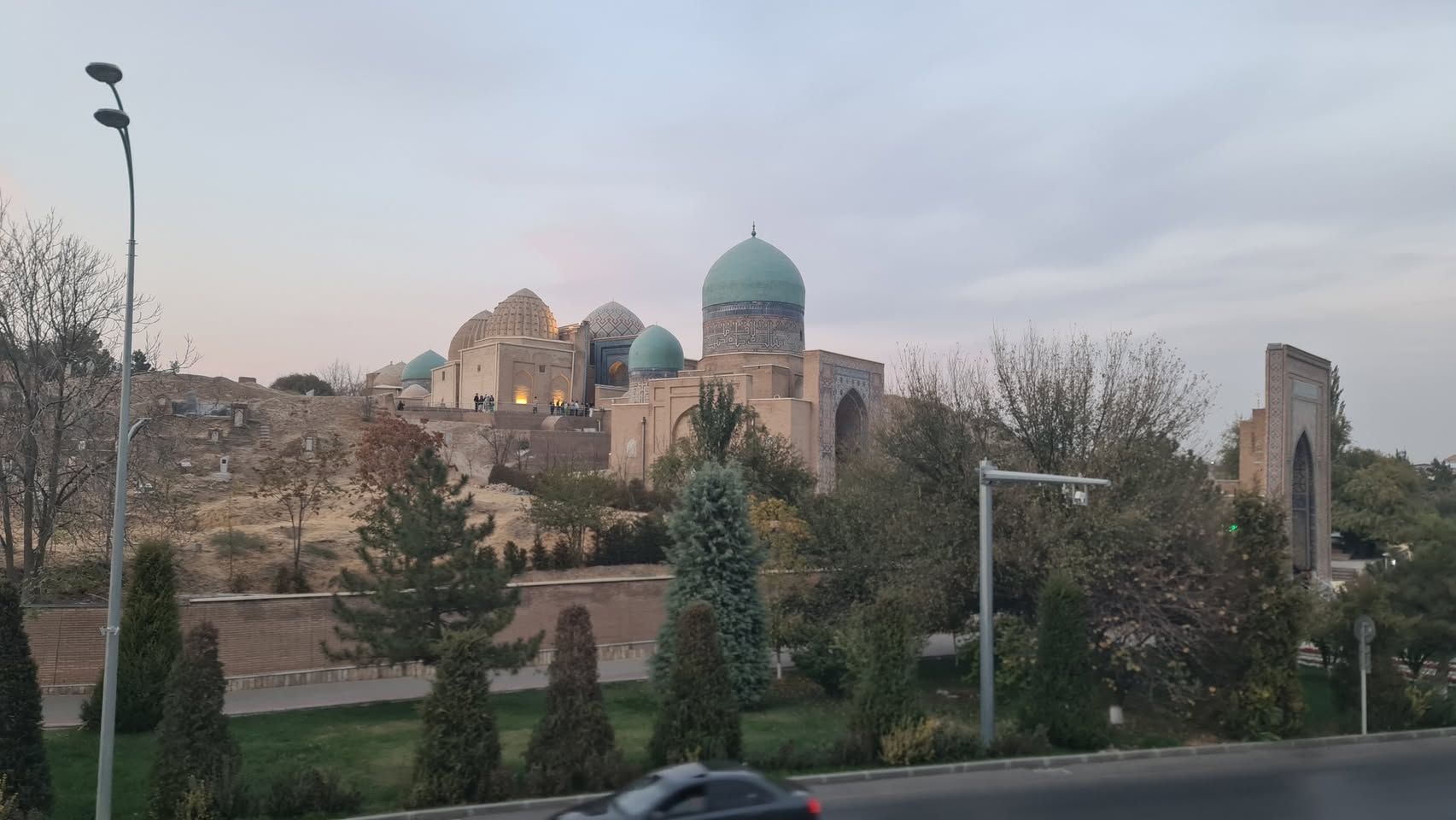
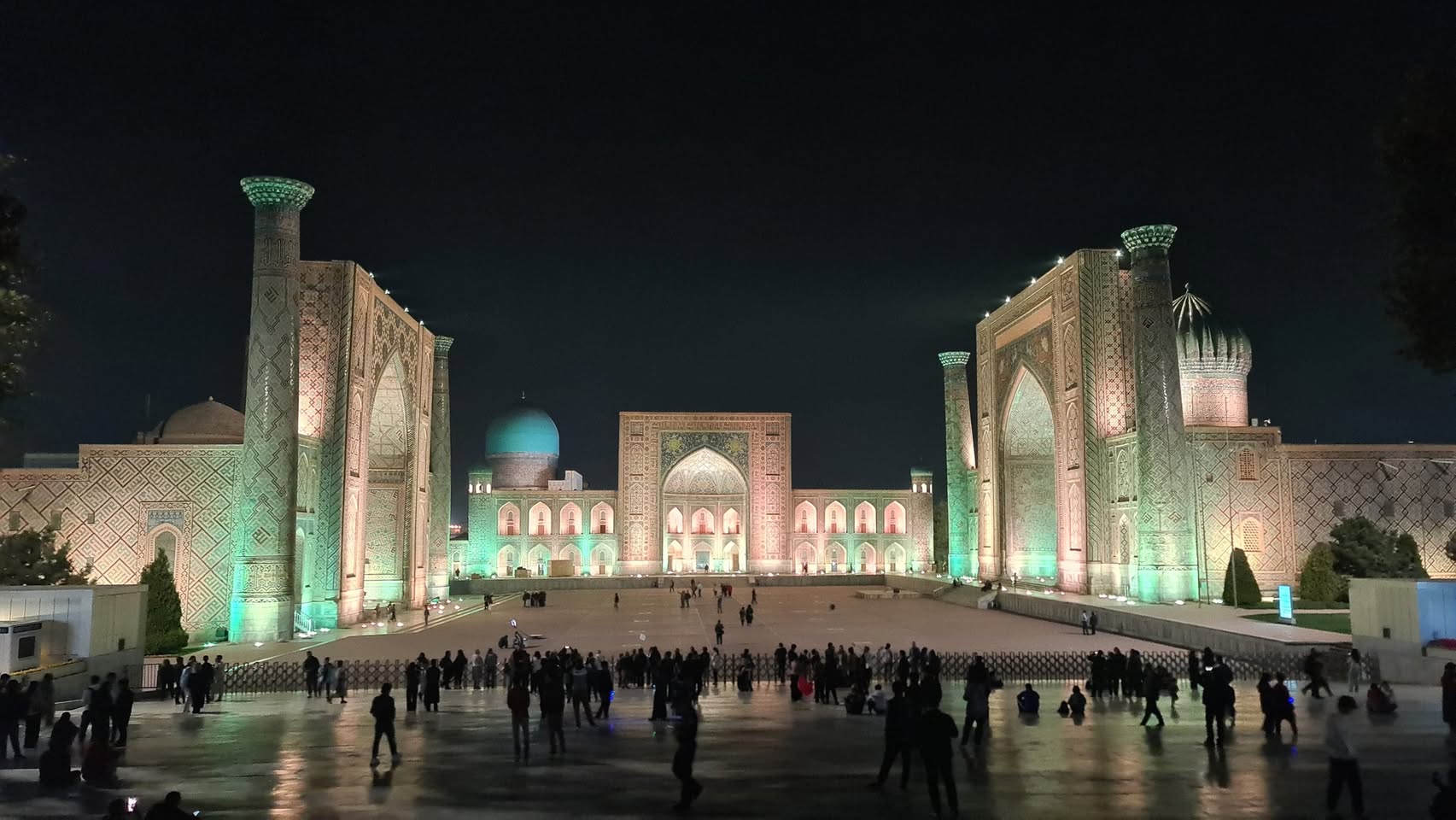
Hello from Samarkand, the eighteenth stop on the trip. Samarkand is one of the oldest continuously inhabited cities in Central Asia, founded in the 8th century BCE. It’s a UNESCO World Heritage Site renowned for its Timurid-era architecture with turquoise domes and intricate tilework which reflects its history as a Silk Road hub and capital of Amir Temur’s empire.
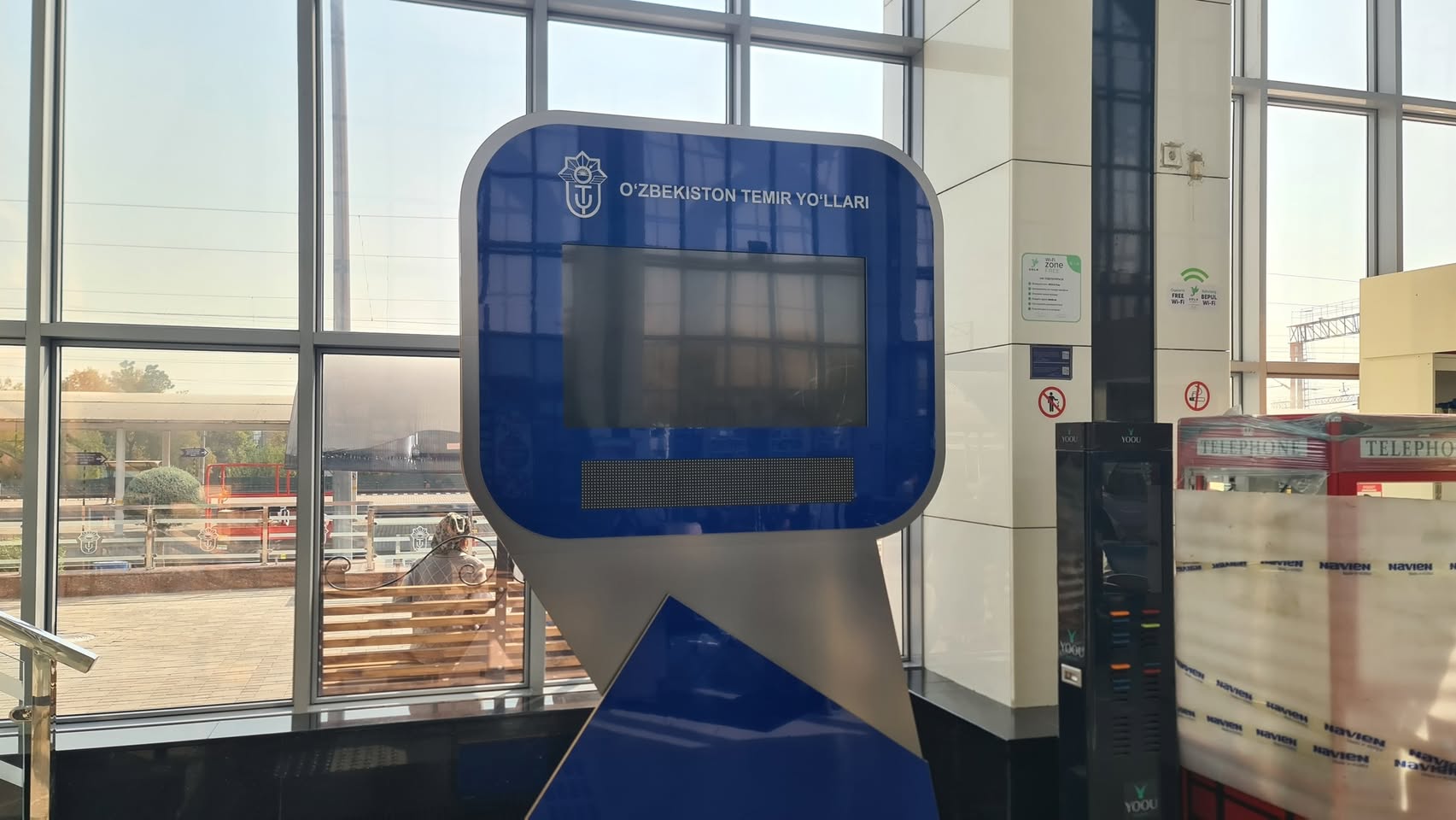
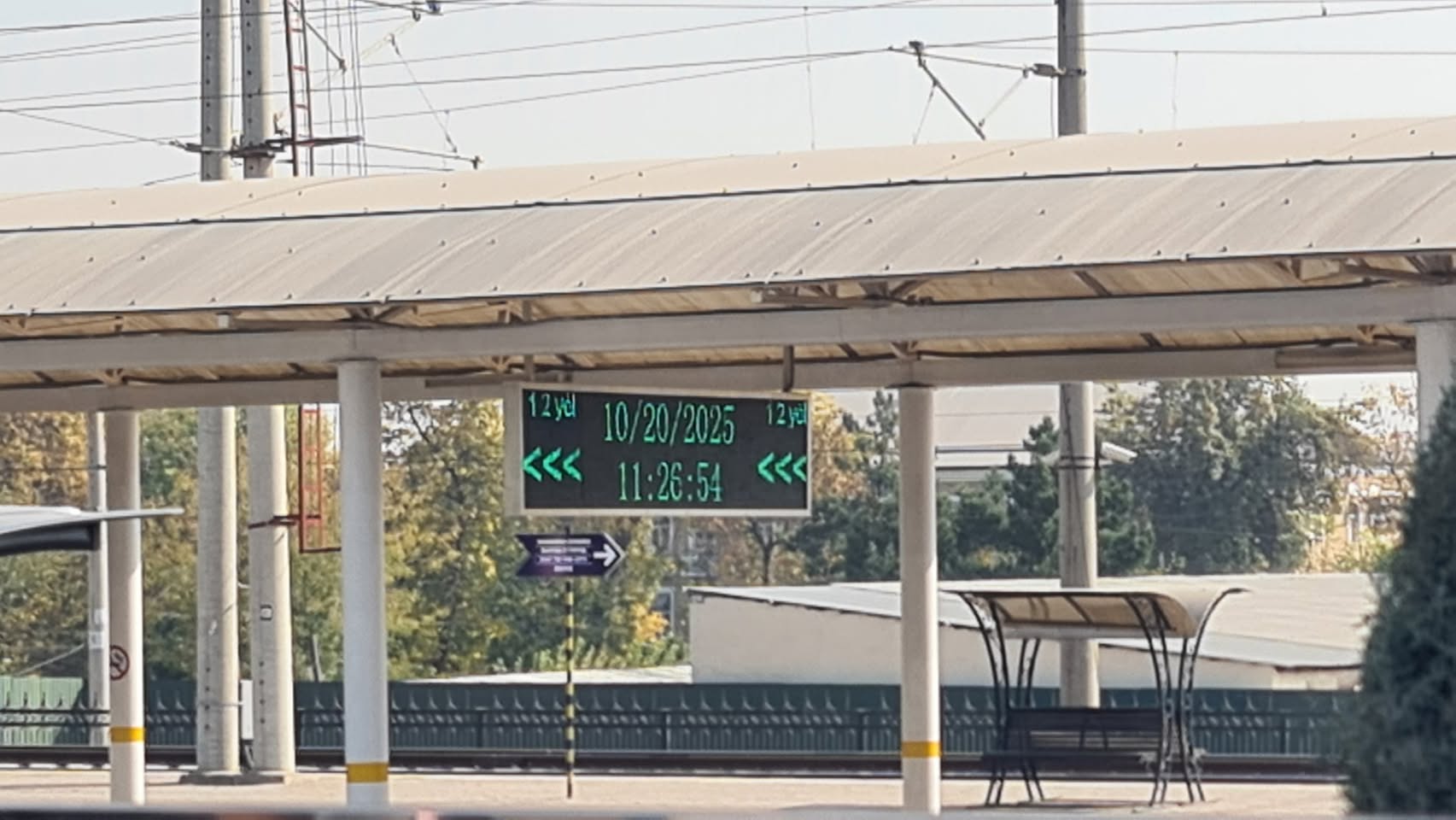
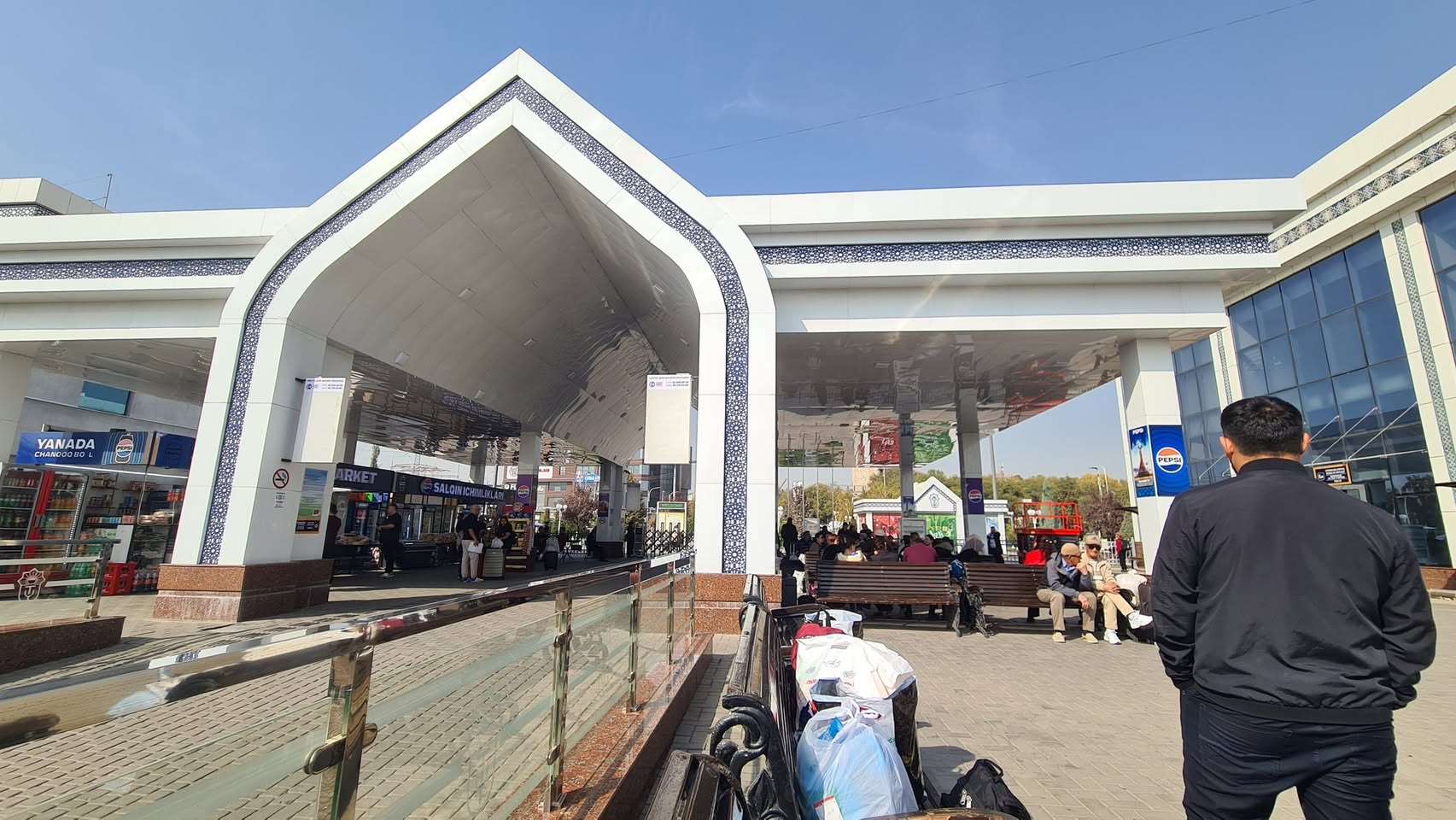
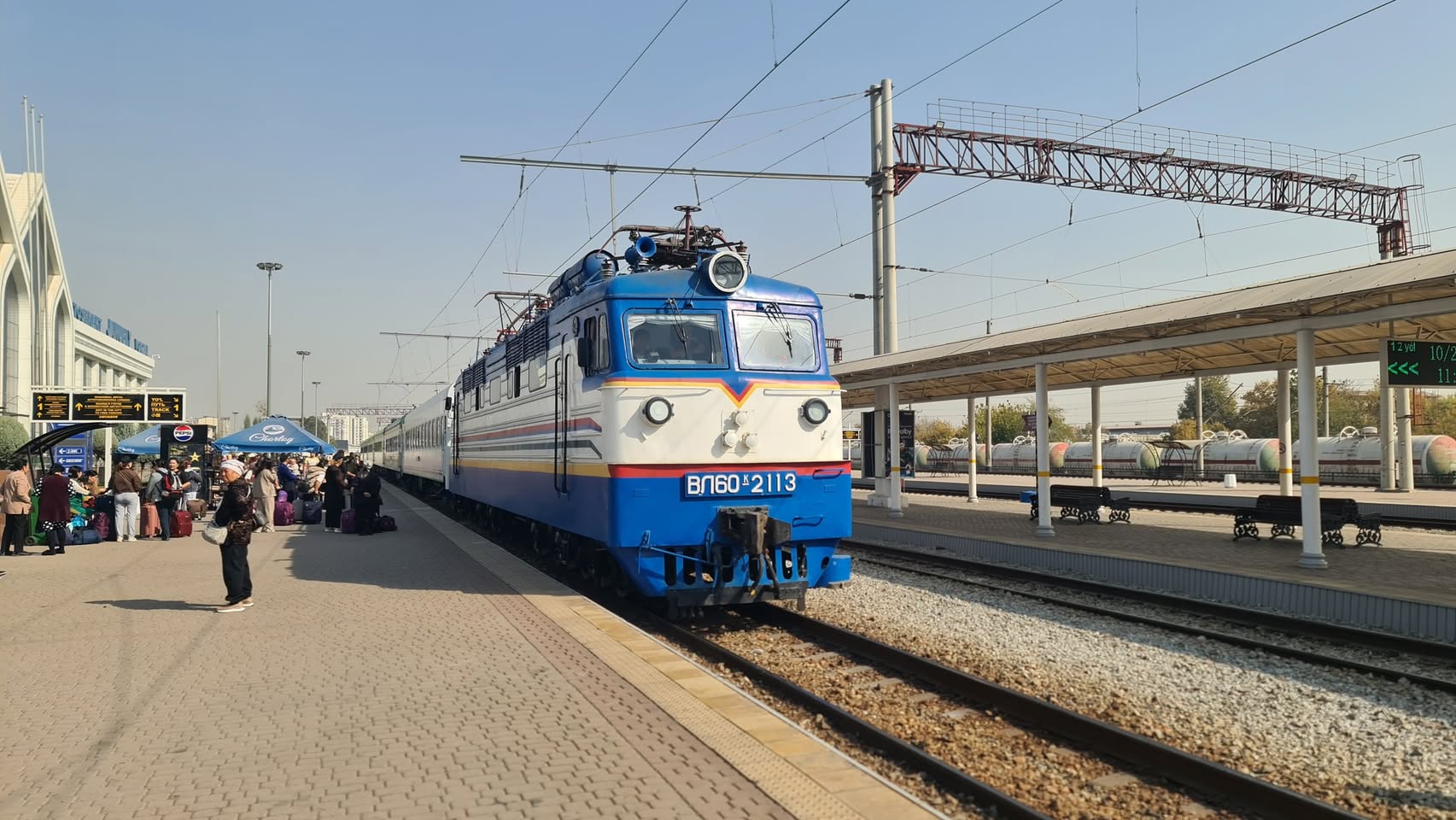
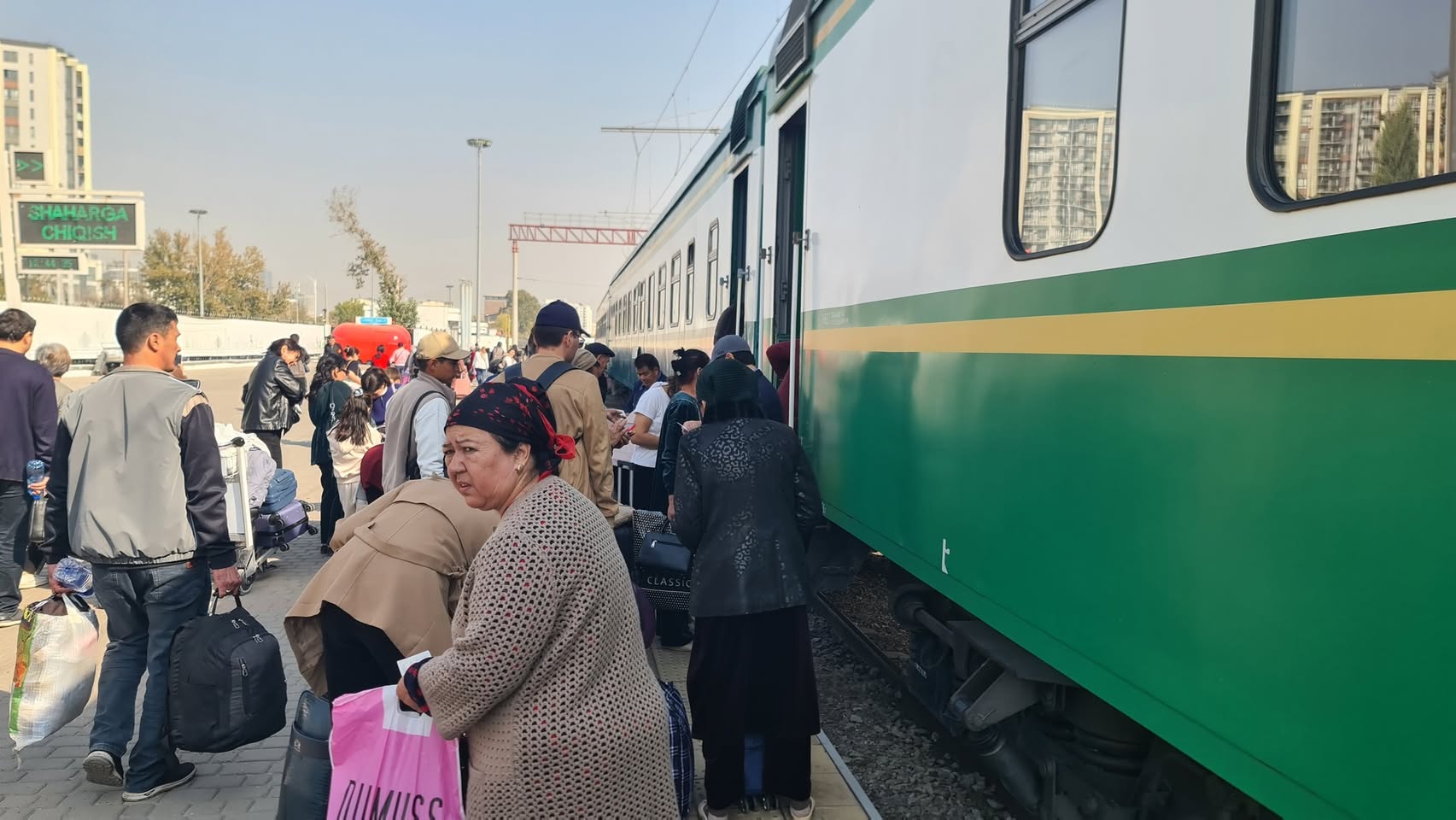
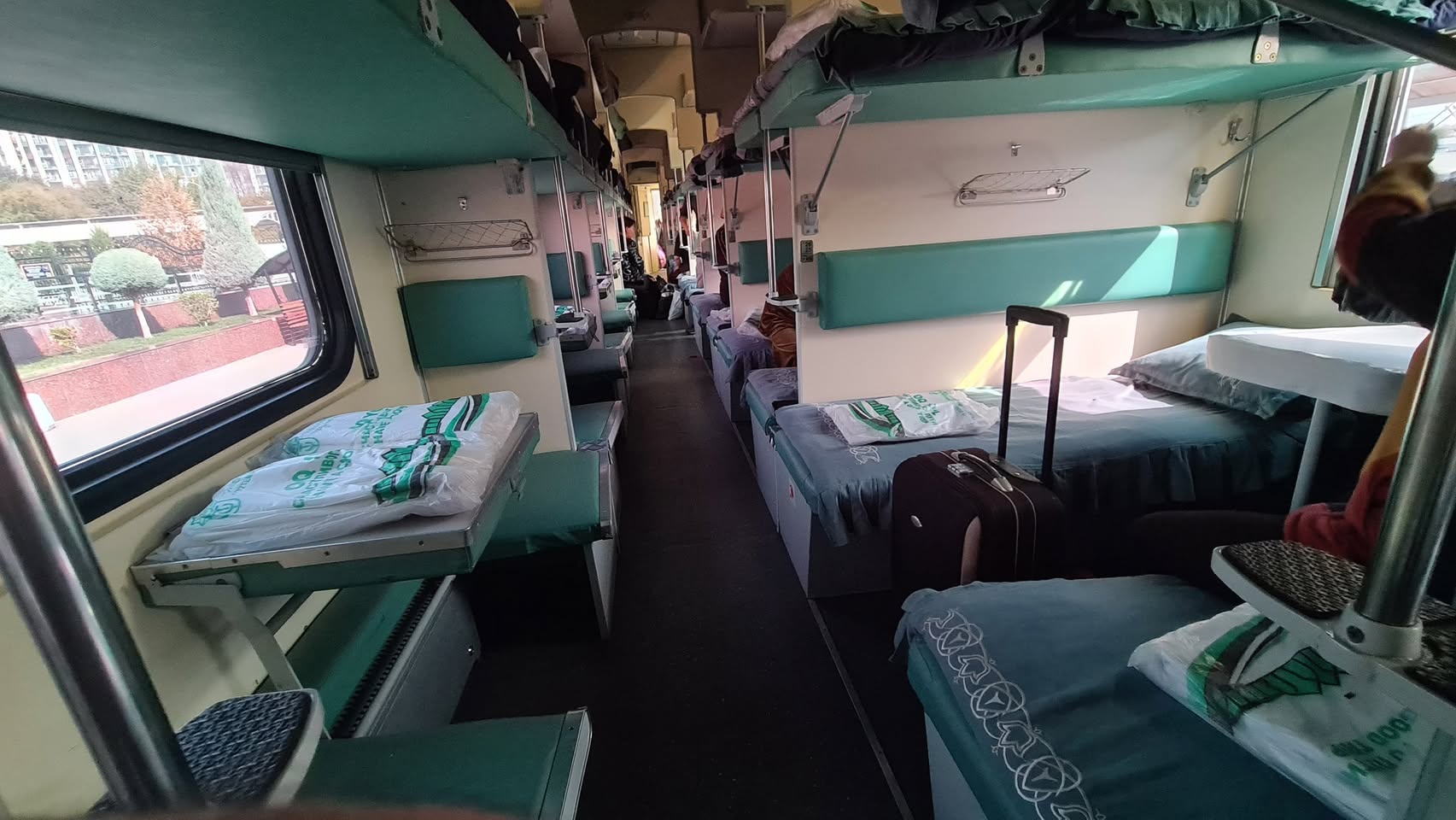
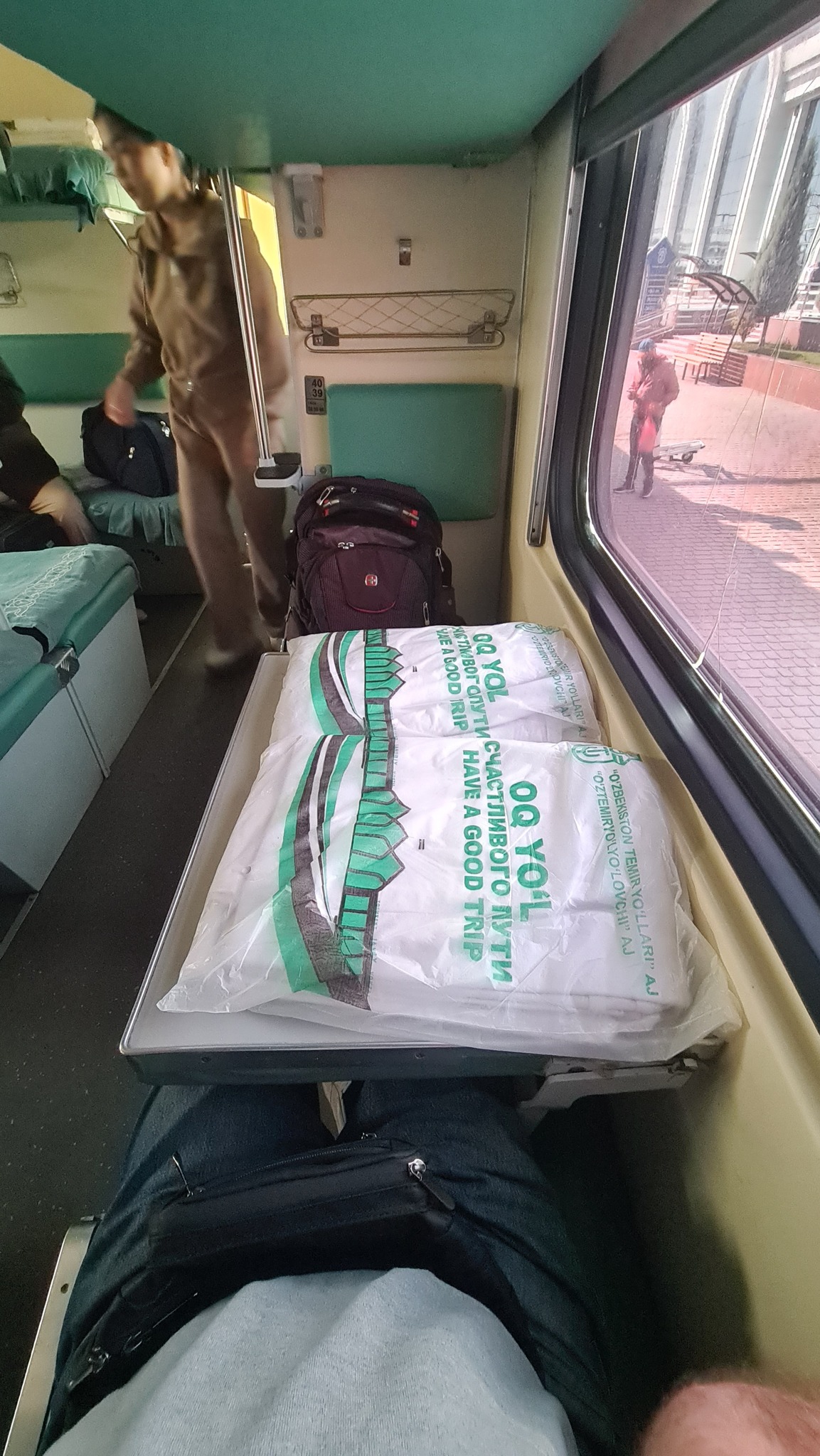
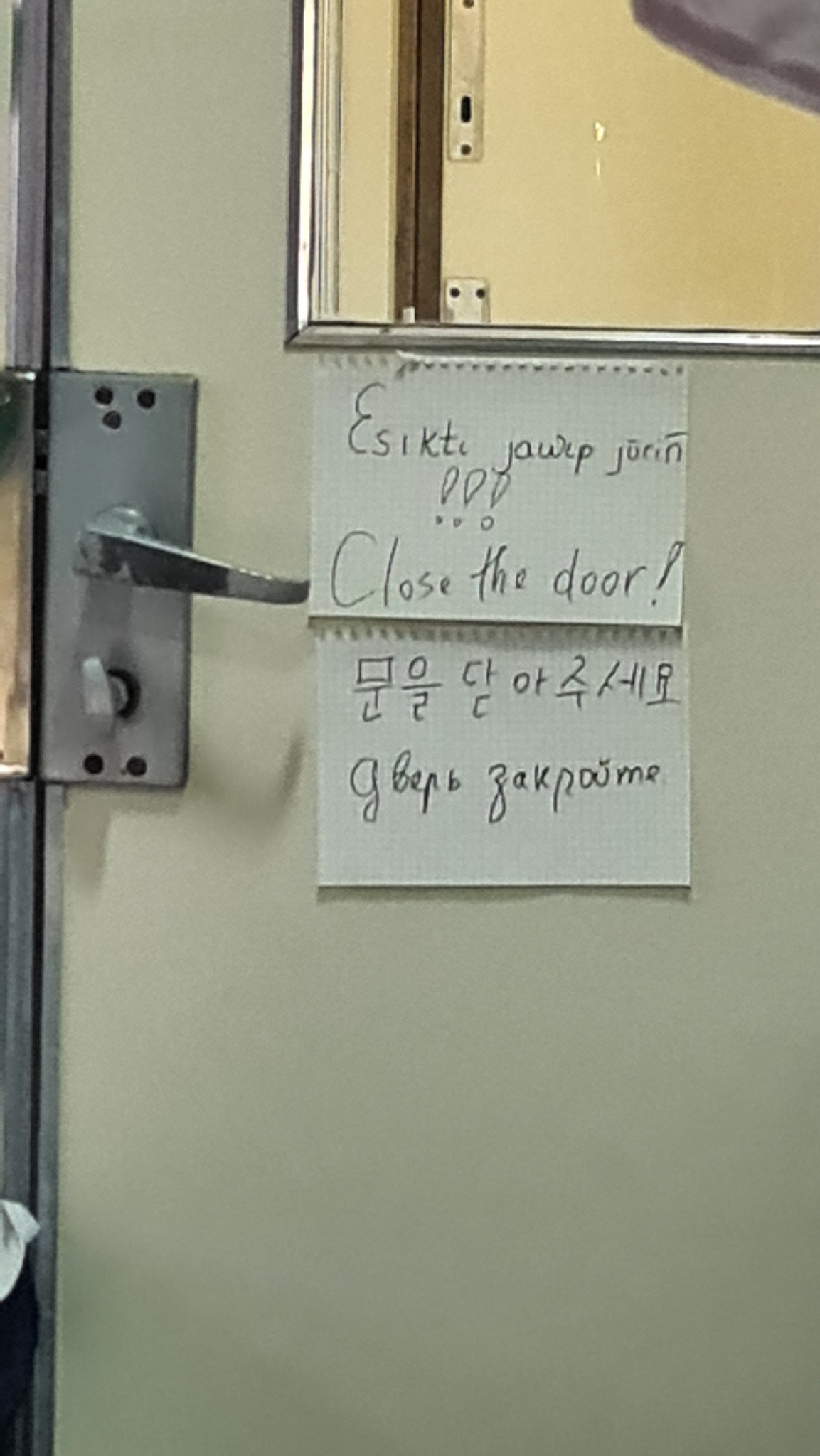
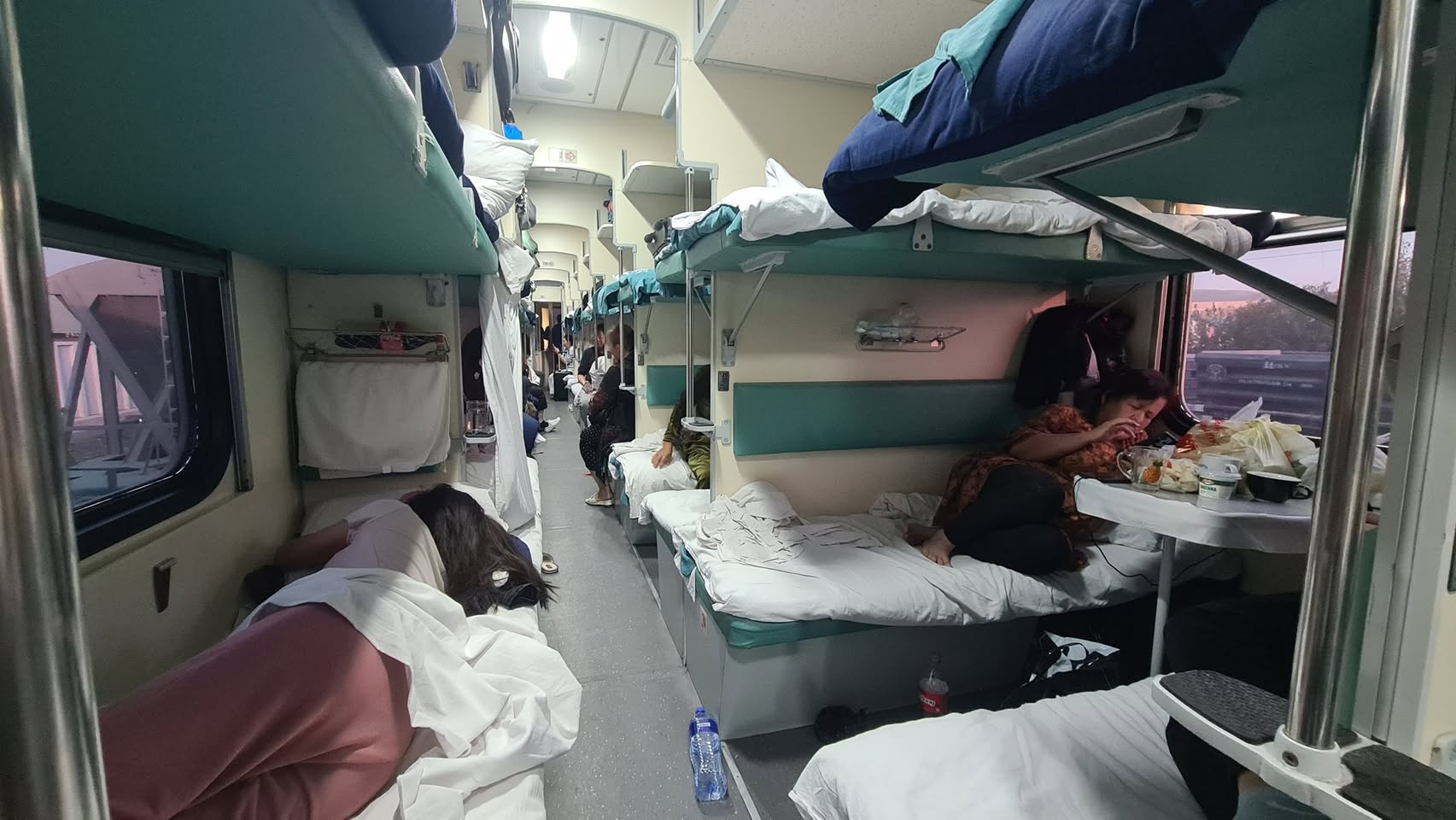
Back in Tashkent I checked out at the front desk. The clerk asked to see my train ticket and told me that I’m leaving from a different train station than I arrived at! Damn, this must be a big source of confusion for tourists! He booked taxi for me, only 40,000 or $3.35. I arrived at the expansive train station to find not a single working display showing schedules or track assignments. The big clock on the platform is 1 hour and 10 minutes off. Wow. Announcements over the PA are in Russian sounding like Charlie Brown adults talking. My train pulls in, all of humanity piling inside, another old lady tries to push me out of the way again. It’s my first time seeing this bed arrangement – 2 upper and 2 lower sleepers but not in a cabin with a door – open to the walking aisle. My bed is on the other side of the aisle which is arranged as lower and upper sleepers parallel to the aisle. I have a lower bunk thank Buddha. No power outlets, no Wifi and hot! Despite the heat, the girl next to the door to the outside insists on closing it every time someone goes through and she even made a sign in multiple languages saying to keep the door closed. Does she live in a sauna?
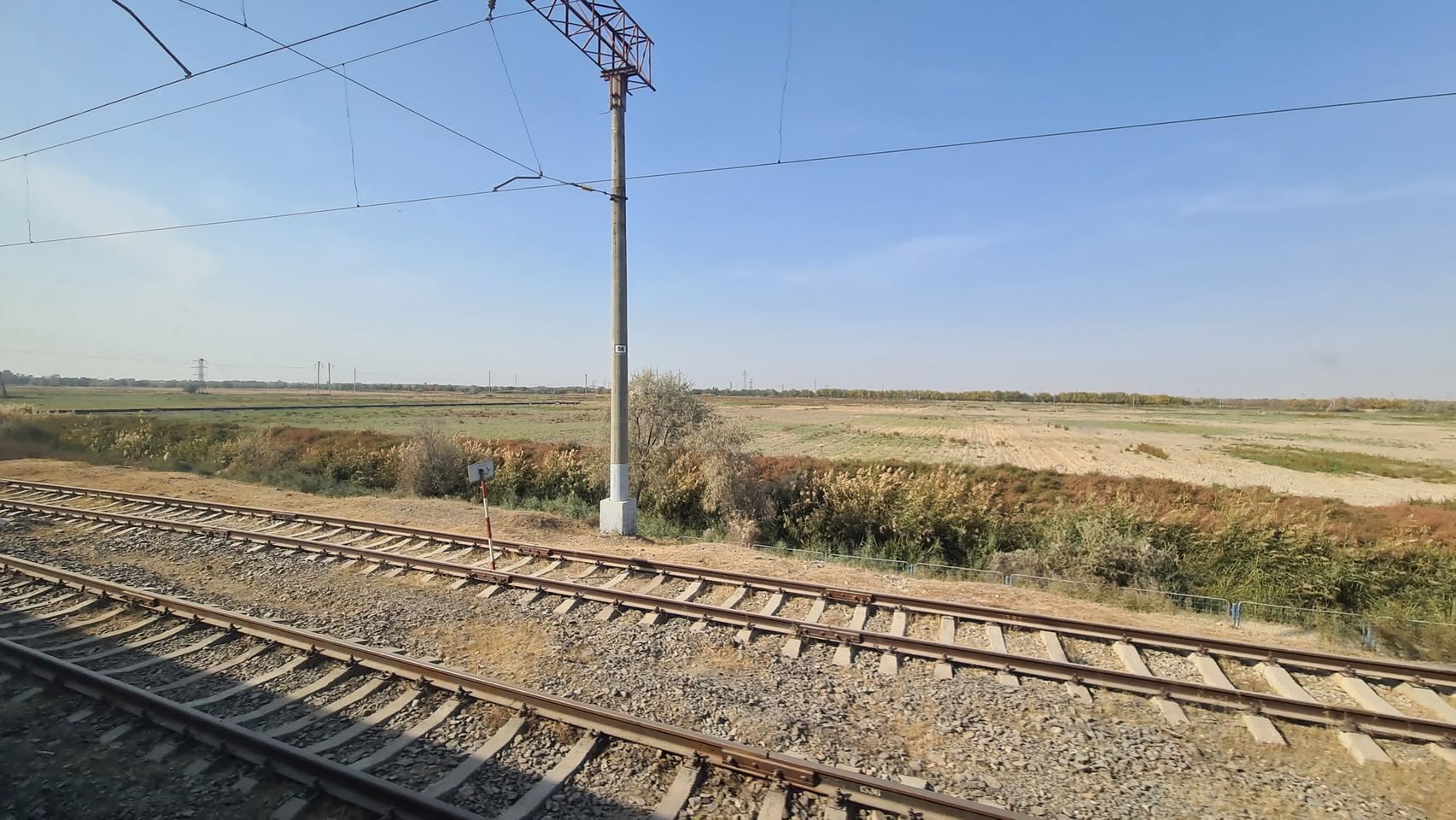
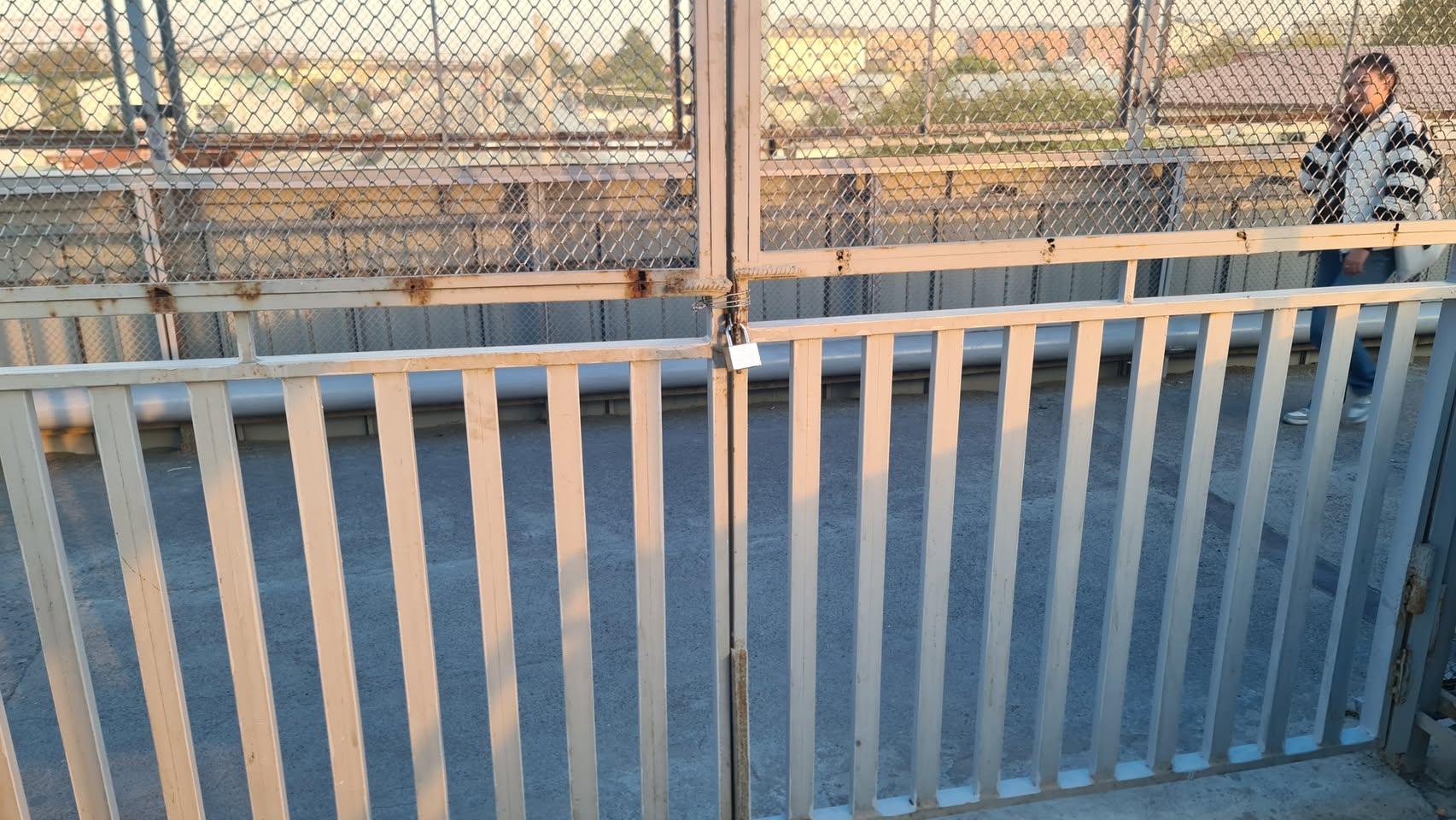
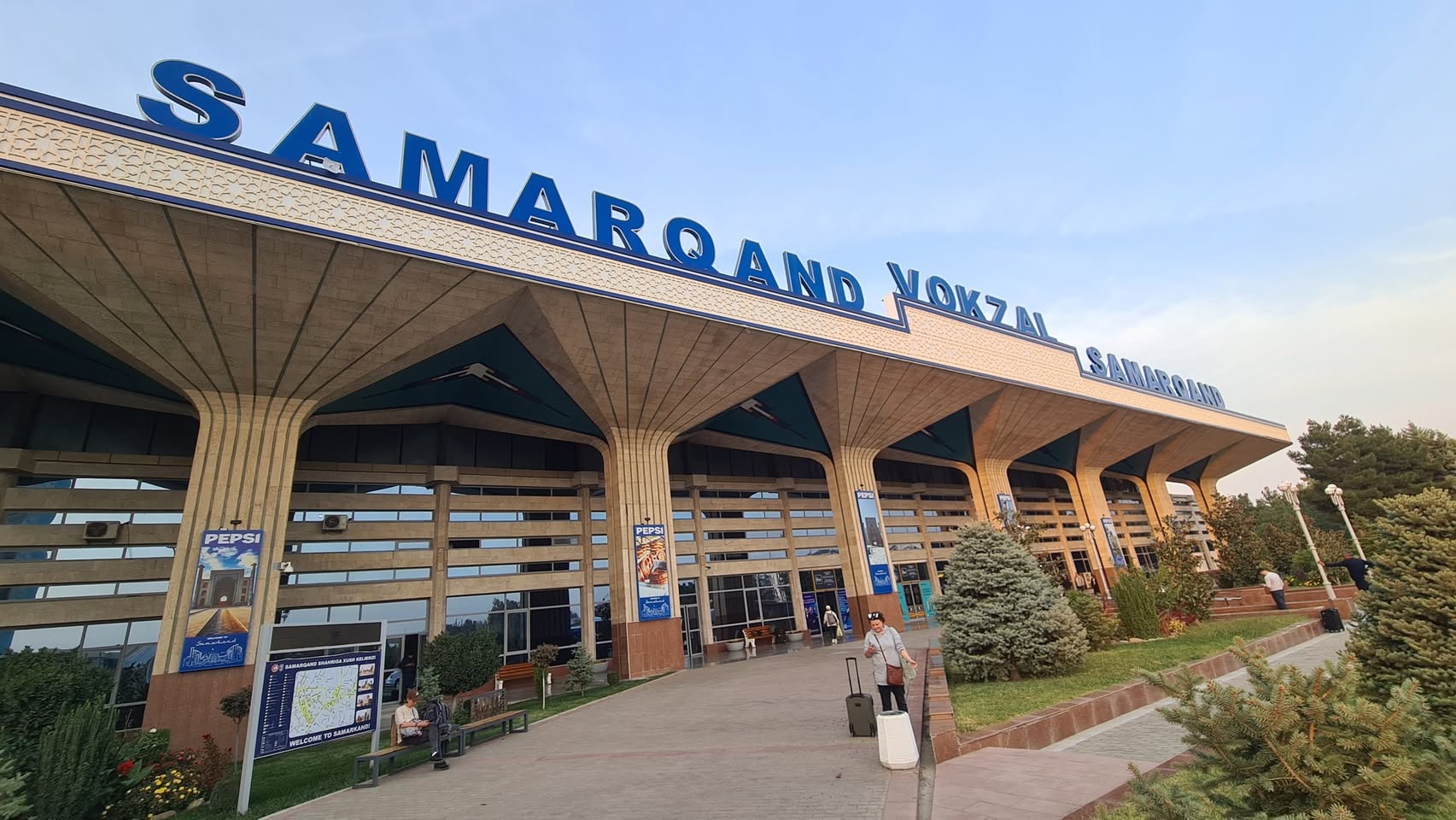
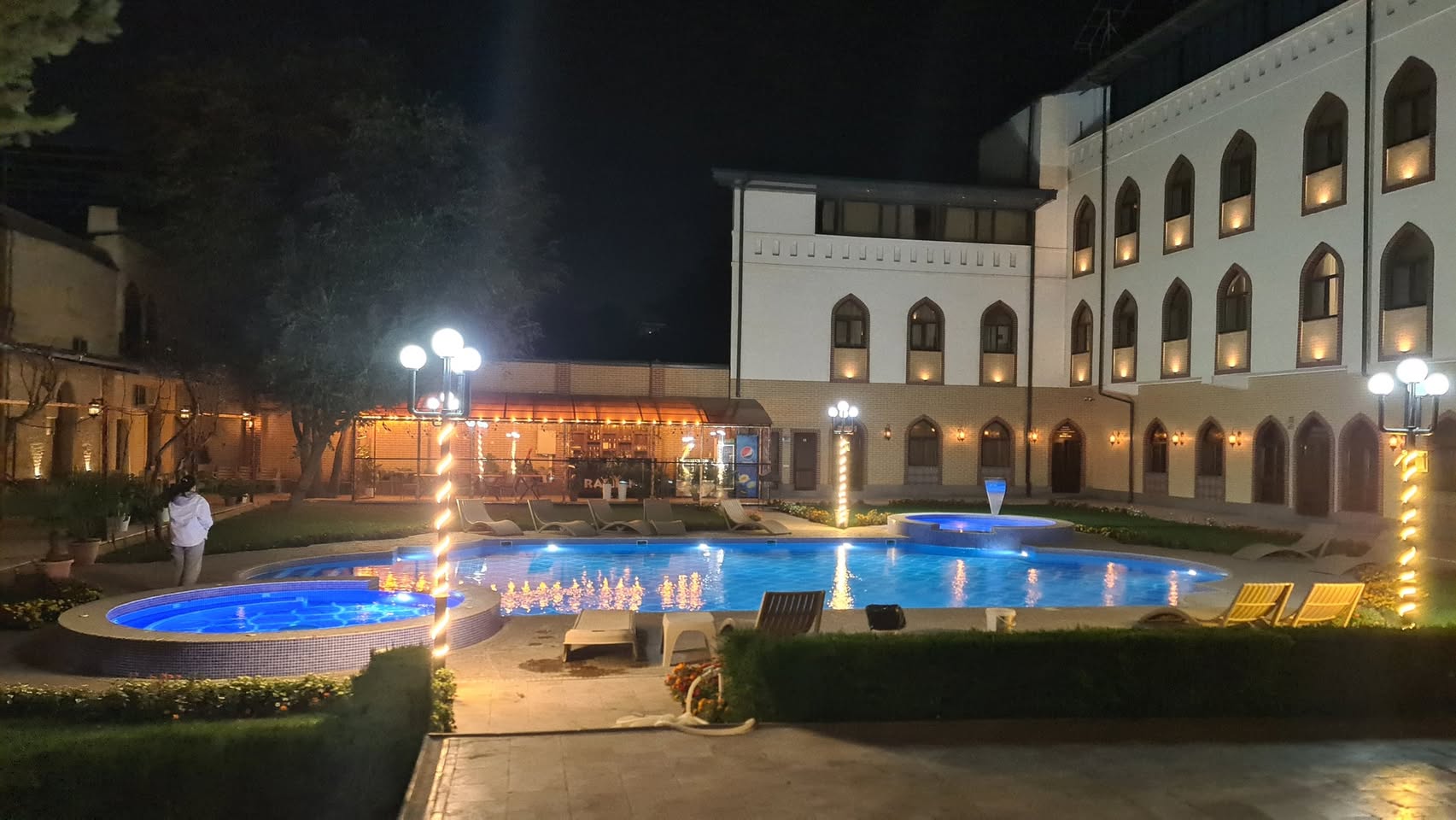
The 4 hours passed quickly, a nice ride through the barren countryside. A uniformed man on the platform was waving everyone in one direction so I walked that way, up a very long staircase, only to find a PADLOCKED gate at the top! WTF? Went back down, past the man, going the opposite way from what he said, down a stair, under the tracks and up into the station. Got on Google Maps, my hotel is literally 100m from the station, walked there in 5 minutes, looks new with an Arabic architecture. The Wifi is fast but the VPN is again having a big problem talking with its servers.
Checking with Grok it says:
“Uzbekistan has a restrictive internet environment, ranking 133rd out of 180 countries in the 2024 World Press Freedom Index, with widespread censorship of social media, news sites, and VoIP services (e.g., WhatsApp calls, Twitter/X, and YouTube). VPNs are legal to use for privacy and security, with no outright bans as of October 2025, but the government monitors online activity for “spreading false information” or accessing blocked content, with fines up to 10 million UZS/~$800 USD or up to 3 years imprisonment for repeat offenses.
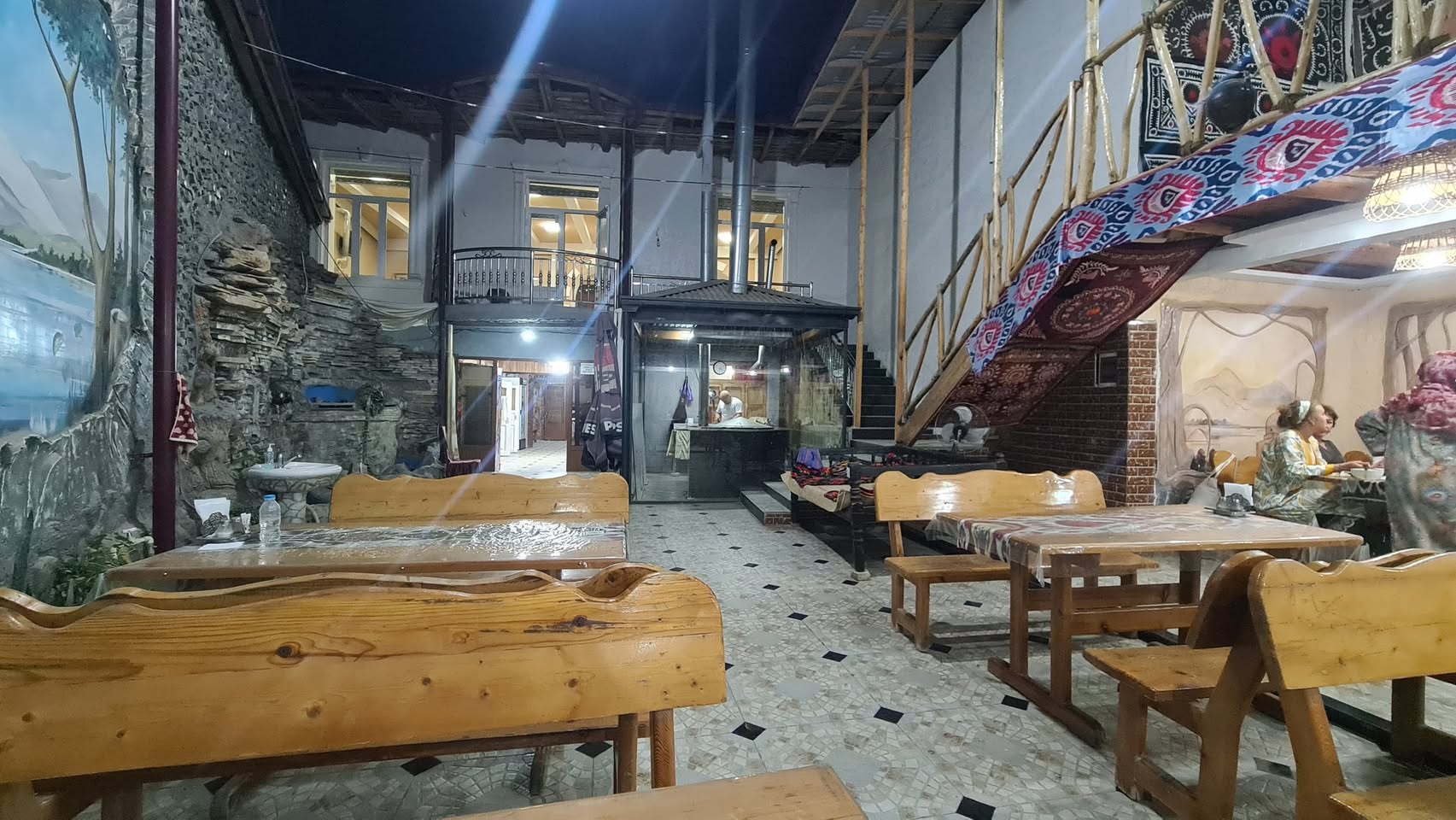
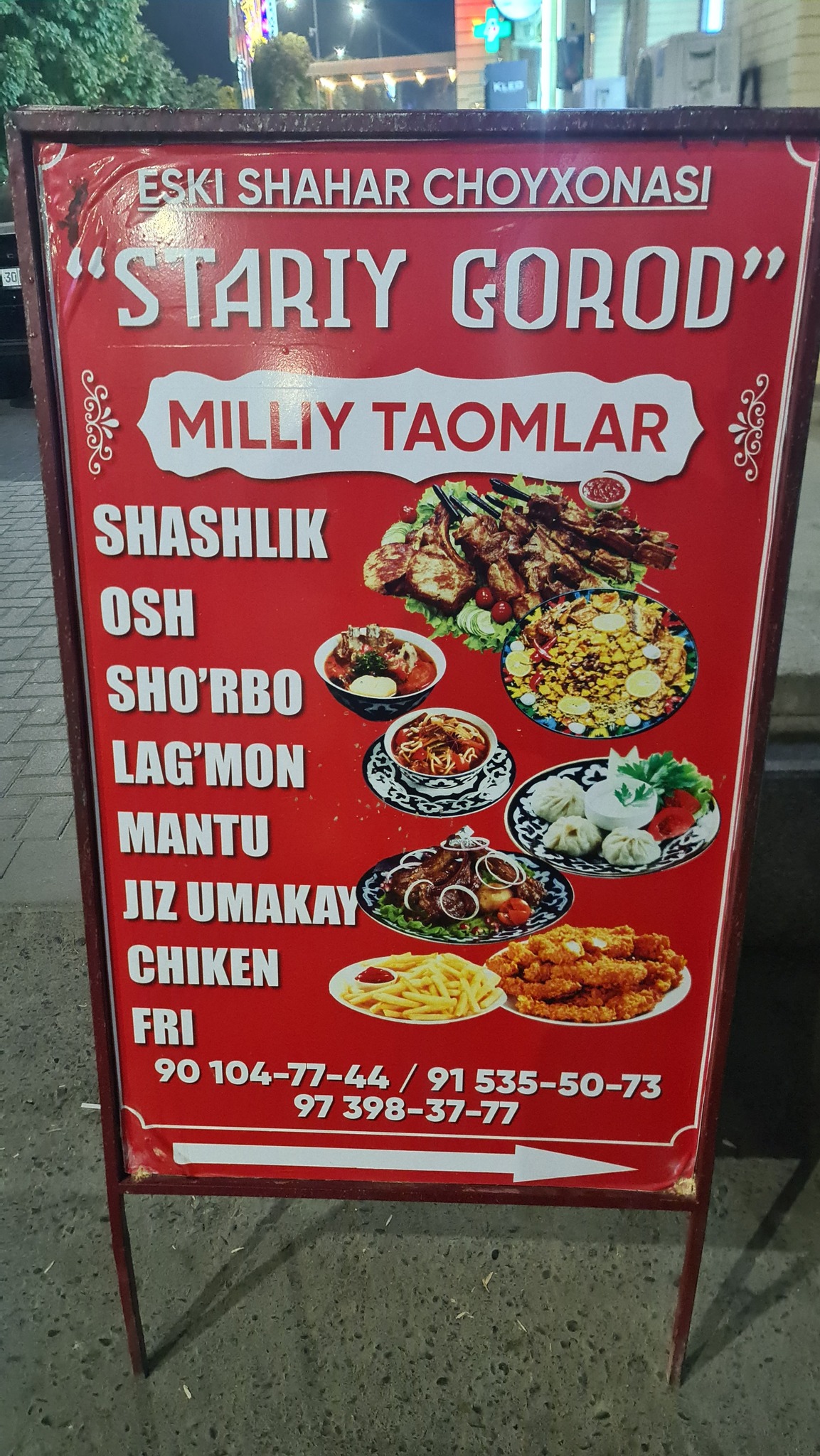
The downside of my hotel near the train station is it’s a 30 minute taxi ride to the center of the oldest parts of the city and the interesting things to see. The staff at the hotel were super helpful booking taxis for me as again I can’t register an app to book for myself. I made a plan with the Danish kids to meet up and my Chinese EV-driving taxi driver had good English and was very chatty. Canada #1! Tesla #1!. We met in a restaurant near their hostel and the manager very nicely came down to translate from the menu for us. They told me the story of their nightmare shared taxi from Shymkent to the Kazakh/Uzbek border – the driver was stopped by police and was getting a ticket for being an illegal taxi, then he sped away with the cop trying to hold onto the door jamb, driving 150 kph down the road with inches to spare to the other cars. They arrived at the border, pushing and shoving to get through the gate, searched 3 times, then a minibus to Samarkand. The whole trip took 7 hours! Ah the adventures of traveling the world!
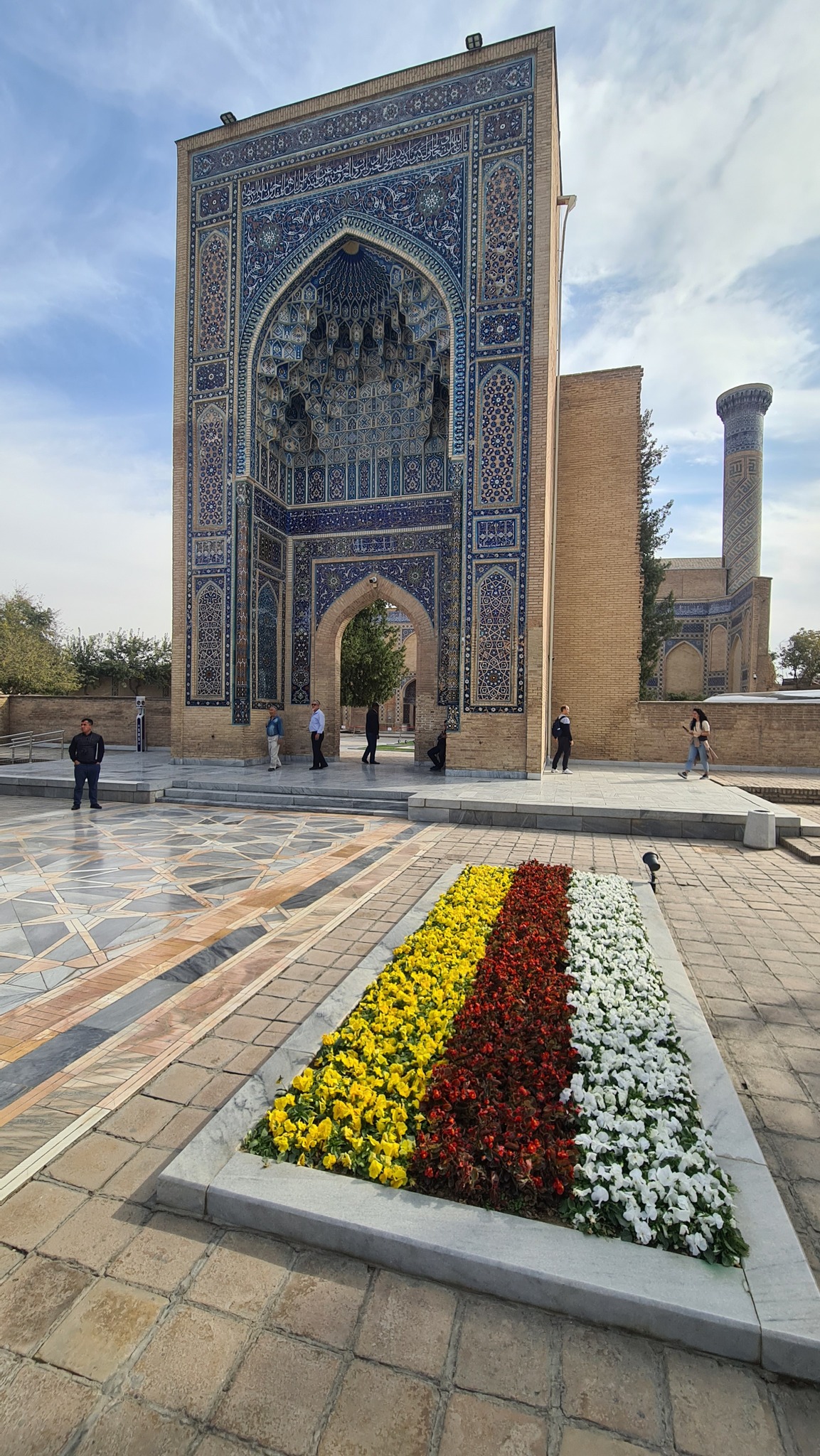
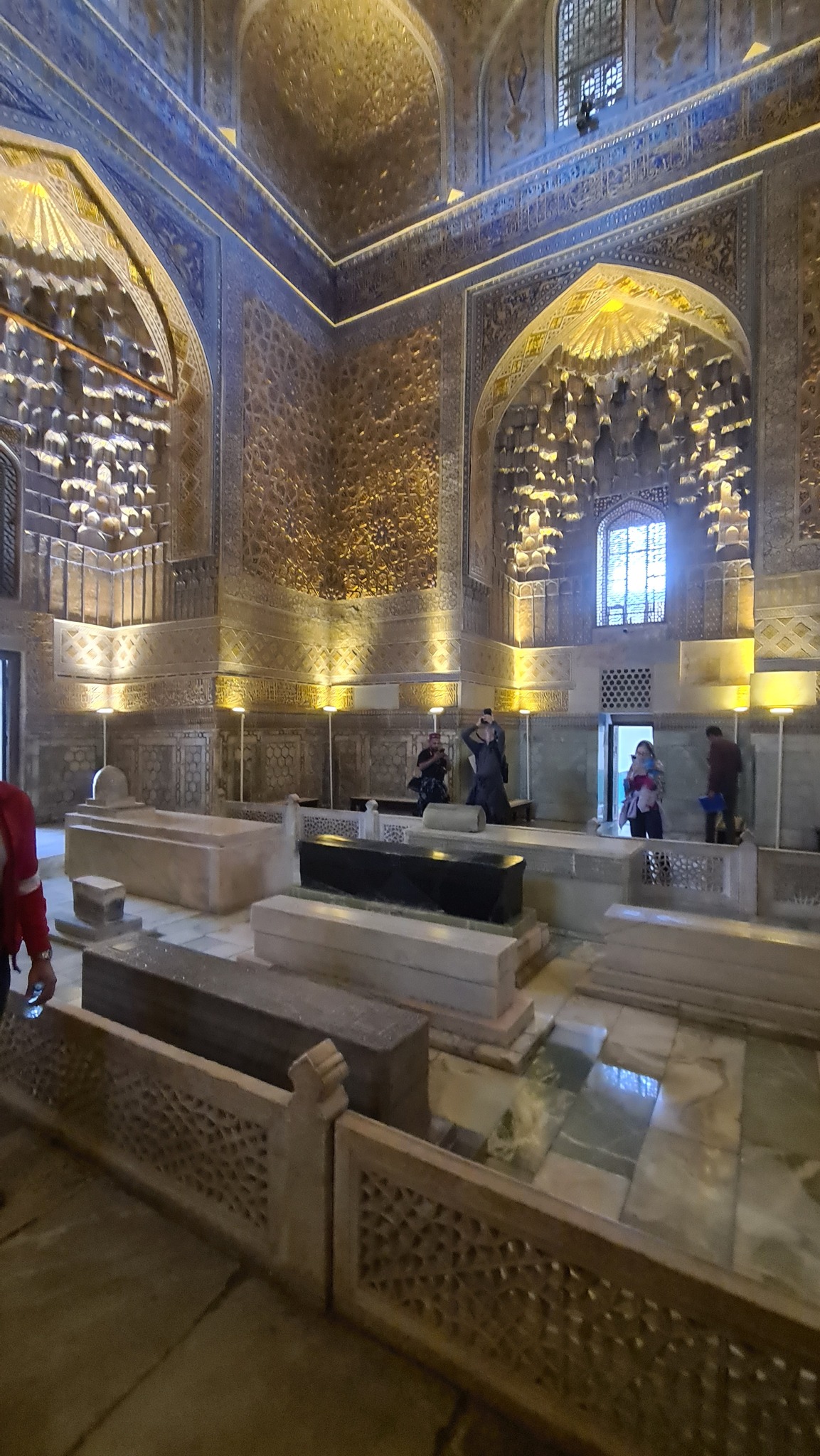
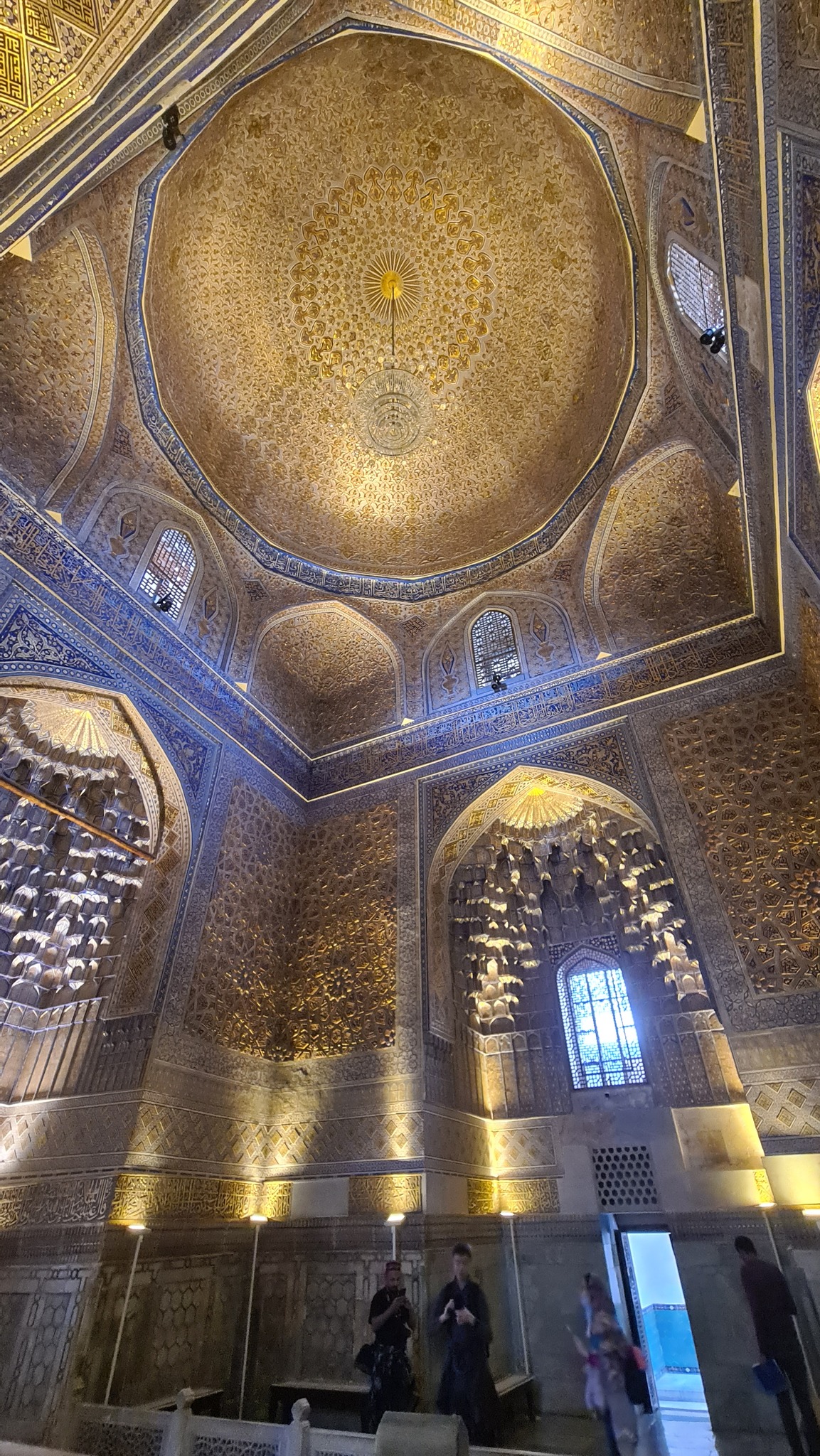
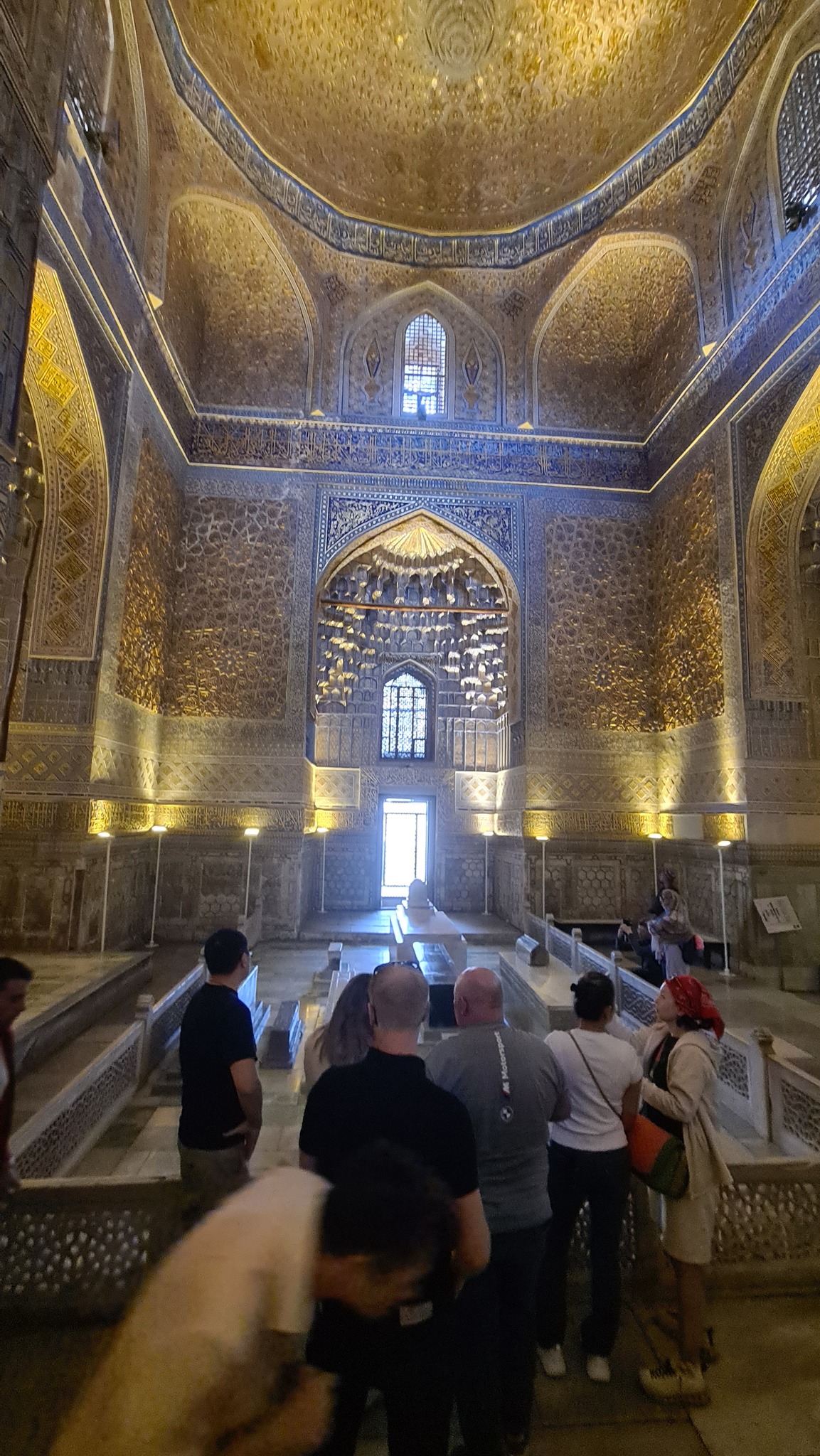
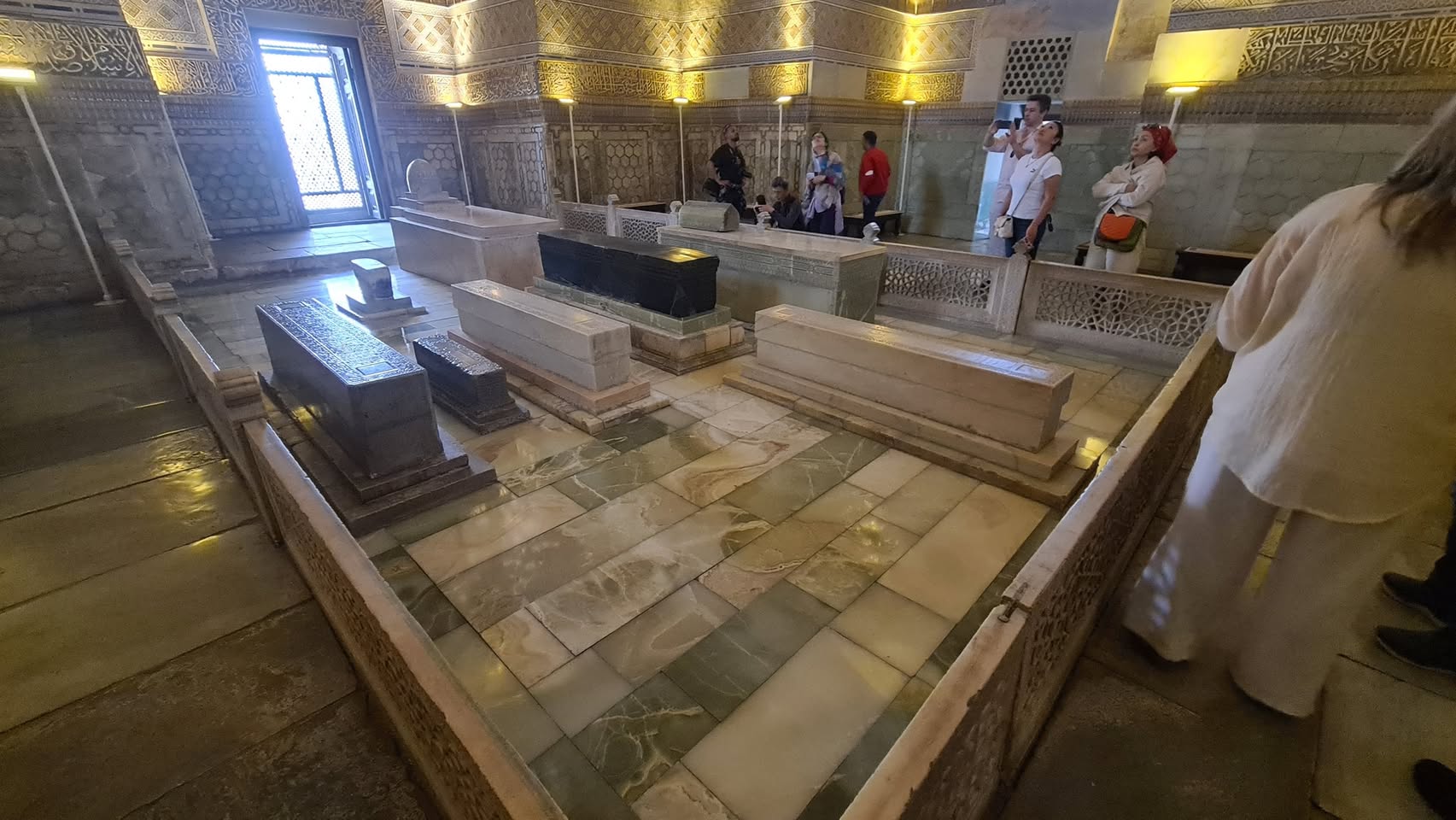
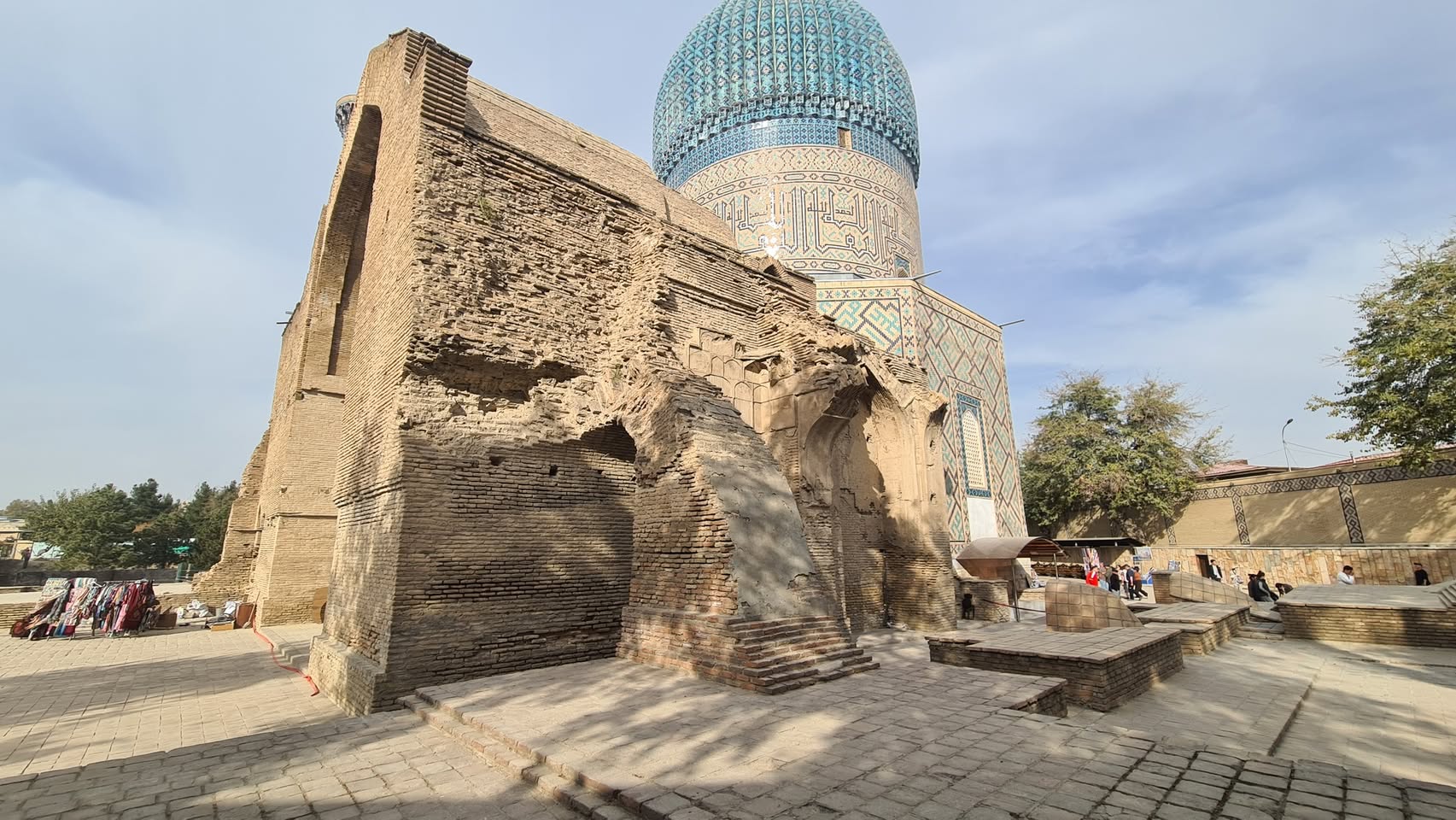
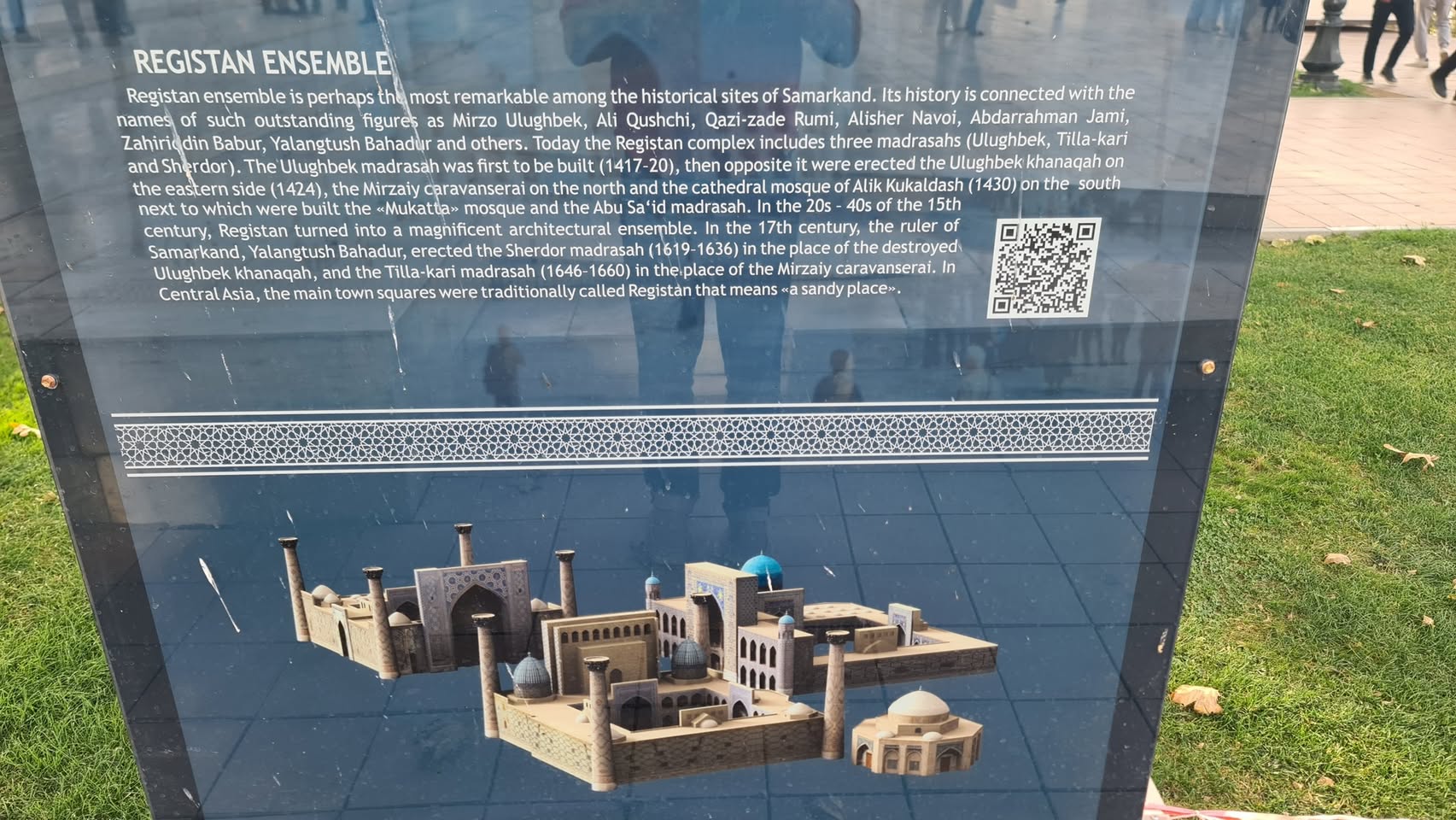
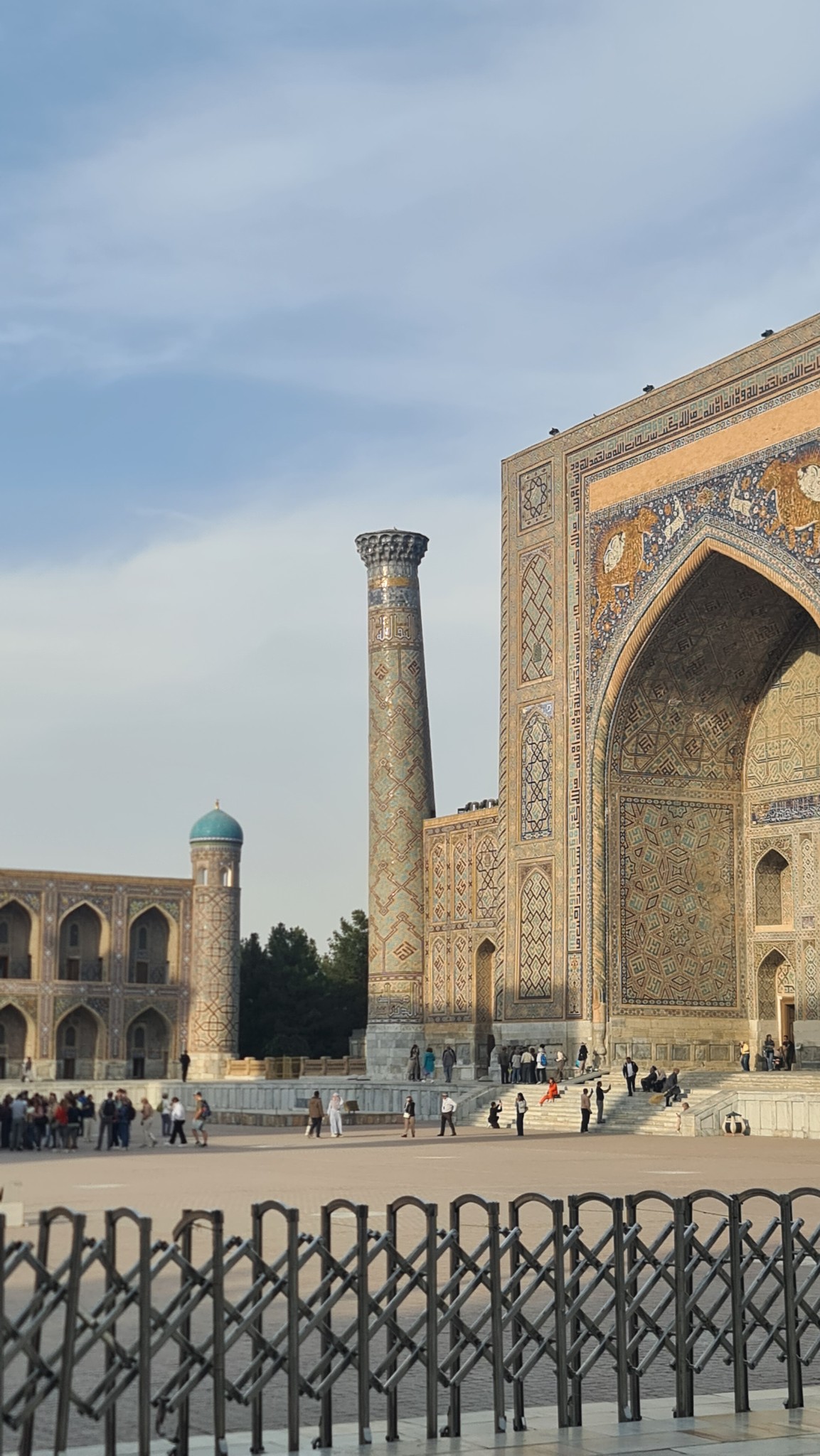
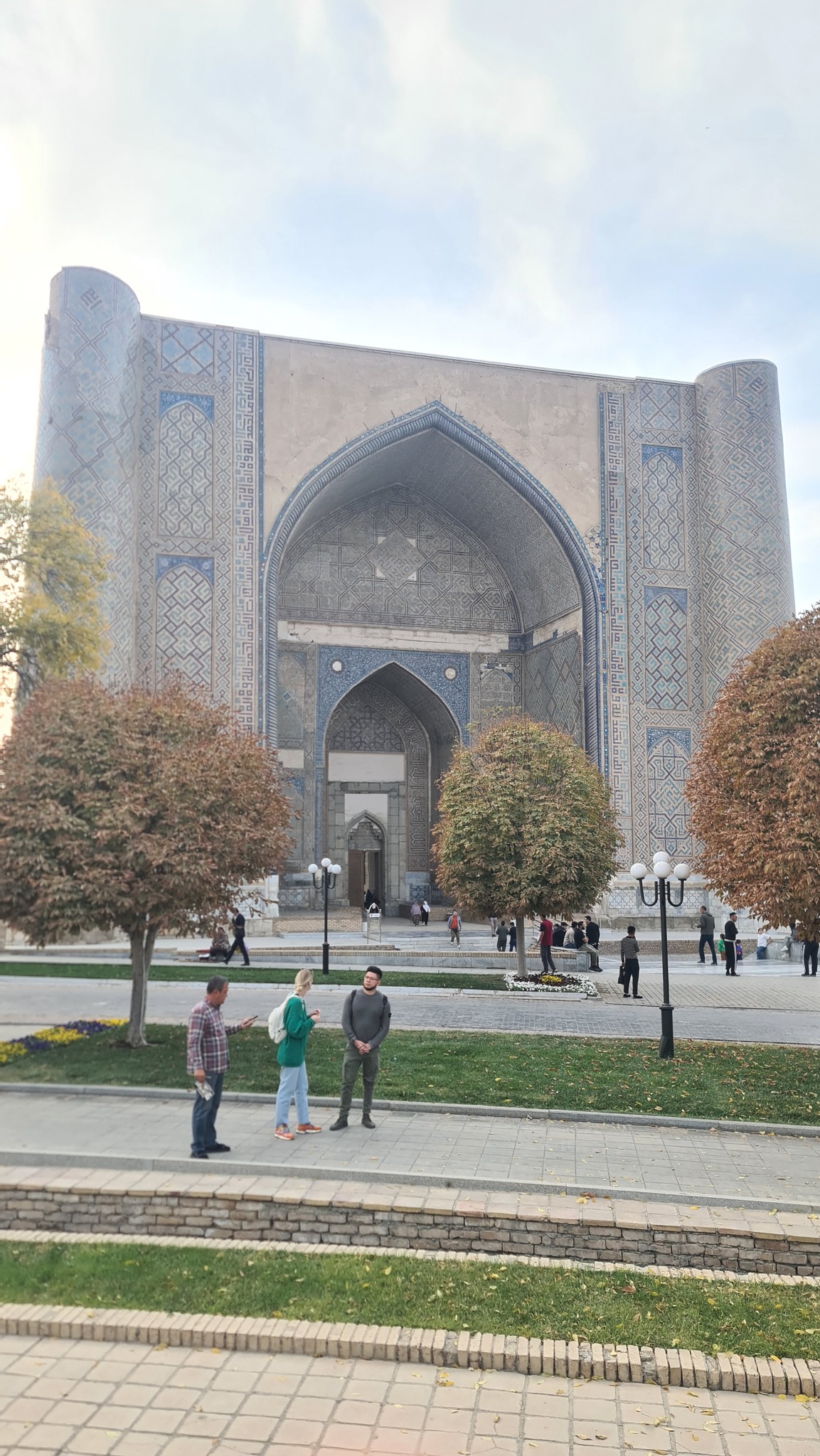
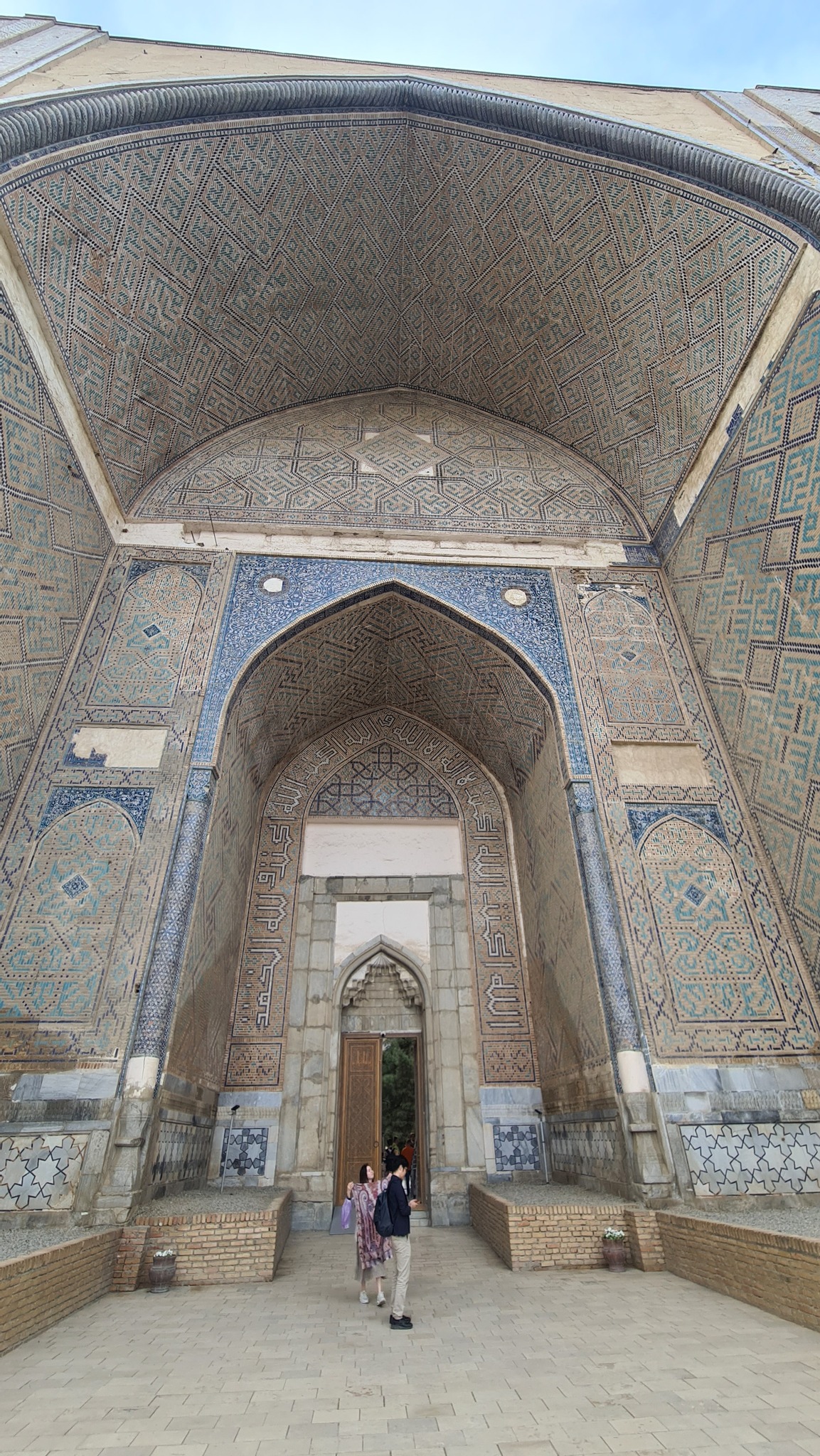
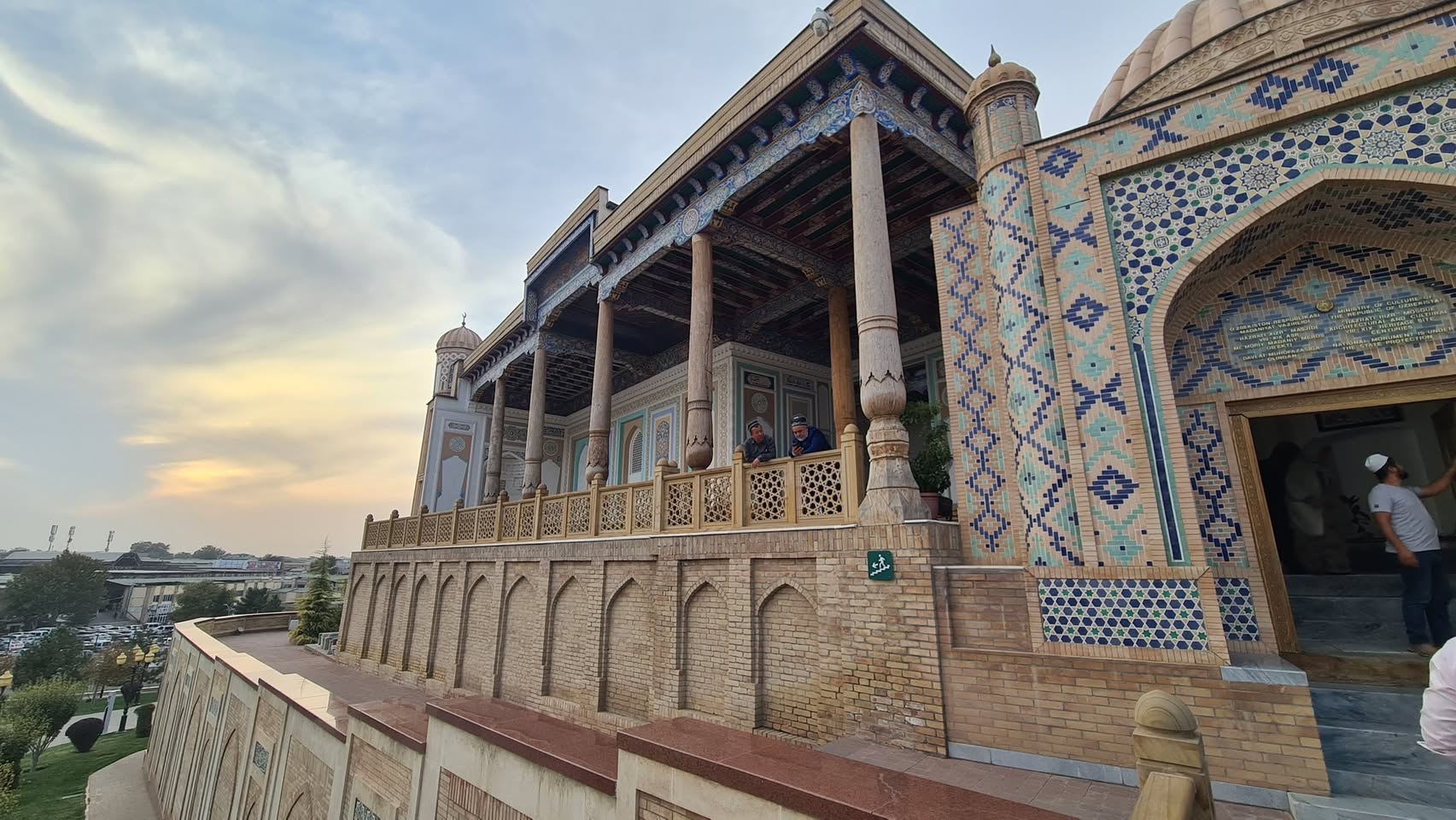
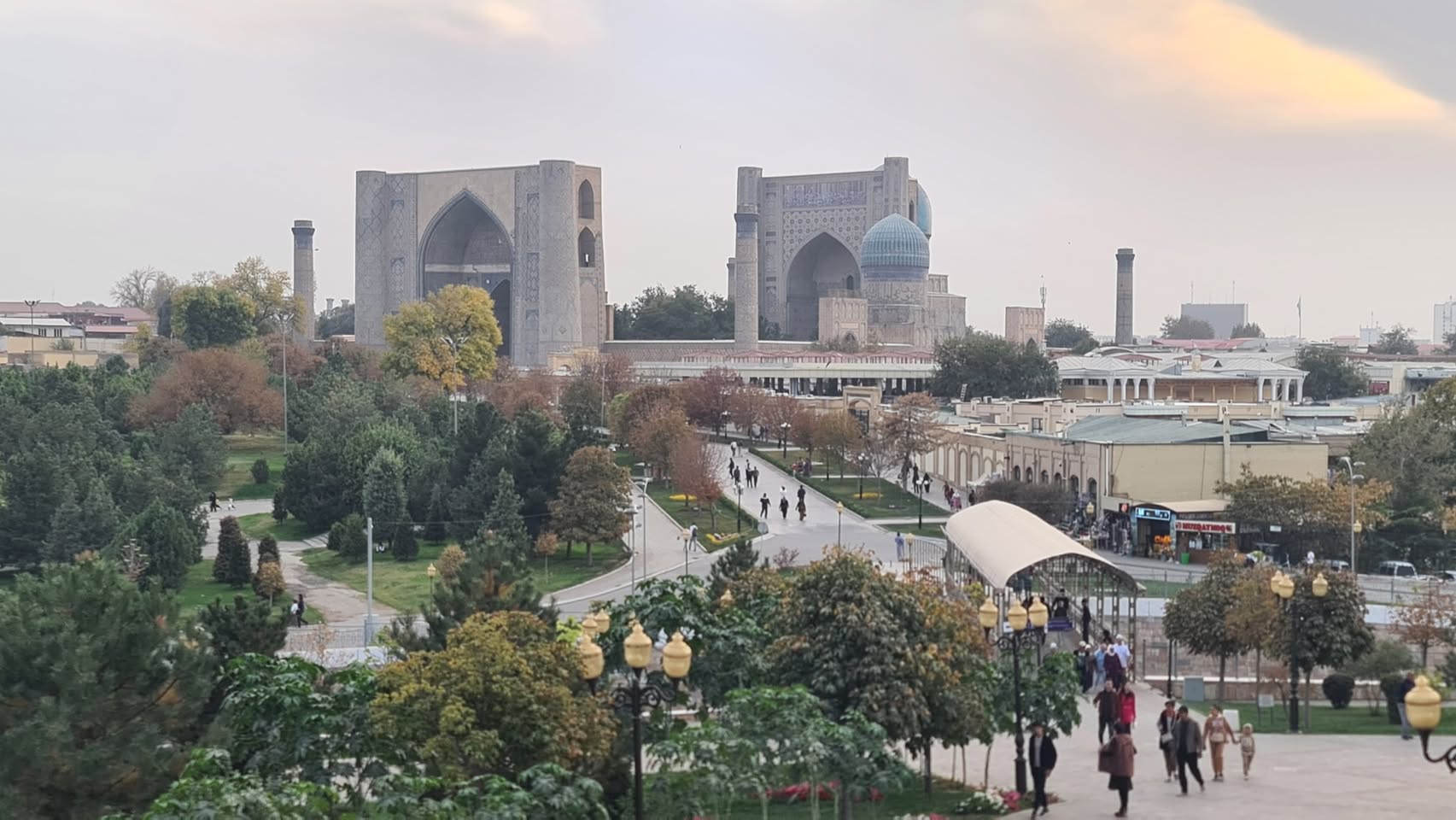
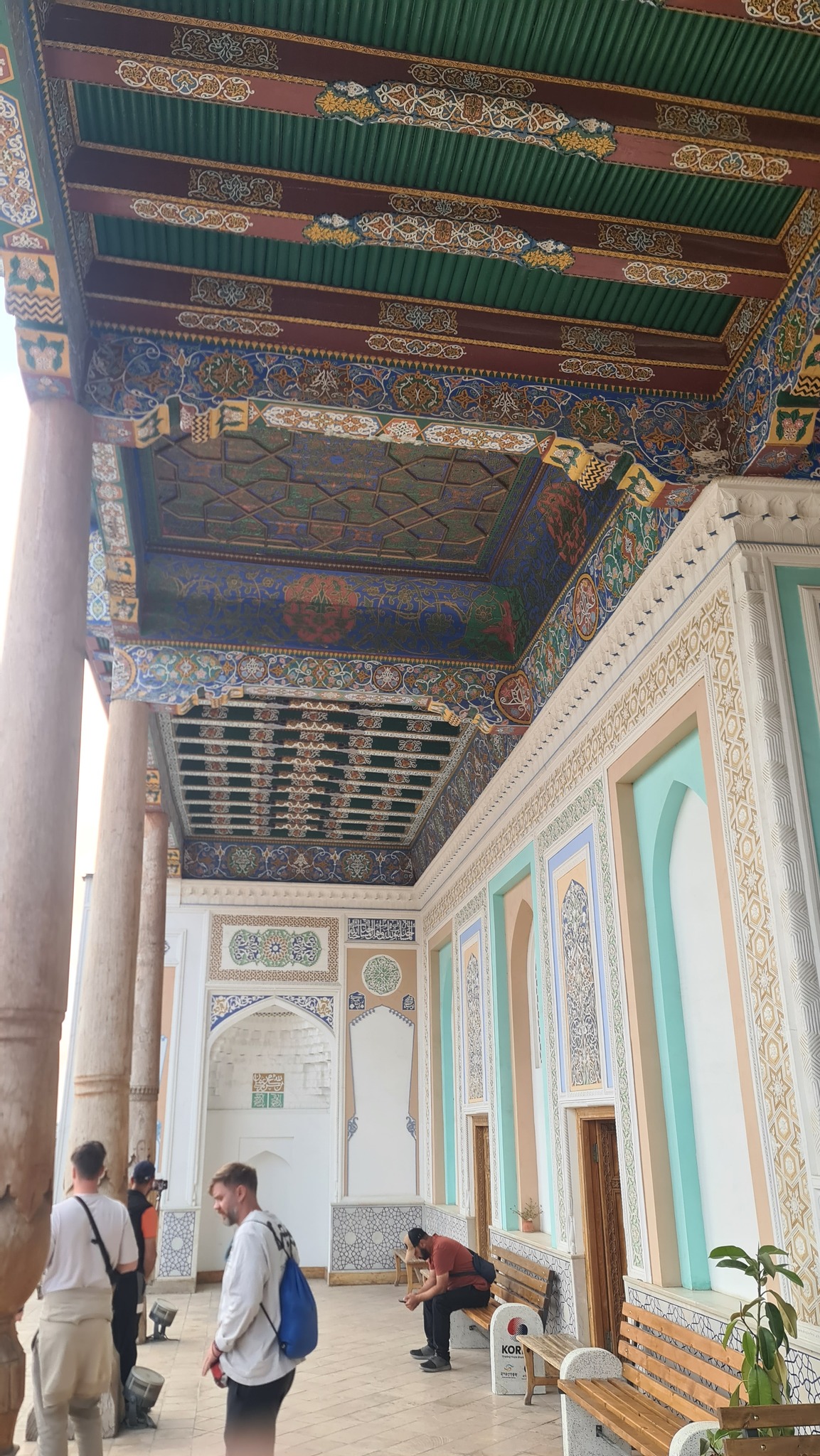
In the morning I went over for a rare breakfast, very nice dining room and food spread. I got a taxi to the old center and found my guide on the walking tour I booked. There’s just so much history here that I decided to get an expert to explain everything. At first it was just me and a Brit because the other 3 were late and met us at a later stop. First up was Gur-Emir Mausoleum which is the tomb of the conqueror Amir Temur and his massive family tree of descendants. We then walked to Registan Square, a UNESCO World Heritage Site with a cluster of three grand madrasahs built between the 15th and 17th centuries, showcasing the pinnacle of Timurid architecture with intricate tilework and domes. Then down the hill to Bibi-Khanum Cathedral Mosque and Hazrat Khizr Mosque which was reconstructed in the 19th century, replacing the one destroyed in the 13th century, with the original mosque on the site dating back to the 8th century. At the end of the tour I zigzagged my way through narrow streets to come back to the old center, grabbed a waiting taxi and went home, exhausted from an exceptionally long walk. I can’t come close to describing all of the history here so just check out the pictures and do a search if you’re interested in more detail. I took 125 pictures so I’ve only posted the best ones.
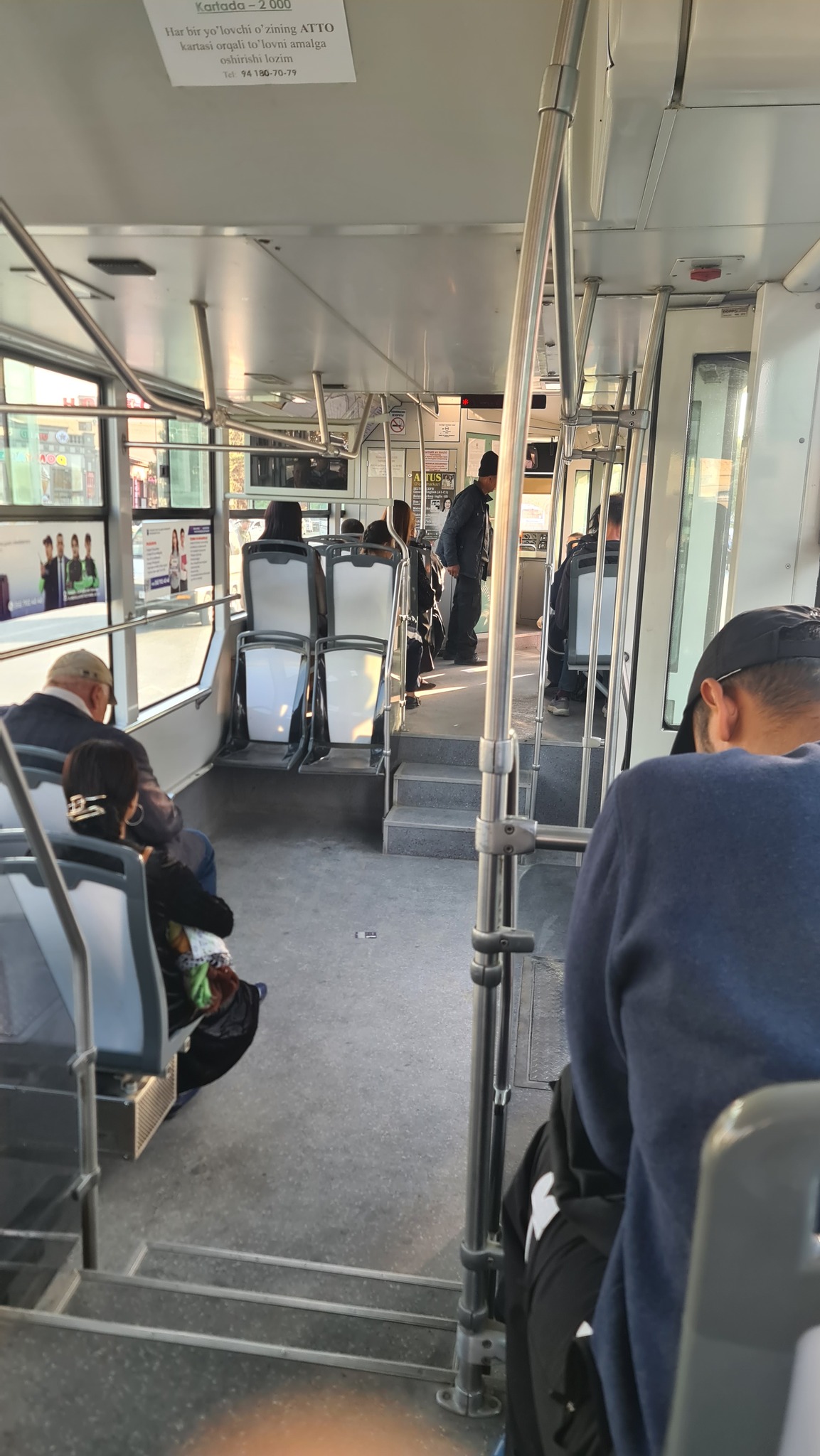
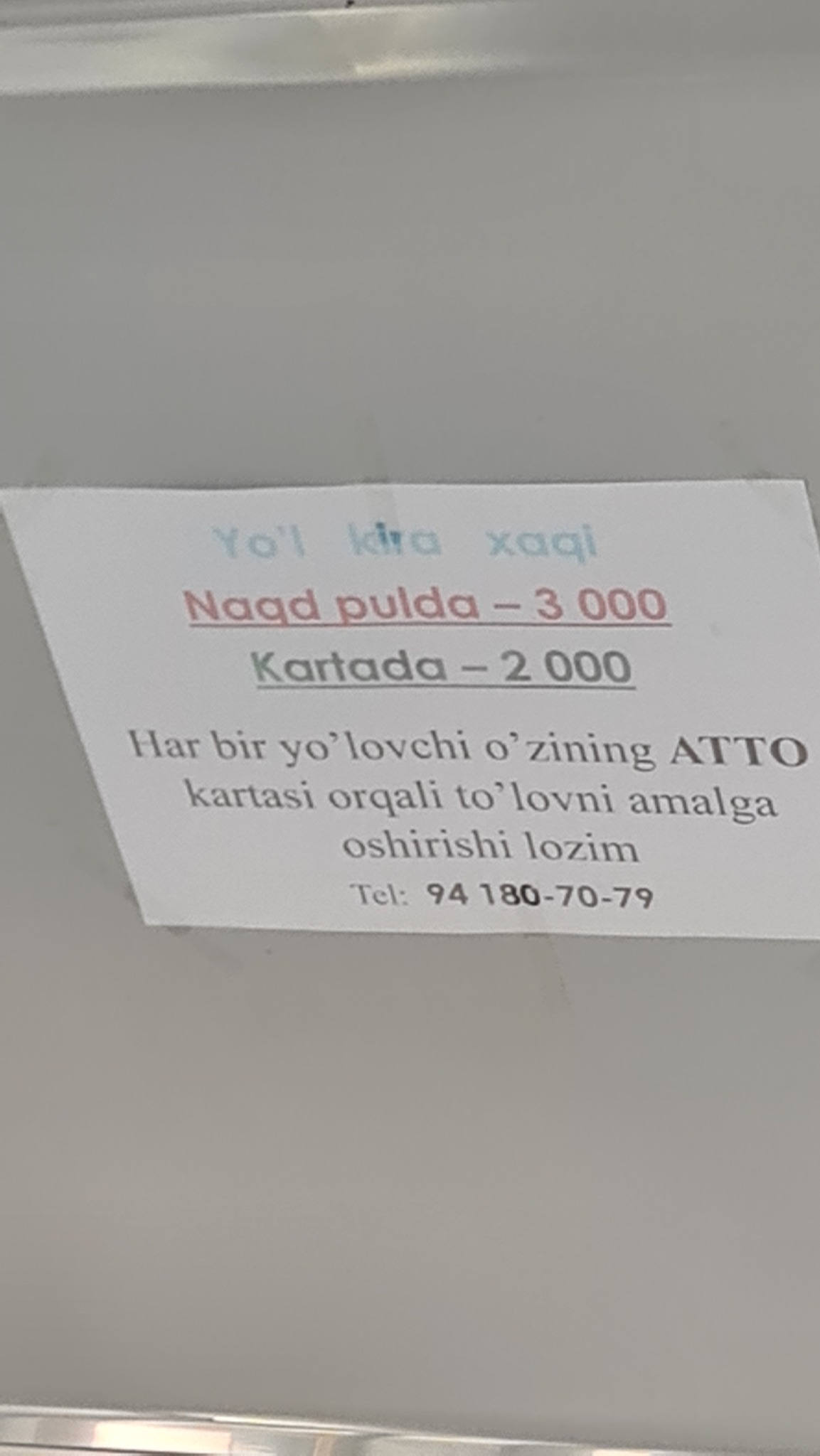
The next morning I walked to the other side of the park just outside the hotel and jumped into a street tram. The tram system here, one of Central Asia’s oldest urban rail networks, was established in 1909 under Russian imperial rule as a horse-drawn line, transitioning to electric trams by 1913. Due to the dawn of car travel, the system fell into disrepair and only Line 1 remains operational, a 5.7 km route from the Railway Station to the Ulugbek Observatory. Fares are 1,000 UZS or literally 8 cents, with the conductor not really seeming to care if anyone paid or not. I gave him my smallest note at 2000 and he seemed happy not to give me any change so I sat down. We went south but did not turn towards the main Registan Square as I had hoped, but ended up at a loop in the middle of nowhere – no Observatory to be found. I got out and started hunting for lunch, past trenching for laying a sewer pipe, crossed the street, spotted a place where I got a chicken wrap, fries, Miranda and ice cream with chocolate sauce. I walked back to the tram and went back up to the north terminus. It’s slow going because cars use the tram lane and often want to turn left, blocking our way. The tram has a mechanical bell that the driver rings with a crank handle, low tech but it works!
Bottom line: Samarkand was a key stop along the Silk Road, making it a hub of trade, scholarship and religion. Left in a mess by the Russian and Soviet empires, it’s slowly modernizing and opening up for industry and tourism. Definitely a top destination in the area.
Next stop: Dushanbe, Tajikistan