2025-2026 Central Asia Adventure – Batumi Georgia
Today’s Huntington’s Disease report is about Chorea. Huntington’s Disease was first identified by George Huntington in 1872 and was soon given the name Huntington’s Chorea,
where the term “chorea” (from Greek “choros” meaning dance) reflected the very obvious debilitating uncontrollable movements he observed in affected families in East Hampton, New York. Chorea affects everything the body does – balancing, walking, driving, talking, eating, toileting and more. By the 1960s the disease was renamed Huntington’s Disease, more reflective of the wide range of symptoms that affect the HD person. The chorea movements stem from the destruction of neurons in the striatum, part of the basal ganglia, that control muscle movement in the body. Neurons misfire, causing the jerks. In the early days there were no effective treatments but some other drugs were used off-label in an attempt to try anything that might work. Canada and Europe approved a drug called Xenazine in the 1970s for use with other chorea symptoms, and I actually ordered supplies each month from Canadian pharmacies for my wife Allie. Tetrabenazine was US FDA approved in 2008 as a direct symptom reducer but not a cure. A derivative called Deutetrabenazine came in 2017 offering fewer side effects. Here is a video showing mild and actute Chorea: https://youtu.be/LAMGRuhtdxA
Welcome to Georgia. No, not that Georgia, this Georgia. This is a new country to me, #70.
Below is the standard summary:
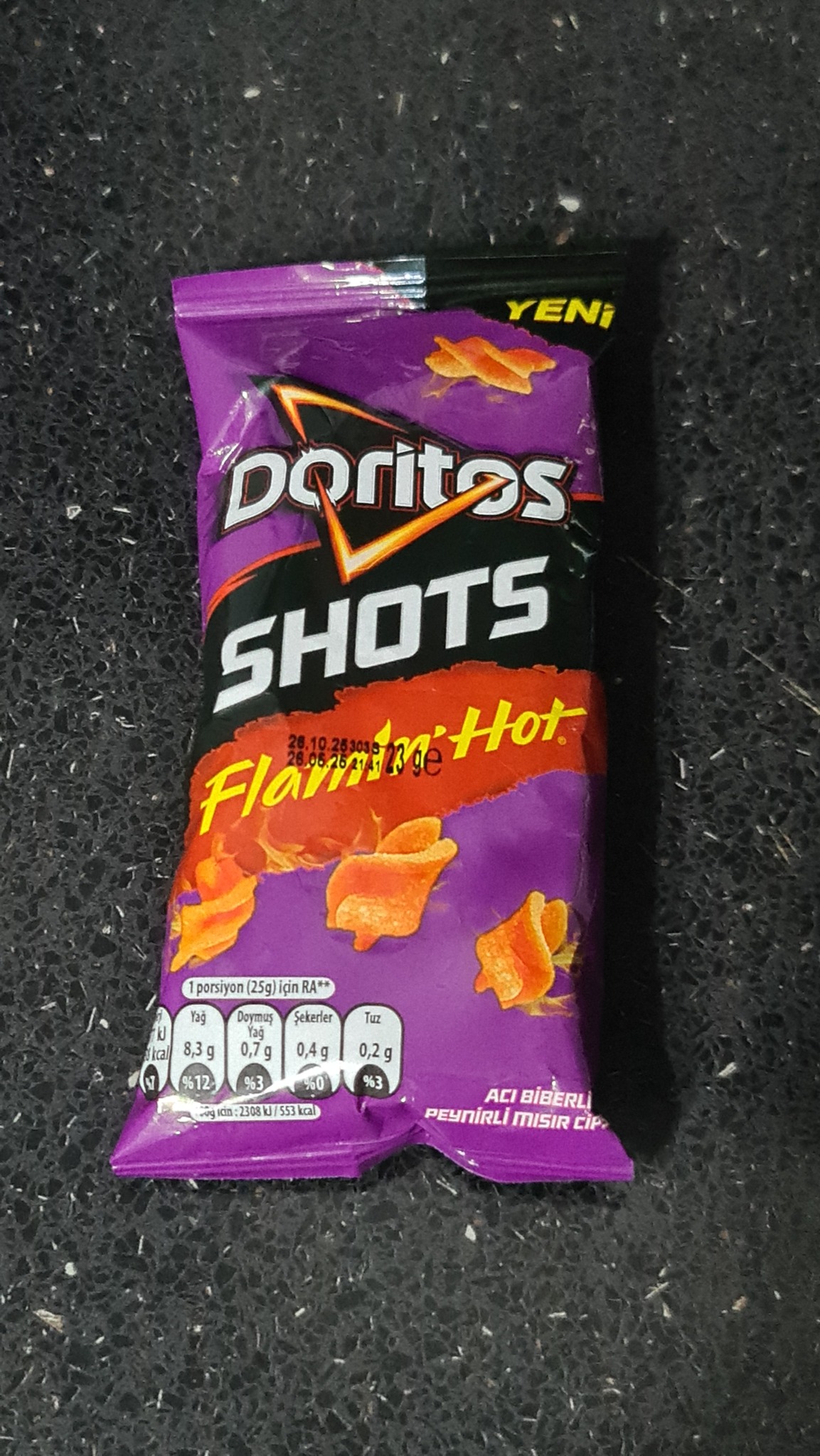
– Cool Ranch Doritos: No!
– Spain & Wise Debit Cards Work: Yes
– Airalo Worldwide Telephone/Data/SMS eSIM Works: Yes
– VPN Works: Yes
– Cost of Living: $
– Currency: USD $1 ~ Lari 2.71
– Language Issues: No problem in the cities, difficulties outside
Your Short History Lesson:
Georgia is strategically located on the south shore of the Black Sea, with natural trade routes established through it from the very early days of civilization. Bronze-Age settlements have been found, through to the Colchis Kingdom around 1200 BC. In Greek mythology it was the land of the Golden Fleece, where Jason and the Argonauts sought their prize. Greeks and Persians came through, then around 300 BC King Pharnavaz I established the first Georgian state. The Romans did the Roman thing, then it became one of the first nations to establish Christianity in 337 AD (obviously). The Mongol invasion in the 13th century fractured the kingdom into small rivals, then the Ottomans did their thing. Russia annexed all of Georgia 1801-1810. Georgia briefly declared independence after the Russian Revolution but was taken again by the Red Army in 1921. Georgia declared independence from the USSR on April 9, 1991. Civil wars flared up for a while. President Eduard Shevardnadzeâs ouster in 2003 after rigged elections brought Mikheil Saakashvili to power, promising Western integration. Economic growth followed, but tensions with Russia escalated. Russiaâs invasion of South Ossetia in 2008 ended with a ceasefire, leaving Abkhazia and South Ossetia as de facto Russian-controlled regions, recognized by few nations. I remember when this happened and no nations came to their aid, despite John McCain’s impassioned pleas.
Fun Fact #1: The country is known in the west since the Middle Ages as Georgia due the early Christian influence and its Patron Saint St. George. Internally the country’s native name is Sakartvelo.
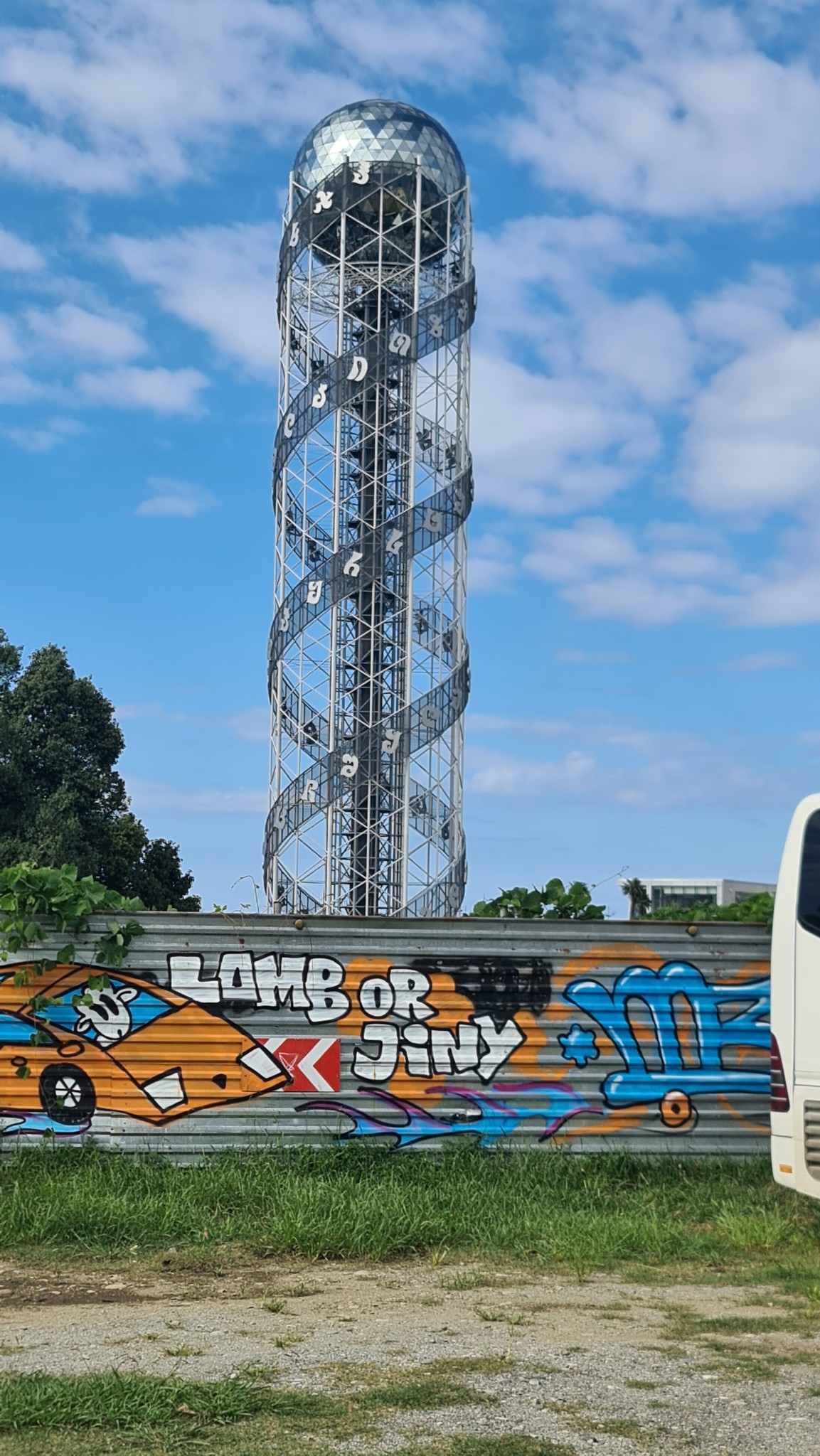
Fun Fact #2: The script used in Georgia’s alphabet is called Mkhedruli, one of 3 scripts used through time. The letters remind me of some Indian scripts, perhaps influenced by Sanskrit. The letters have curves and loops such as á, á, á, reflecting additional influences from Aramaic and Greek and seem very out of place to me in this region. Cyrillic is not seen anywhere, due to a rejection of Russian influence after independence. There are a LOT of Russian tourists here however, due to its proximity to actual Russia.
Fun Fact #3: Joseph Stalin (Ioseb Besarionis dze Jughashvili) was born in Georgia but repressed it as brutally as the rest of the Soviet state.
Hello from Batumi, the eighth stop on the trip.
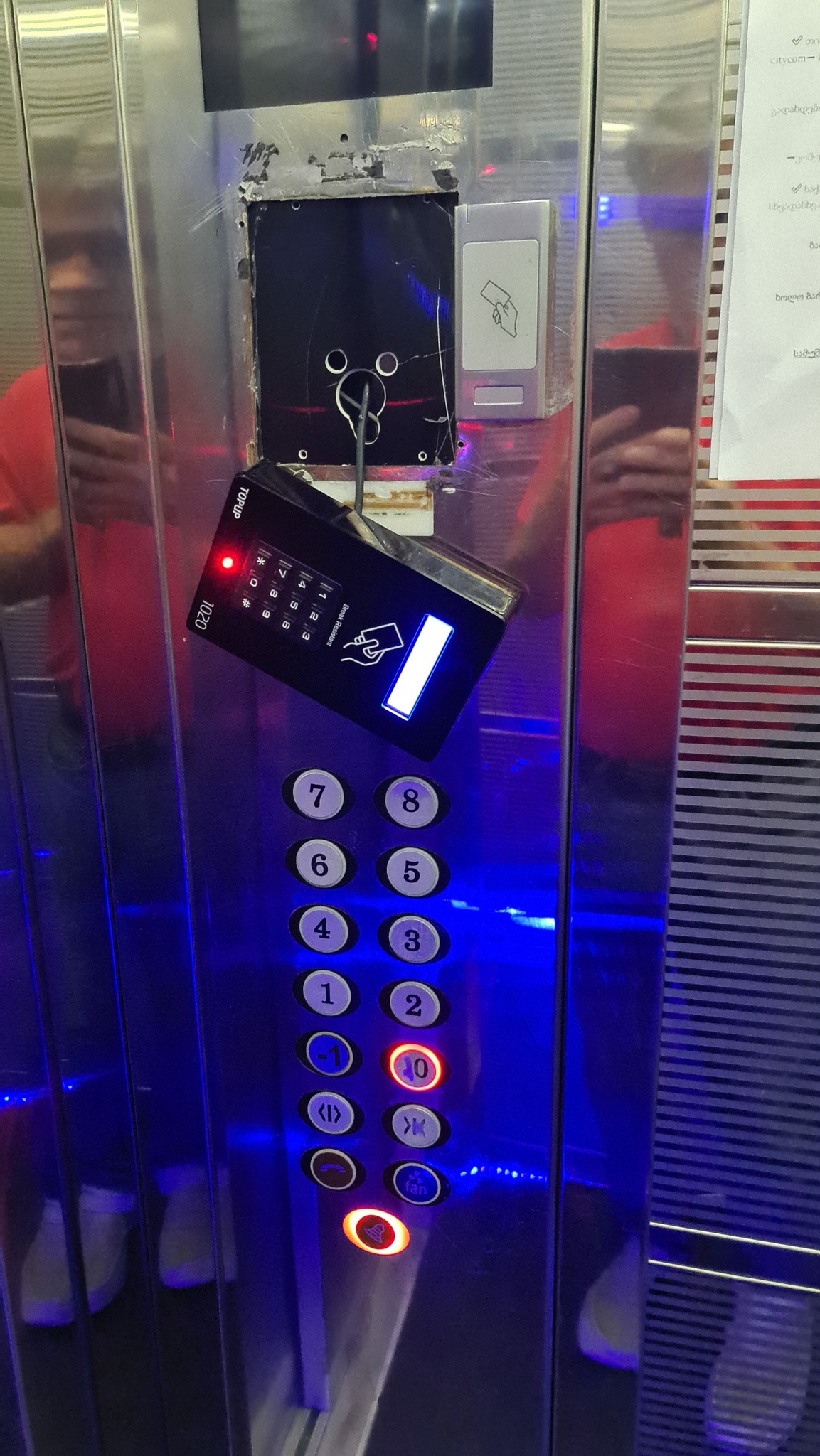
After the adventure of the transport and apartment search detailed in the last post, I’m awake and refreshed in Batumi. Time zones changed so I lost an hour. I went back to the currency change place and changed Euros to Lari to pay my little Russian lady for my room. She must have security cameras scanning the area because she was standing at the elevator door when i stepped out.
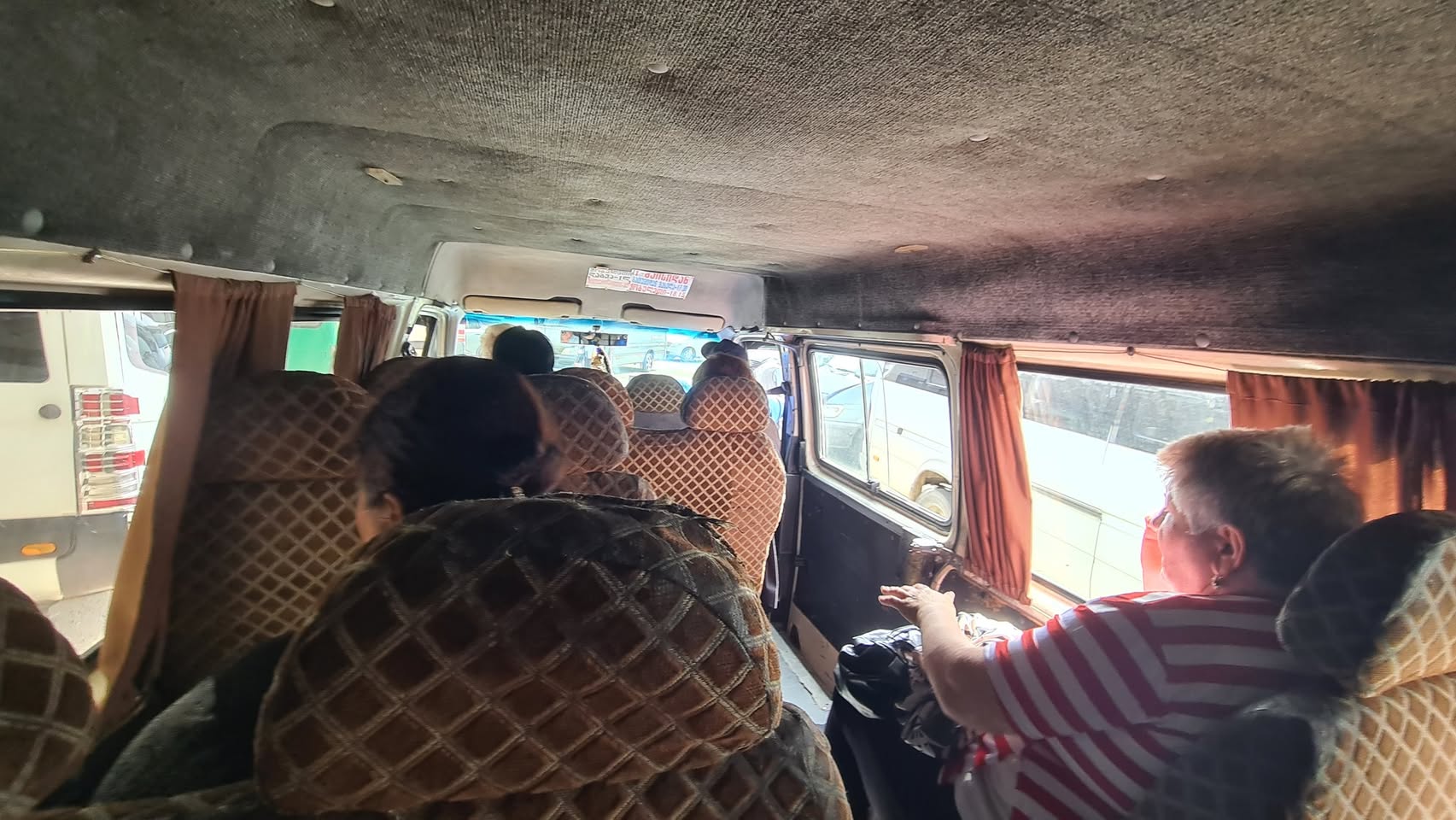
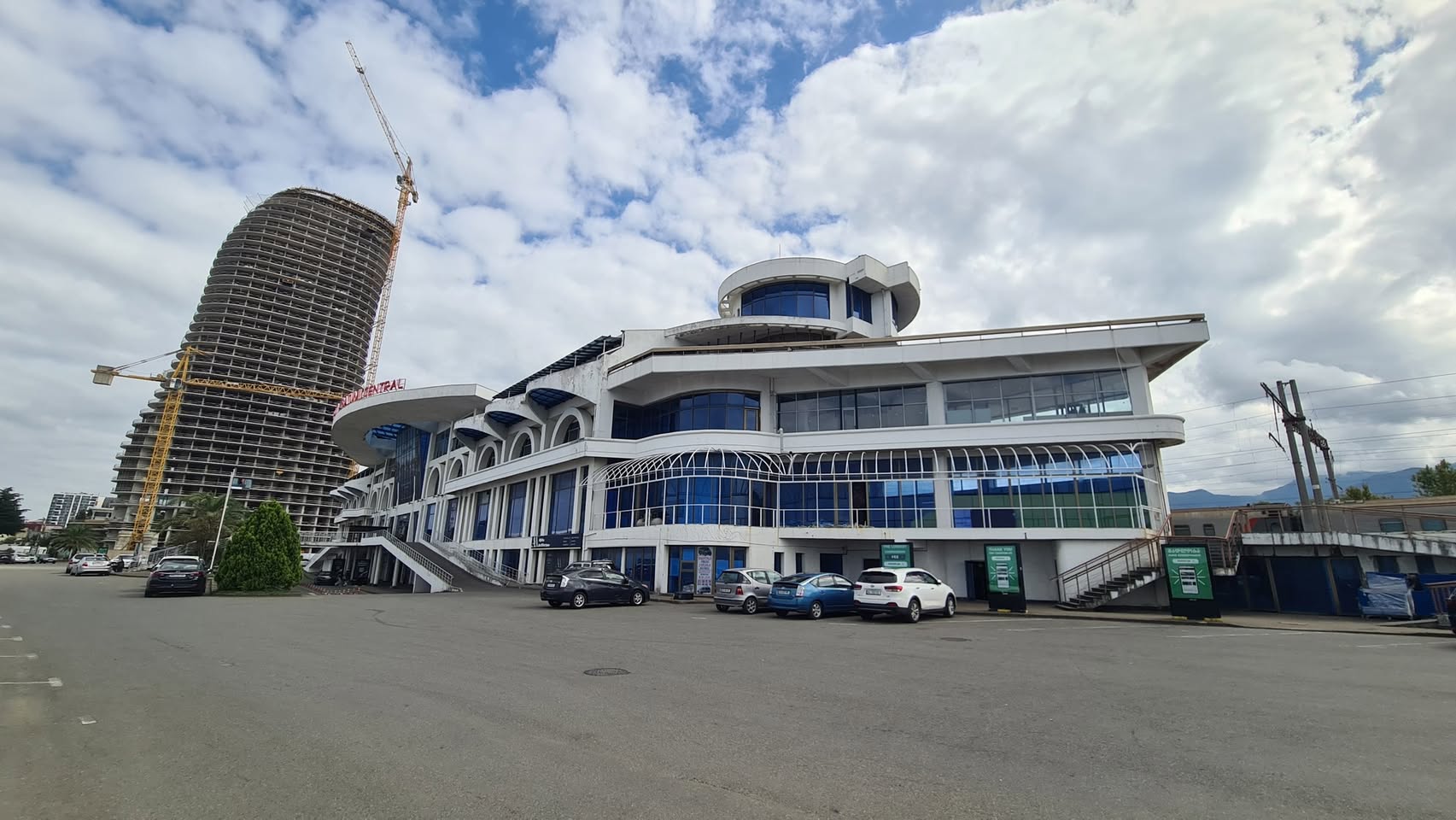
Edward and I decided to go to the bus station to plot our next steps. Total chaos, no English. We thought the train station was across from the bus station but that’s the freight terminal only. We took a dodgy shared minivan a few miles along the shoreline to the passenger train station, which is mostly still under construction. We found the ticket office and were 3rd in line which was good because when we left there were about 15 people waiting in a semicircular clump around the window. Queue up, people!!! We both got 1st class tickets for the 8am train tomorrow, yee ha! Glitch with my Wise card but got it sorted in the end. We walked across the highway and got a nice city bus back to the city center, I tapped my phone on the scanner for the low low fare of 0.8 Lari / 30 cents.
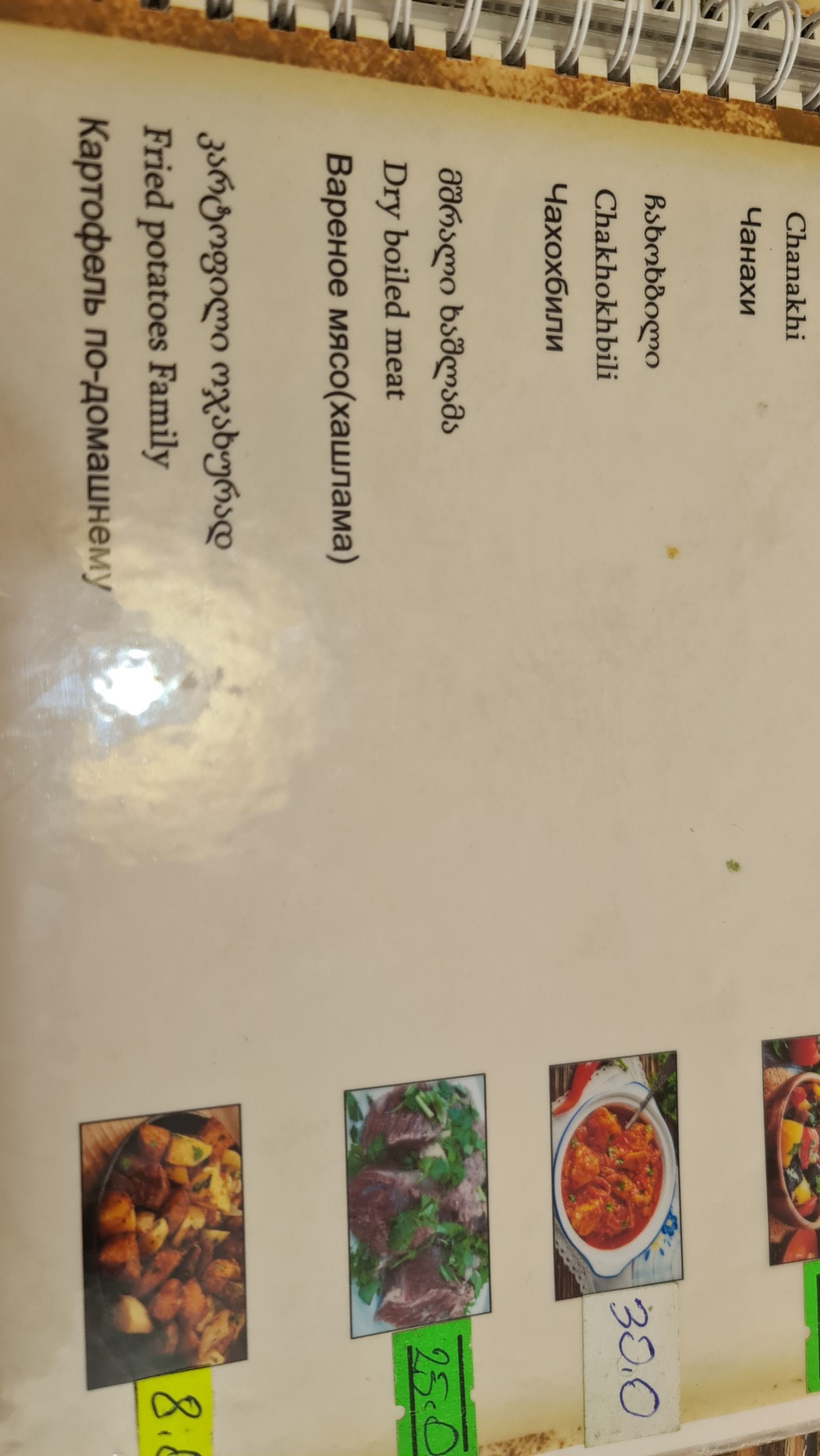
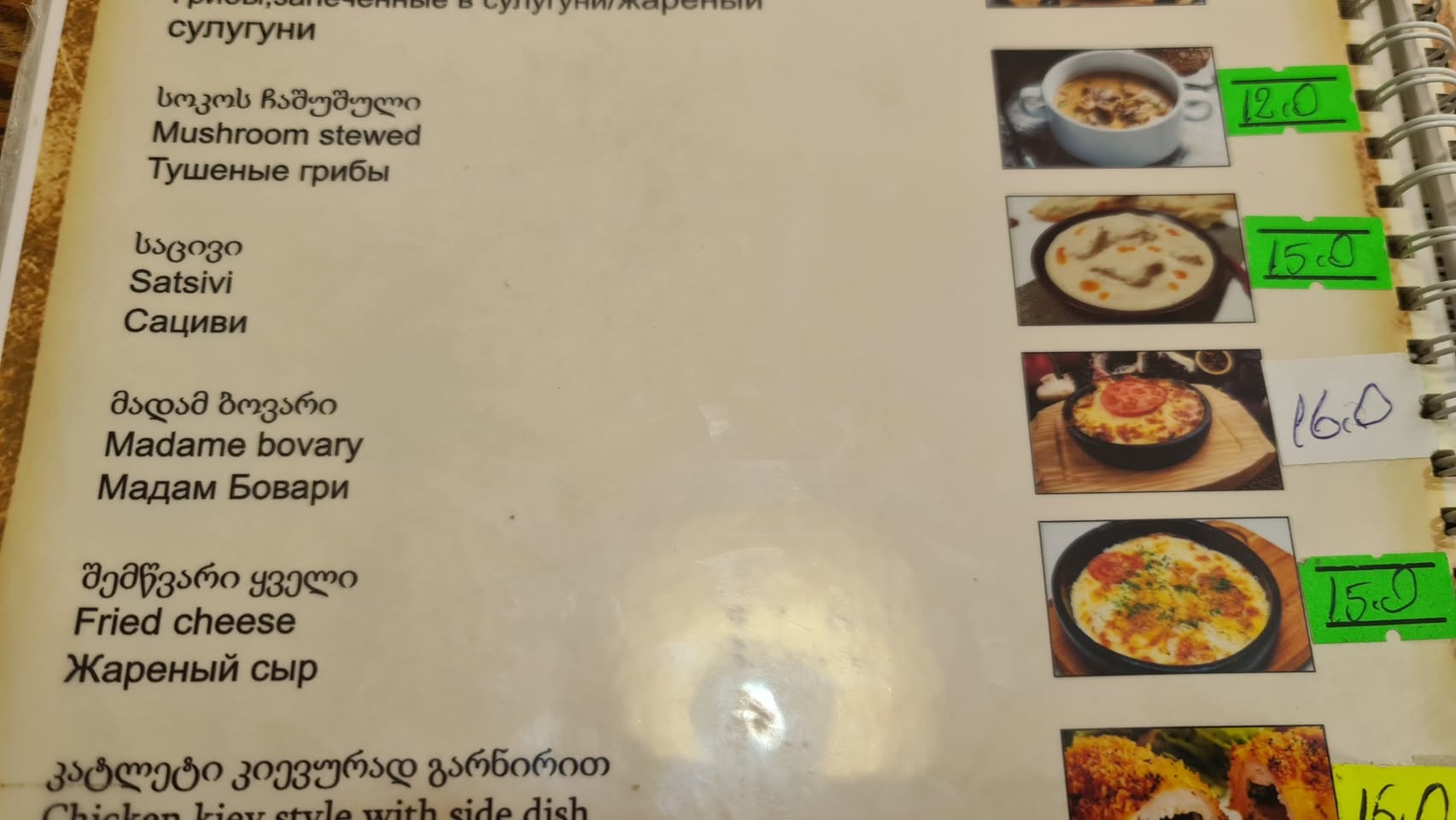
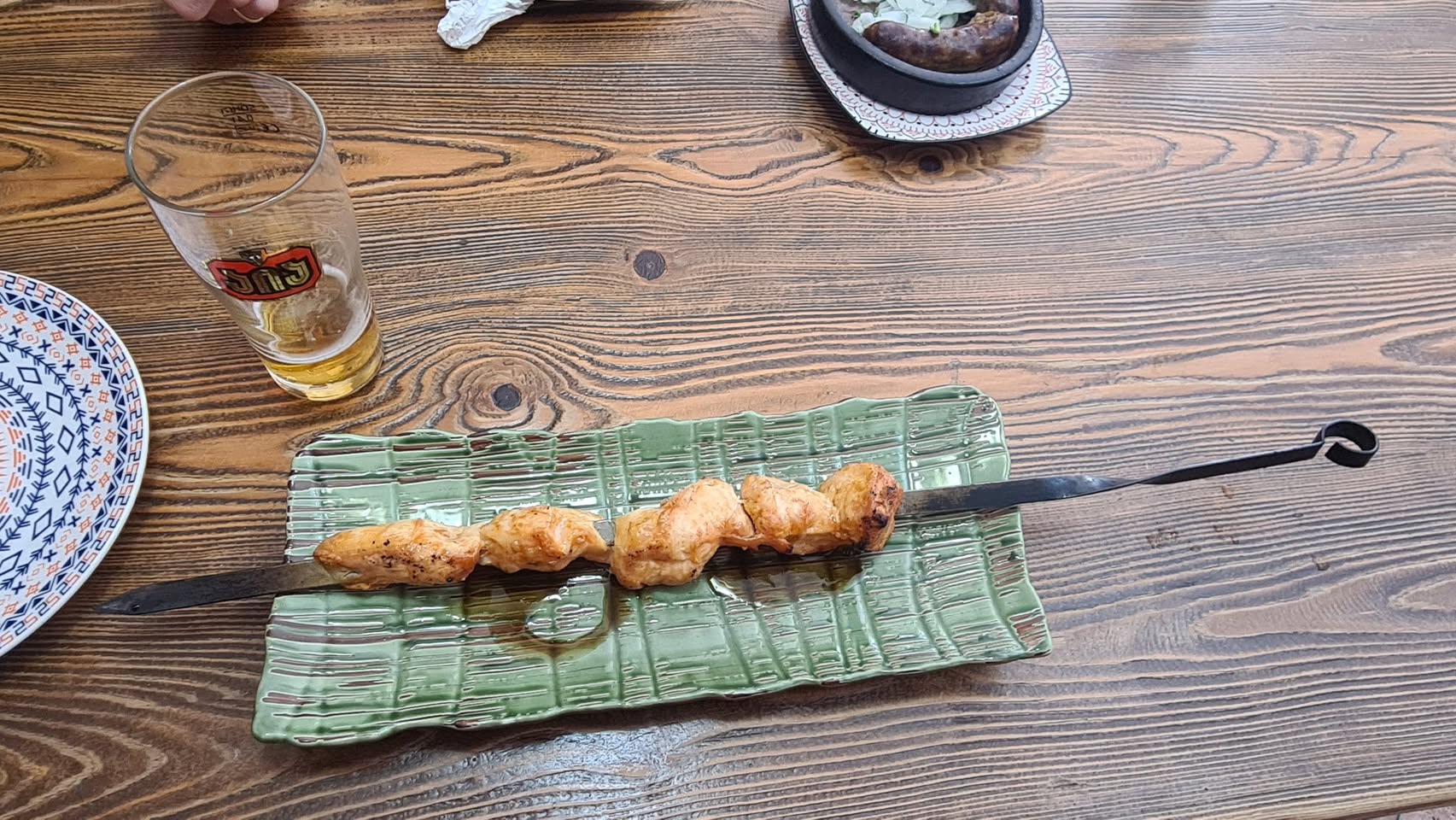
We started looking for sit down restaurants with local food. I wanted to order the famous local dumplings but discovered they all have onions inside. I chose a chicken kebab which came out as a long metal bar with chicken pieces stuck on it, plain, no sauce or actual flavor. Hmmm.
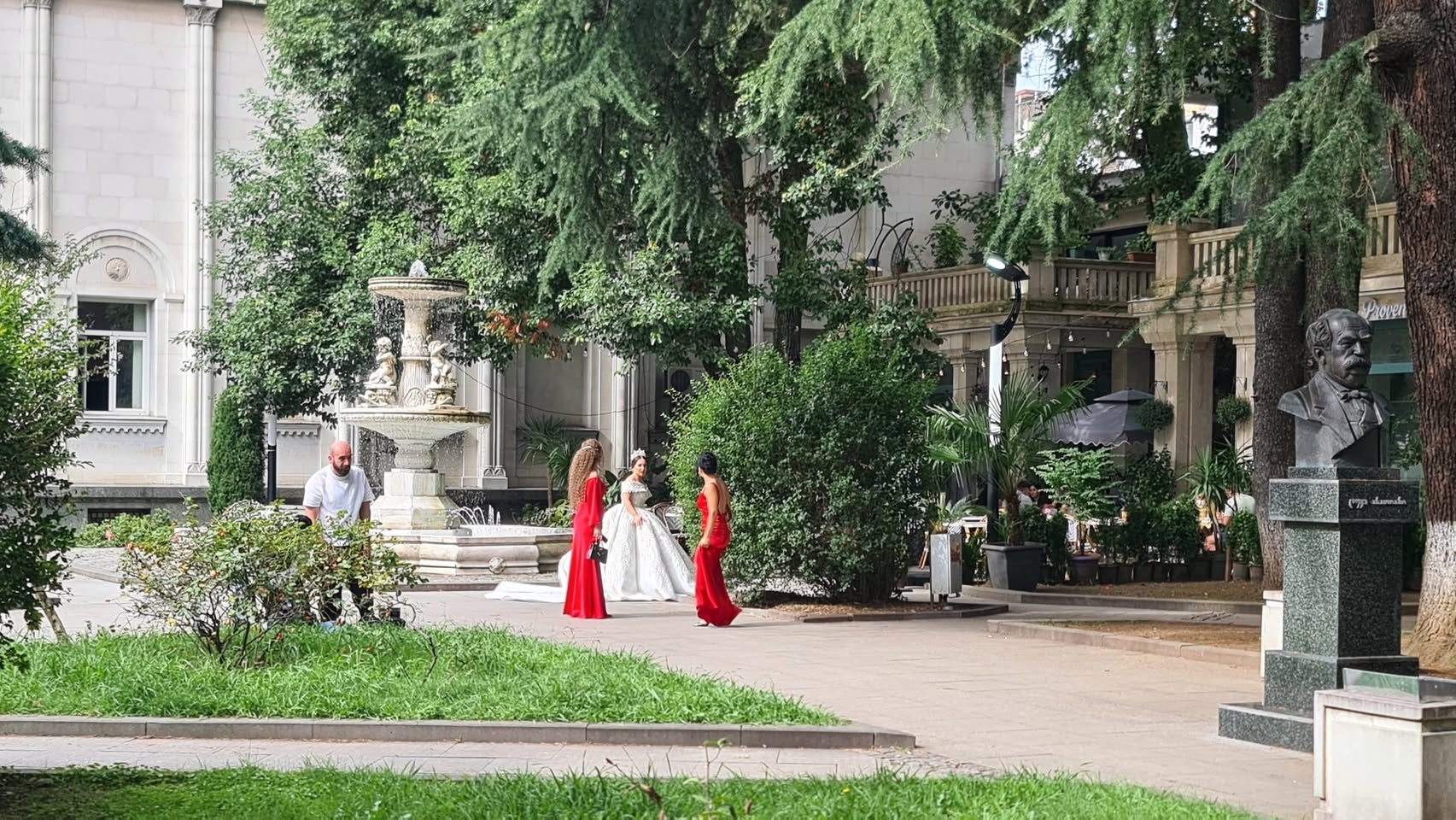
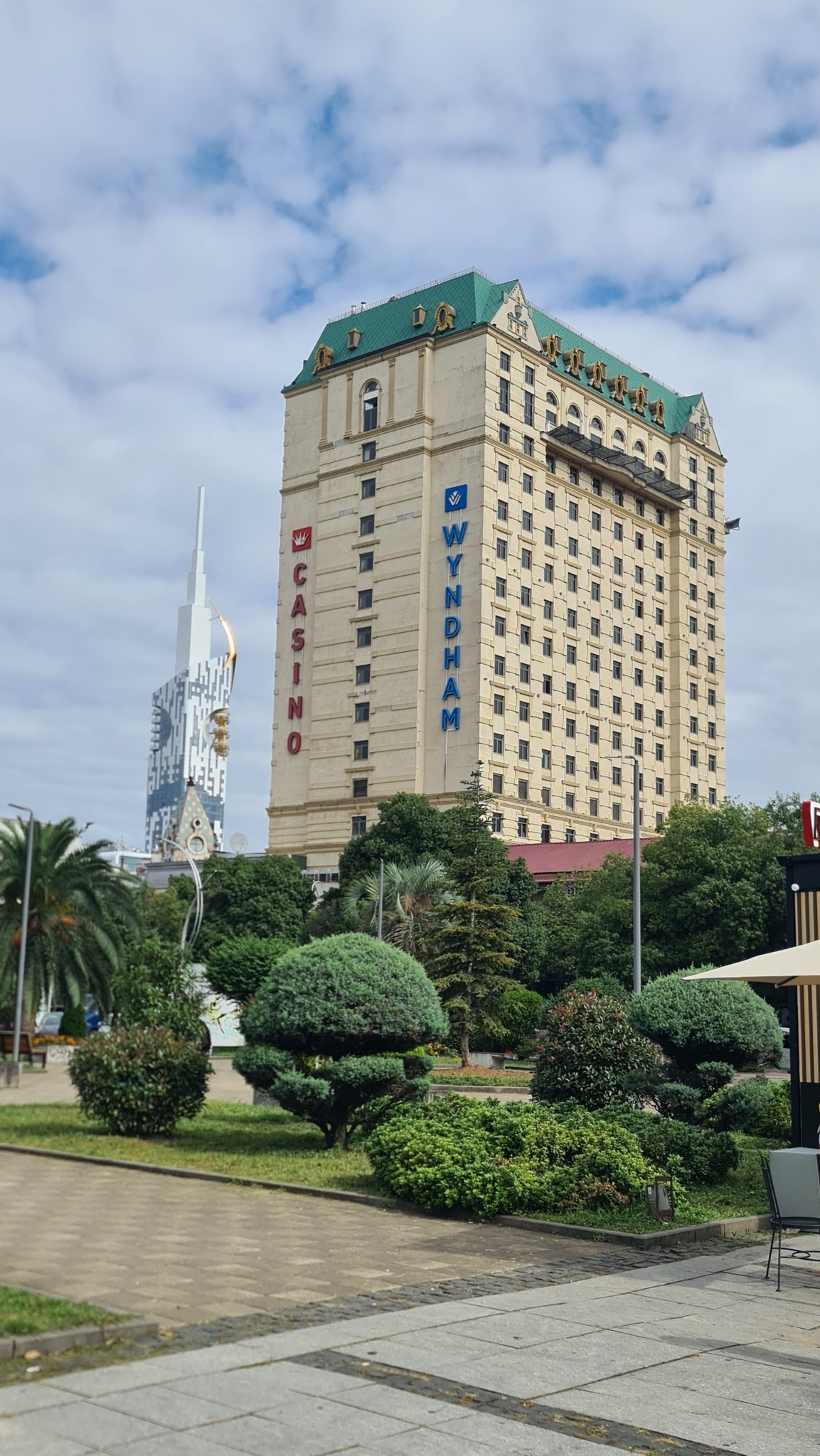
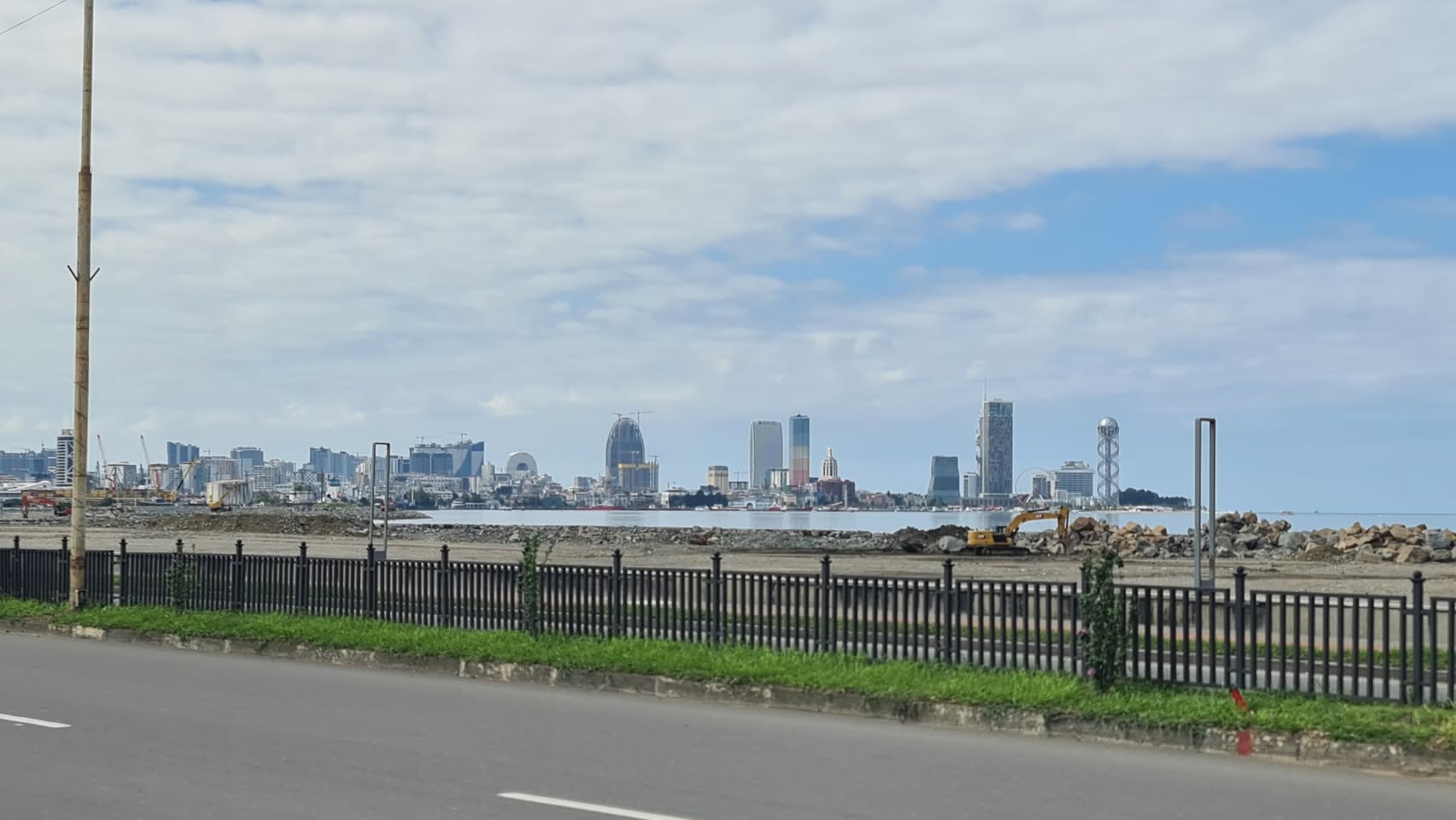
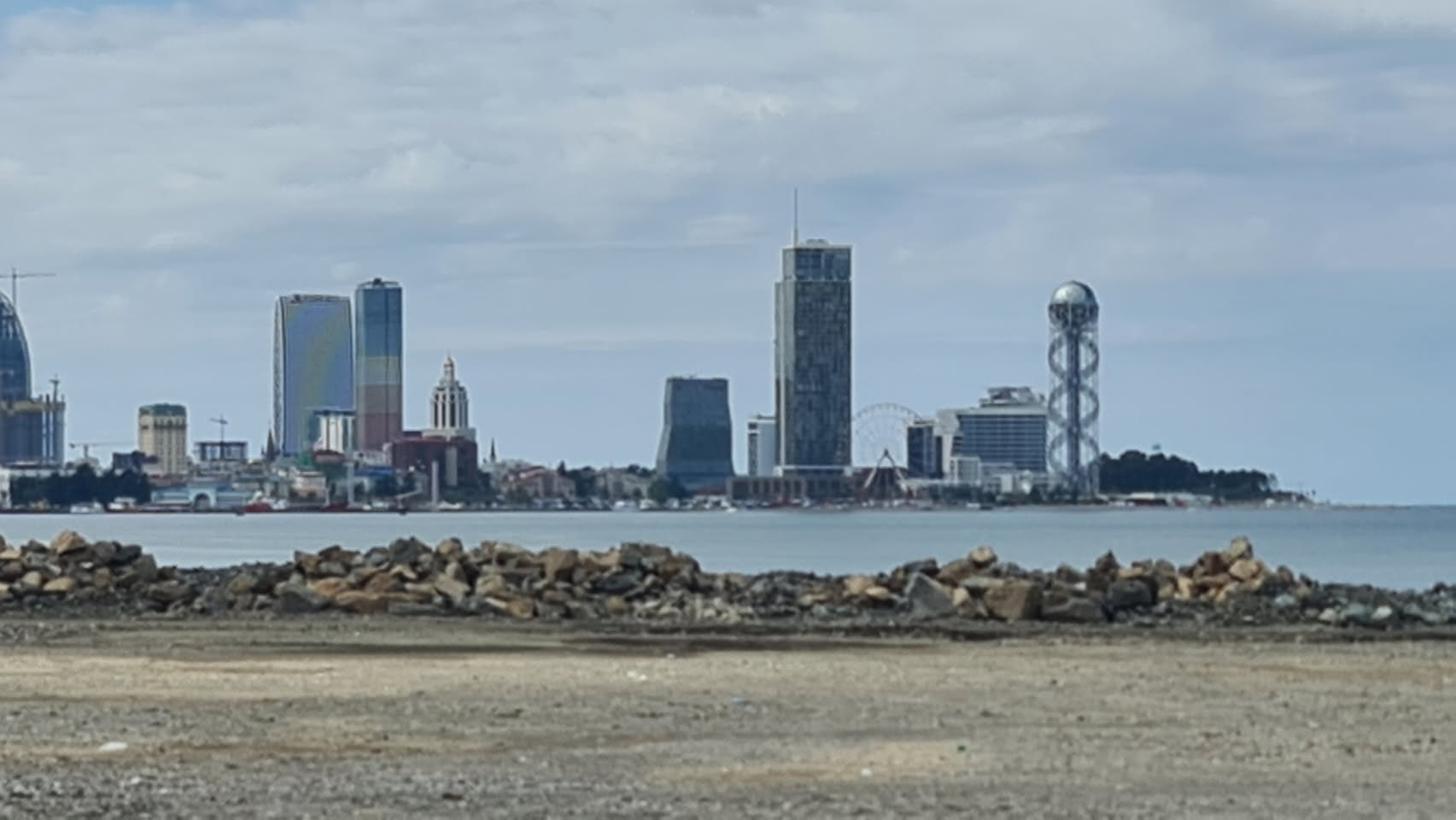
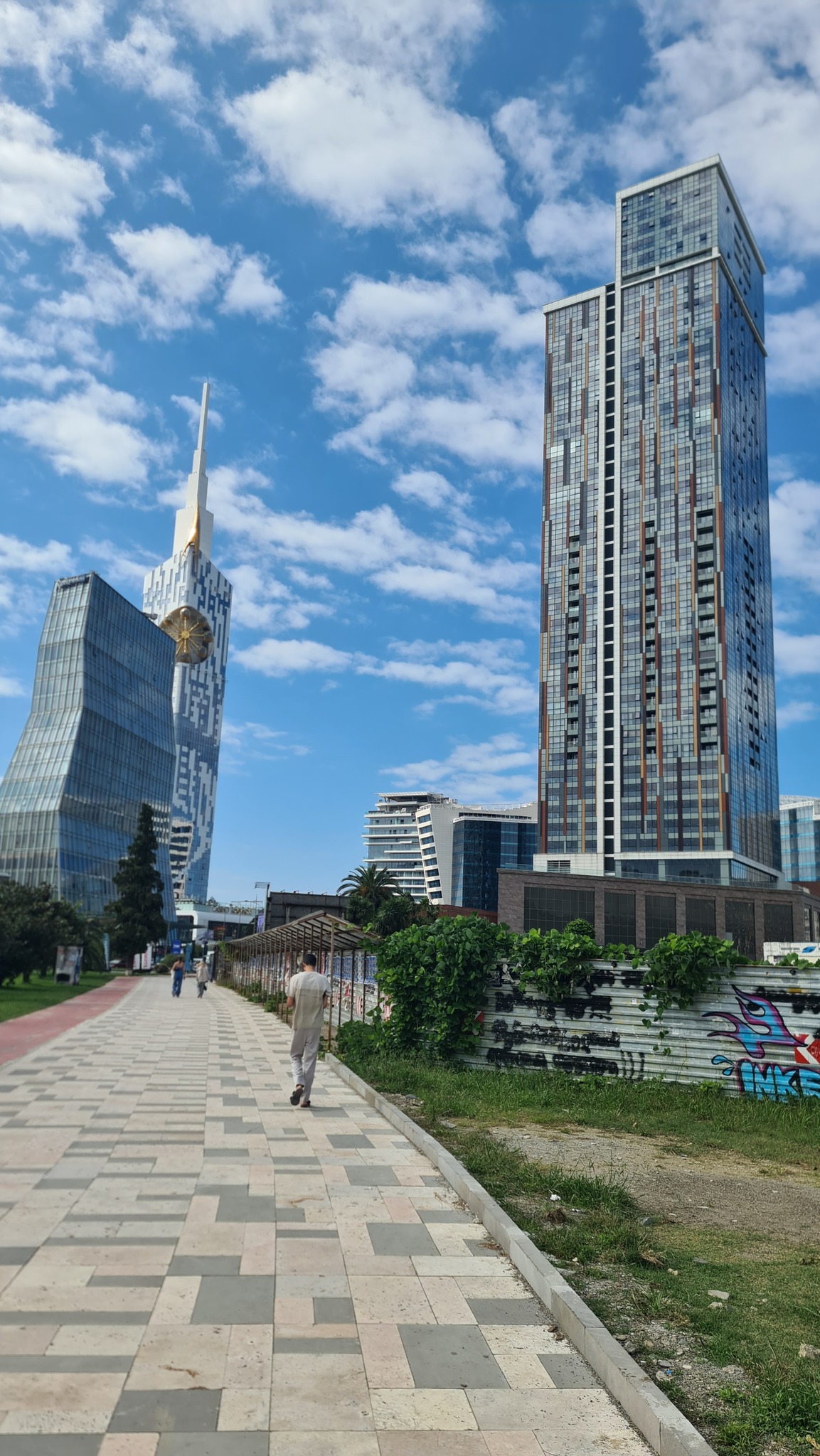
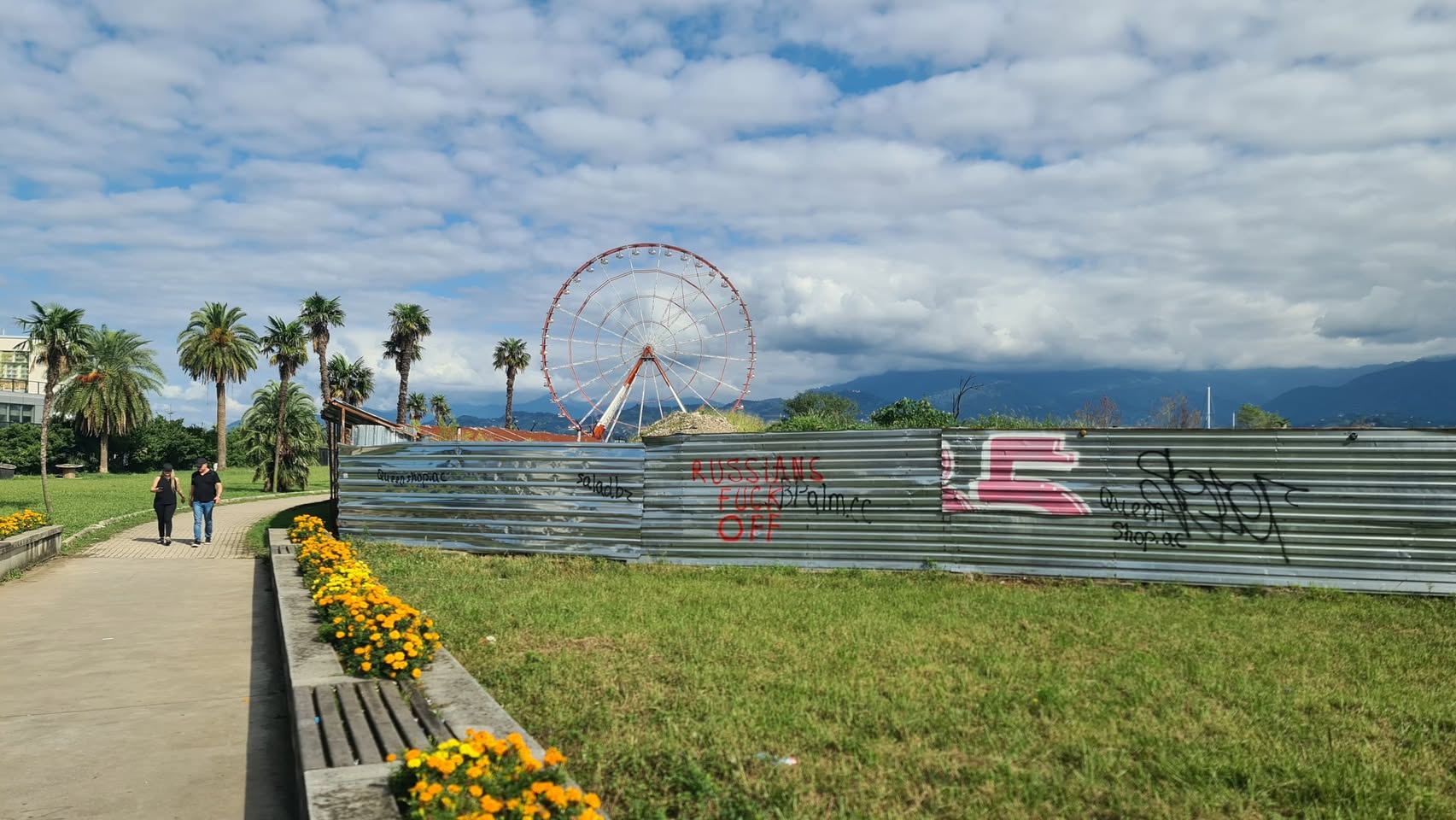
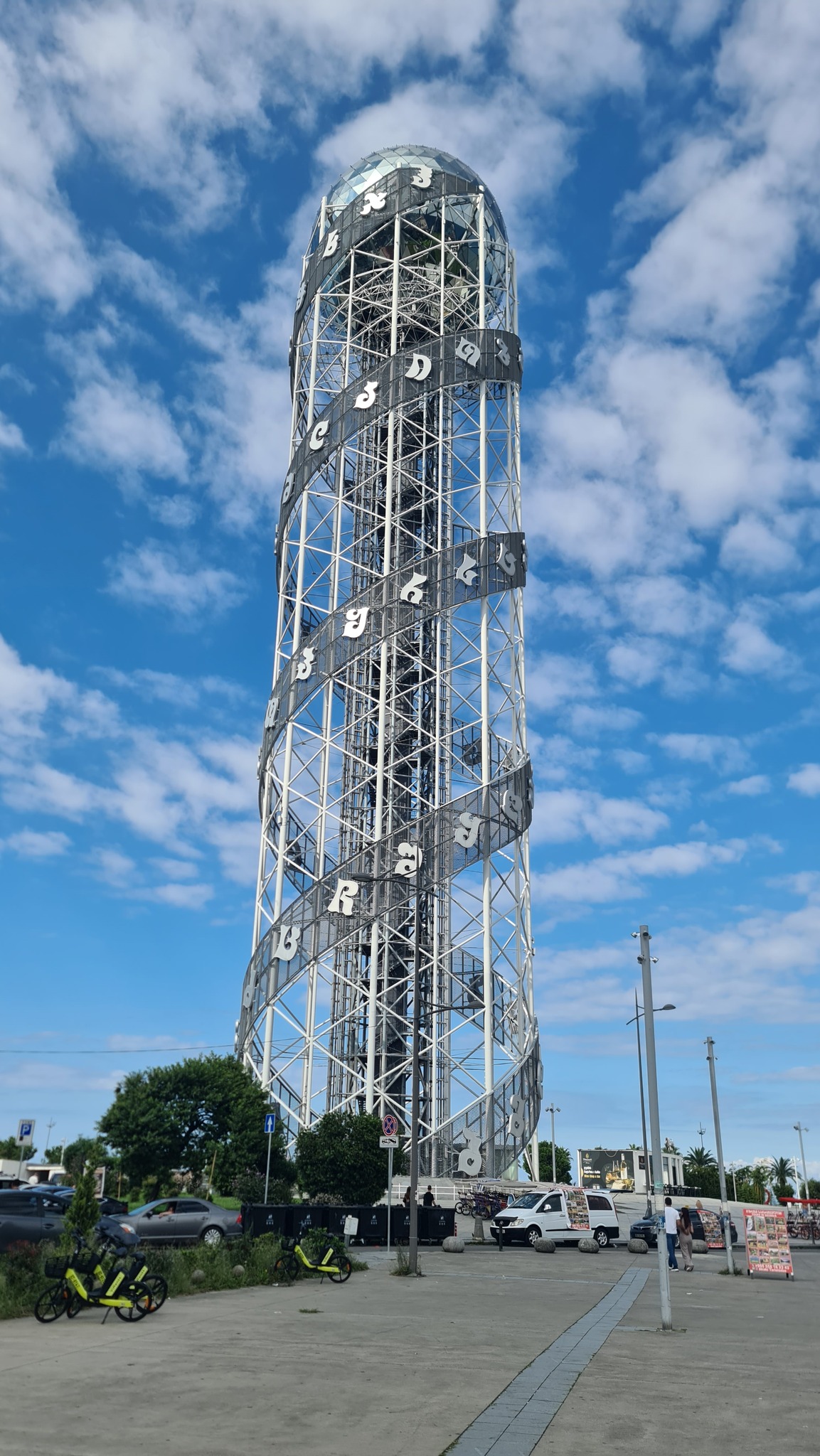
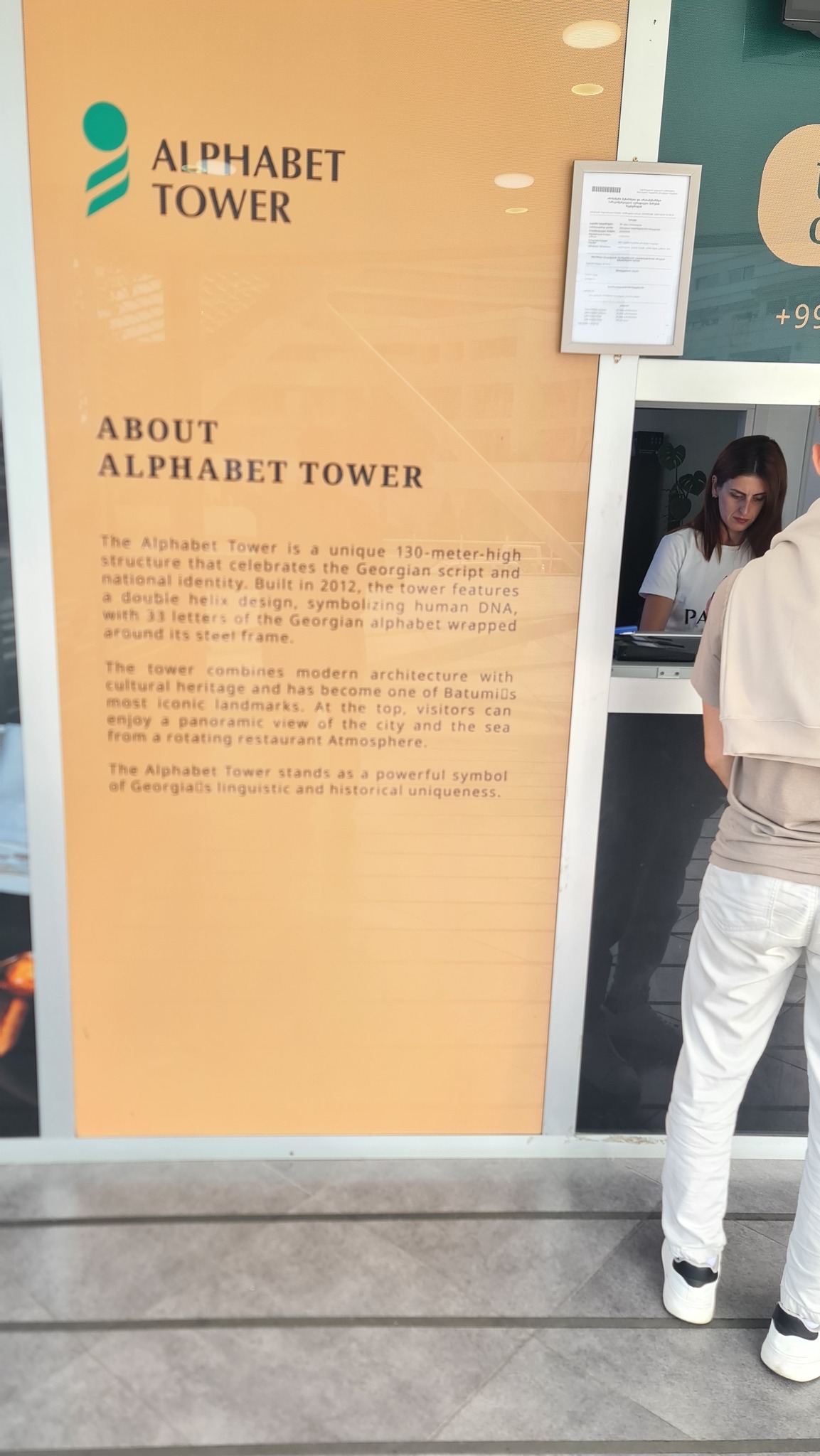
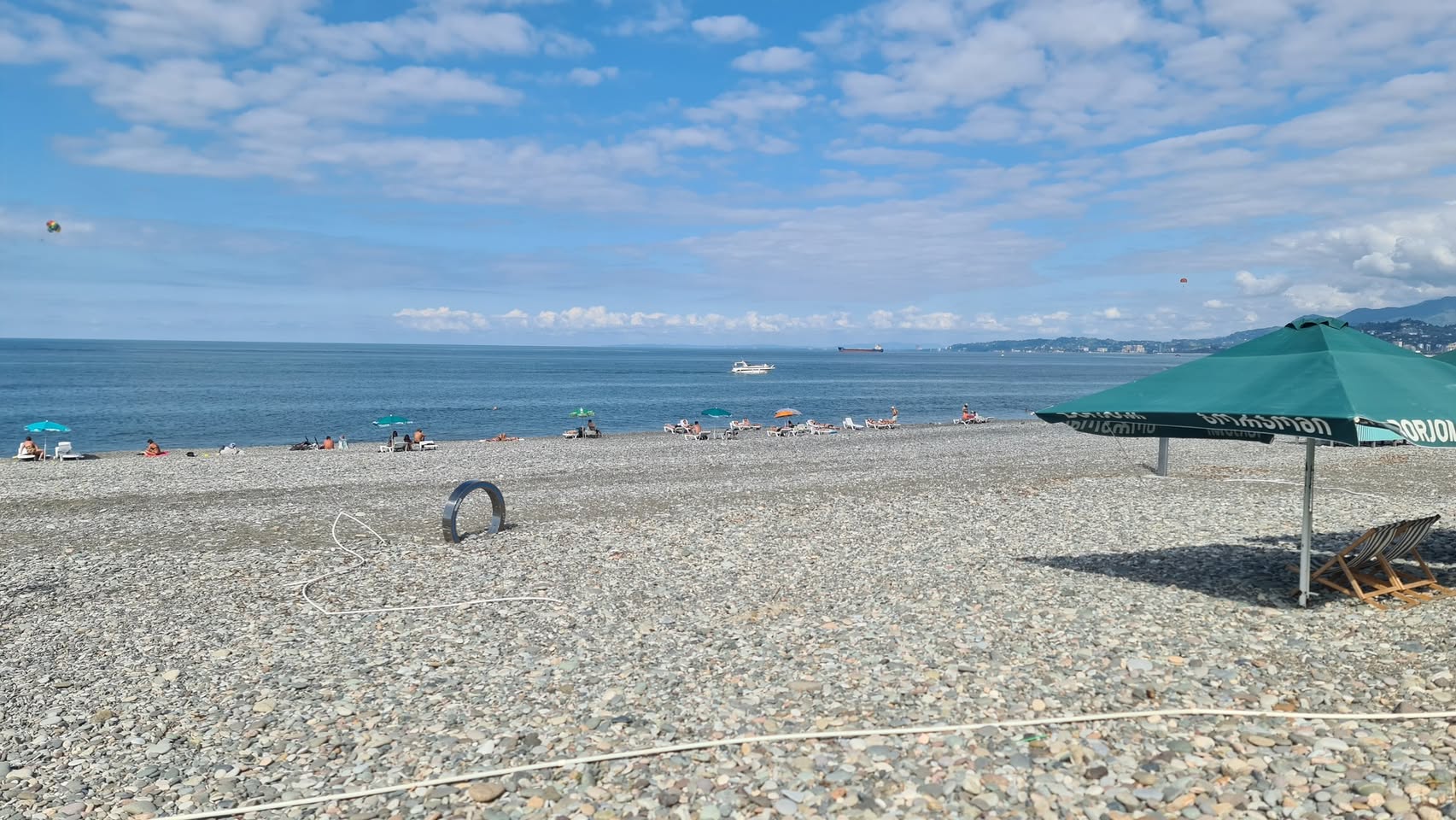
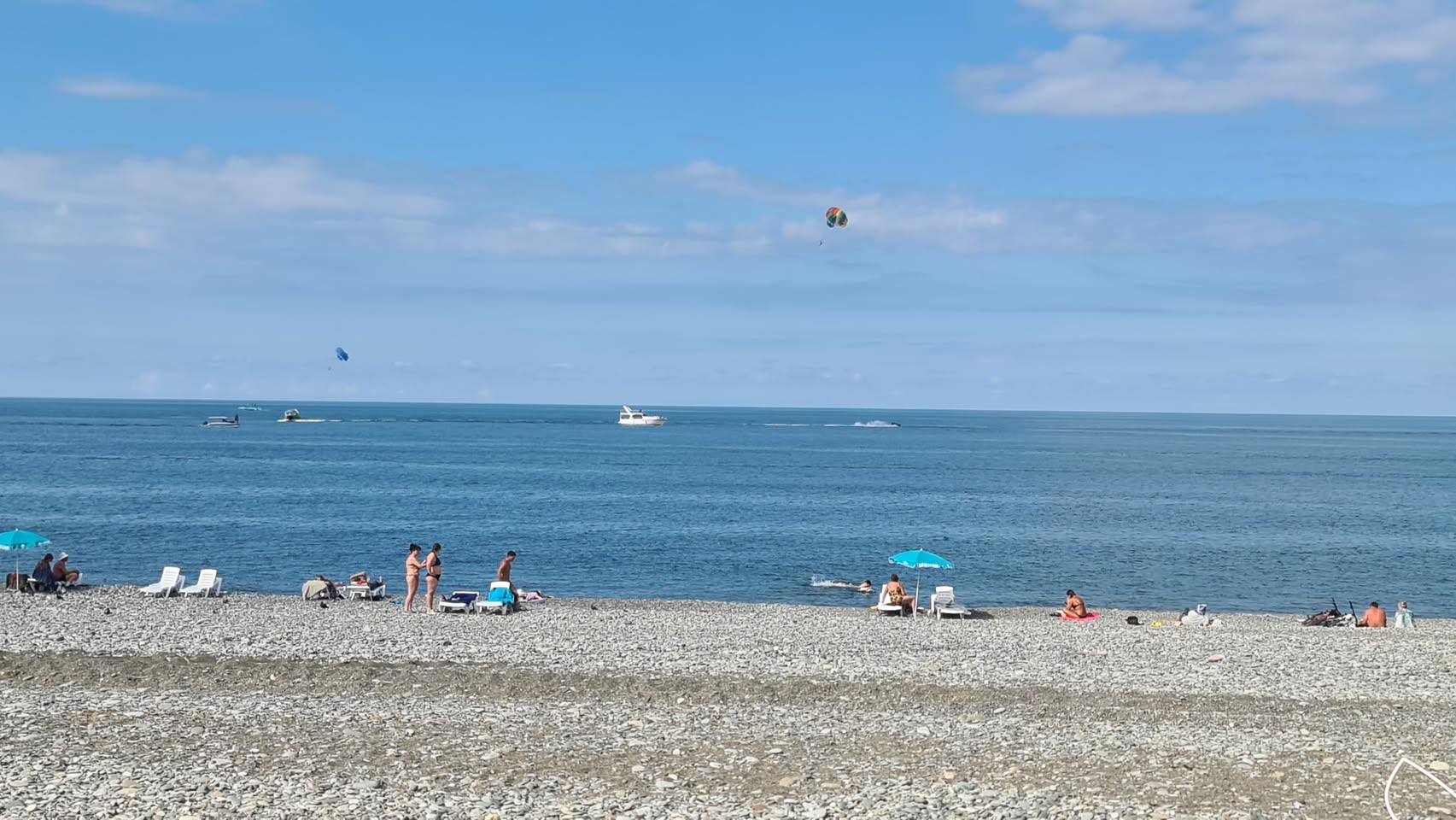
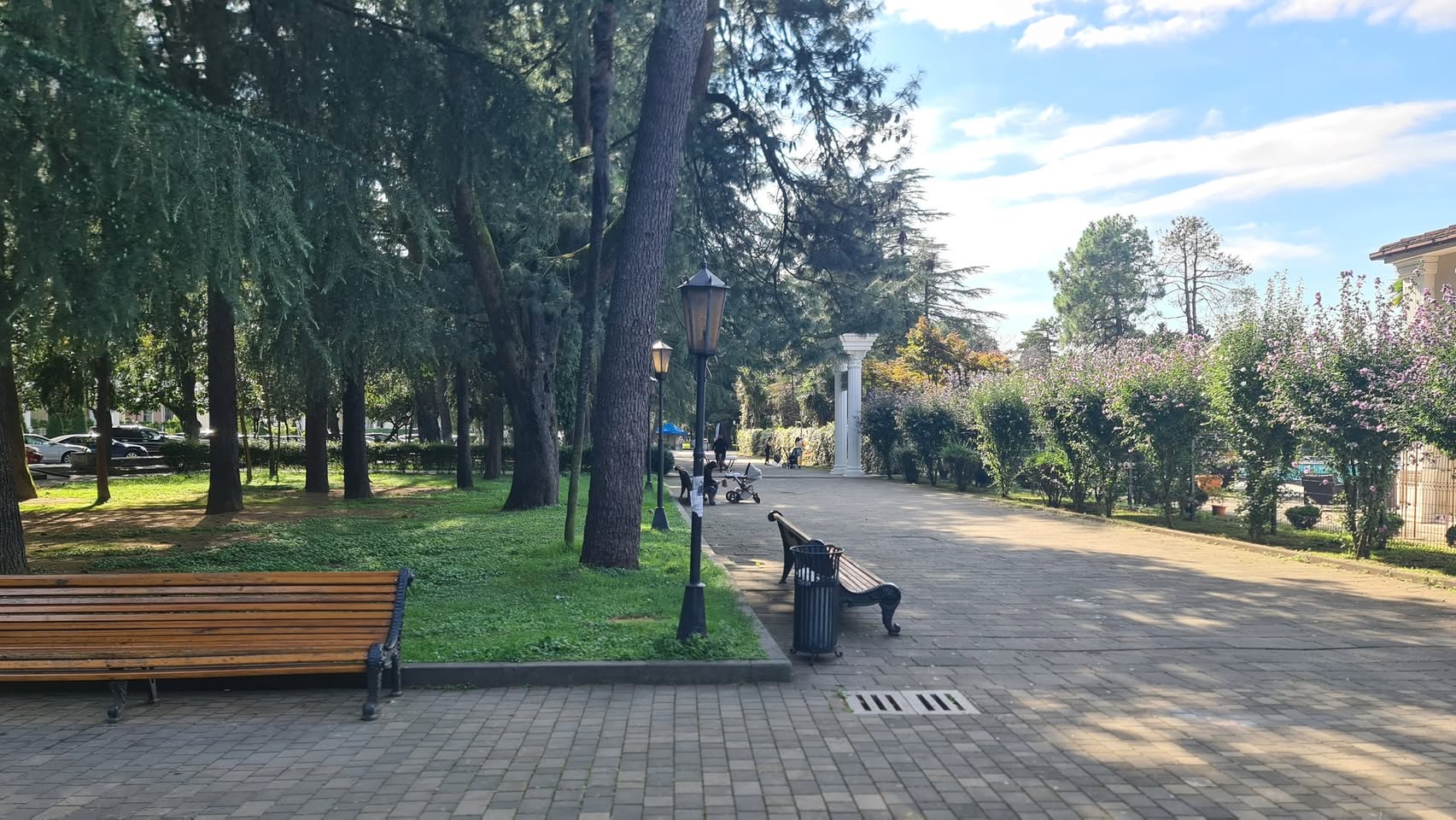
We made our way to the nearby Caspian Sea shoreline and walked along the boulevard, getting hot in the sun. This is not a sandy beach – this is a smooth stone beach so bring appropriate footwear and an inflatable mattress! There’s a 120m tall steel tower with the Georgian alphabet on it. Coming back through the city I’m struck by the obvious pace of development with large office buildings, hotels and retail centers, but still with the quaint little shops and beautiful pocket parks scattered through the city. I was expecting not much more than a scruffy post-Soviet border town and large sea port, but Batumi is so much more than that. I think minus the smokers that I could find a happy retired life here, one of the few places in the world that I could make that statement.
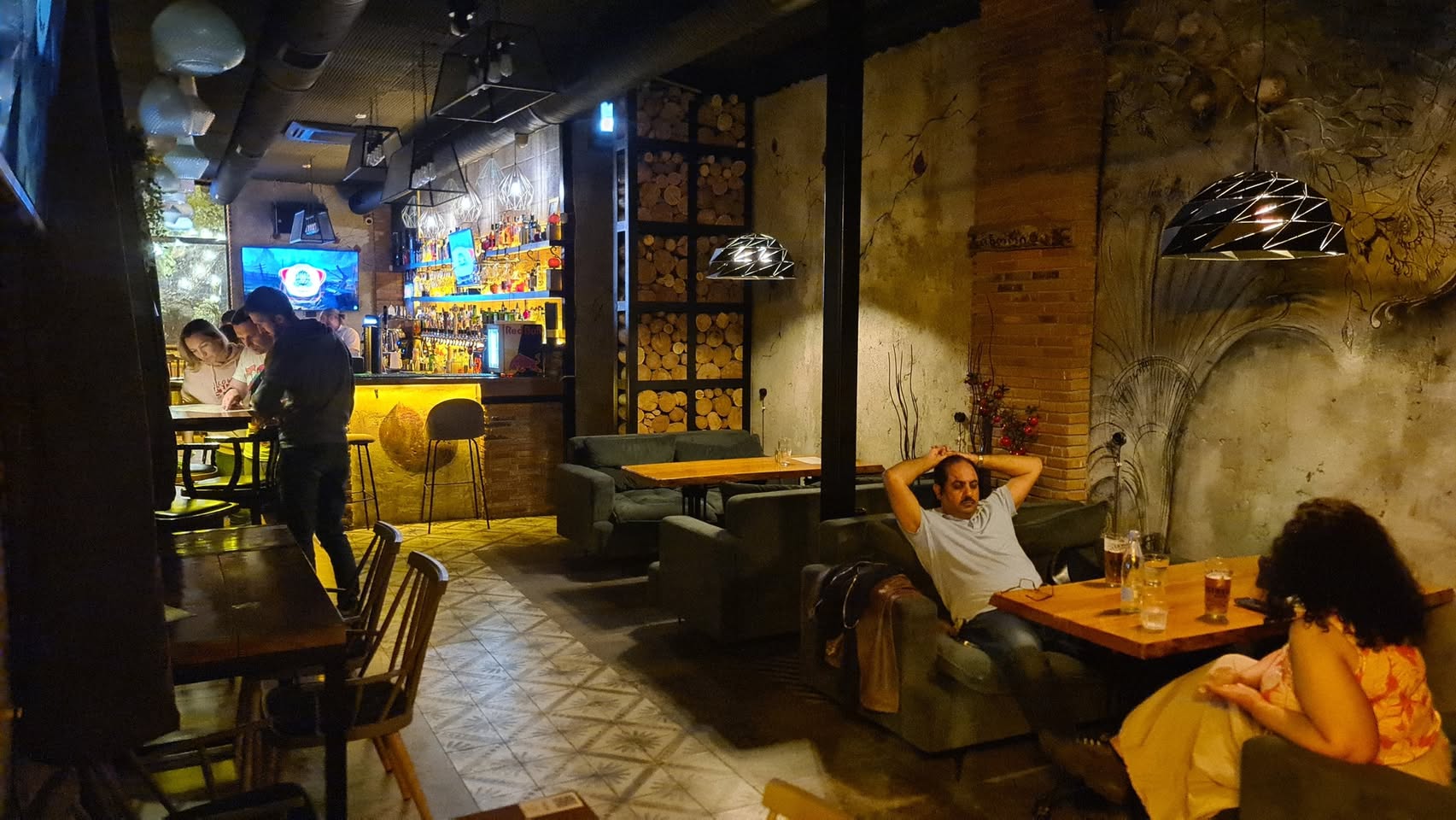
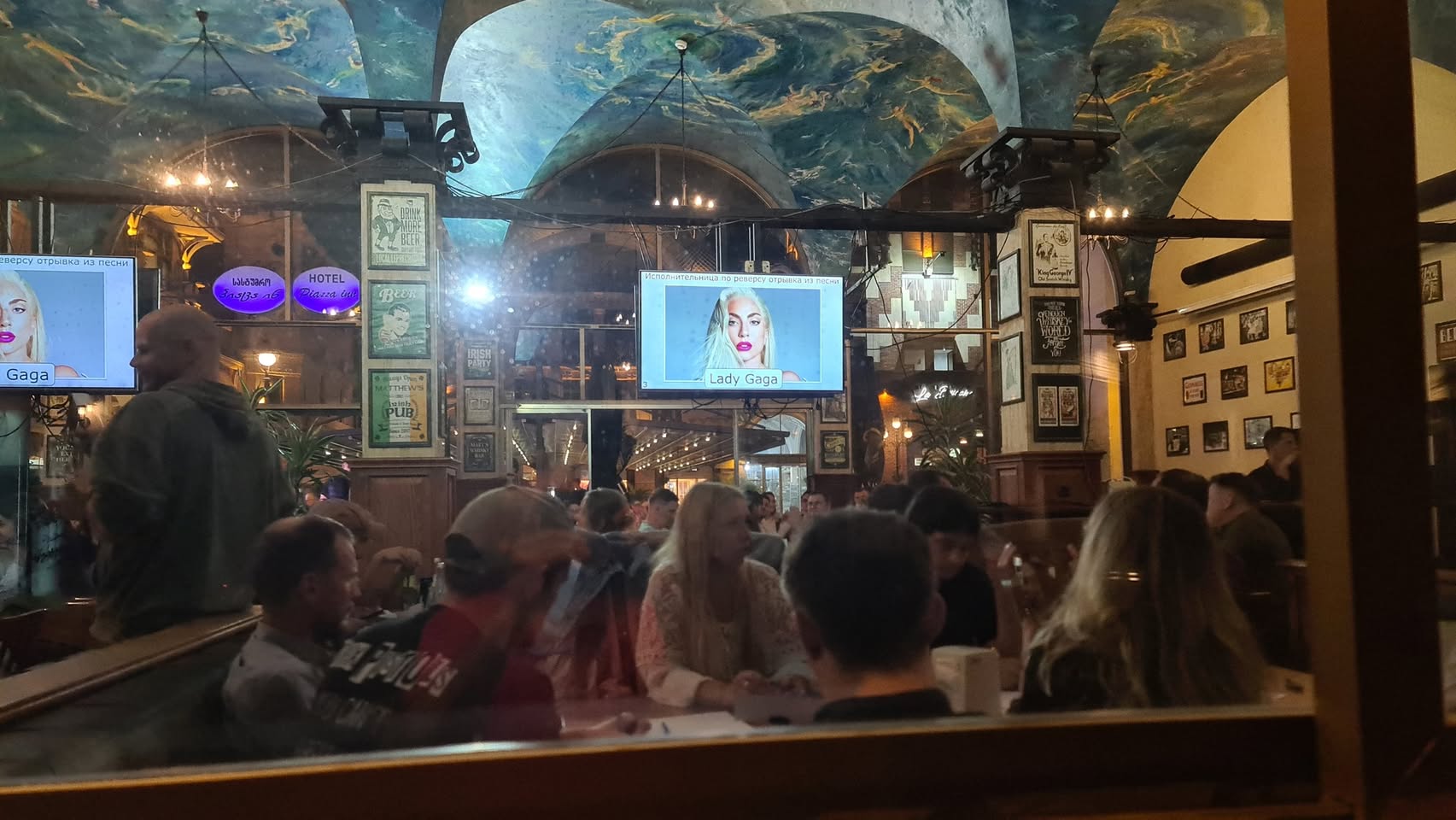
To finish off the day, we met up again at the Guinness Bar, I had a chicken Caesar salad. It’s my go-to safe meal as it seems every restaurant in this part of the world has it on the menu.
Next stop: Tbilisi Georgia