Around The World – Lessons Learned
Every good manager runs a Lessons Learned meeting at the conclusion of a project. It’s an opportunity to review newly acquired knowledge to make future projects better, faster and cheaper. But mostly it blames the innocent and praises uninvolved executives. This is a project of one, so I get to take all the blame and all the praise.
Having an engineering mindset, I have collected a tremendous amount of data and could analyse the shit out of it, but I’ll spare you from that and just hit the highlights. Let’s start with the planning stages first, then move to the actual travel.
Pre-Trip Planning:
——————
* Travel Insurace. I contacted my health insurance provider to confirm how I was covered during my trip and how to go about submitting claims and getting bills paid. I brought a copy of my policy and several blank forms. My existing plan covered me around the world, except for America due to the very high cost of services there. I bought a supplemental travel policy to cover any expenses incurred in America. I cannot stress enough how important travel insurance is. Living in Thailand, we hear nearly constant reports of sick or injured tourists racking up big bills and then their families have to beg on the Internet for money to cover medical costs and a flight home. You can avoid this for relatively little cost up front. I know insurance of all kinds is essentially a gamble but in this case I consider it pretty much the only mandatory factor while travelling. If you don’t want to spend the money, then sit down on the couch and break out the Doritos and stay home. You are not ready to travel the world. I mean this.
* Look At The Big Picture. Confirm you passport has at least 6 months validity past your last date of travel, and has many blank pages available for immigration stamps. Decide if you want to travel alone, with a friend or a small group of friends. Figure out which cities and countries you want to go to. Figure out how many days you want to stay in each place. Talk with people who have been there, review travel web sites. Figure out how to get from one place to the next by plane, train, bus, ferry or taxi. Check on any required visas to enter each country – I only needed Australia and Turkey and both were available over the Internet. Check currency and electrical plug voltage and style. Take everything into account and set a budget. Add 50% to your budget. Build a spreadsheet with all of this information.
* Safety. The world is a dangerous place. Avoid war zones and places with recent or a history of terrorist events. On the airplane, count how many rows to the exit, know where life vests and grouping points are on a boat. Be aware of your surroundings and never put yourself in a vulnerable position. Enroll your destinations in your country’s traveller program such as the U.S. State Department’s STEP program.
* Around The World ticket. Brillant. Not only do you get a great price by buying flights in bulk, my provider allows changing the date and time of any flight, given the availability of an empty seat, for no cost! No change fee or ticket cost differential charge. I immediately used this feature as my electric car convention, the only fixed date in my whole trip, changed dates right after I booked my ticket. The downside is my number of flight segments was limited to 16 and I couldn’t change airports. Since the market for Around The World tickets is small, I essentially had my own agent Tabatha at American Airlines. I spoke on the phone with her to set up my initial ticket and I could depend on her to make changes as needed via email because she knew me and my travel plans and goals well. I even sent her a few pictures as I made my way around the world. She rescued me when some helpful check-in agents dropped the last four flights off my itinerary!
* Eurail pass. I’m torn on this. I spent 3 months travelling through Europe so it made a lot of sense. I got the Global Pass which allowed for unlimited walk-on travel, in first class where available. I could have saved several hundred dollars by ordering my ticket well in advance and having it mailed to me rather than buying it at the Amsterdam train station. I was constantly annoyed at the “reservation fee” payable on most trips, as I paid a crapload of money for the ticket only to be nickle-and-dimed for more money. In the end I don’t know if it was cost-effective but it gave me a lot of peace of mind and comfortable travel.
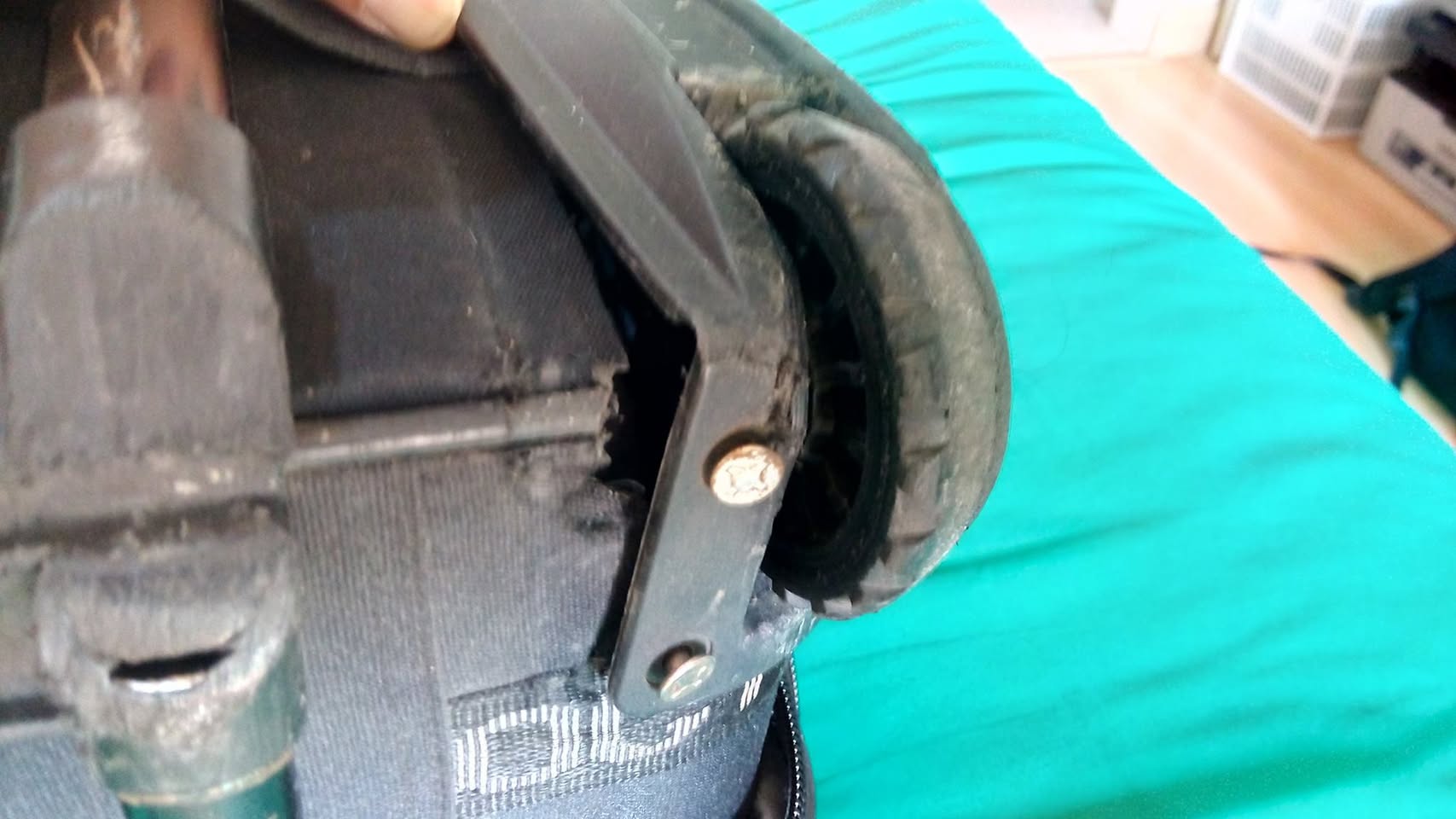
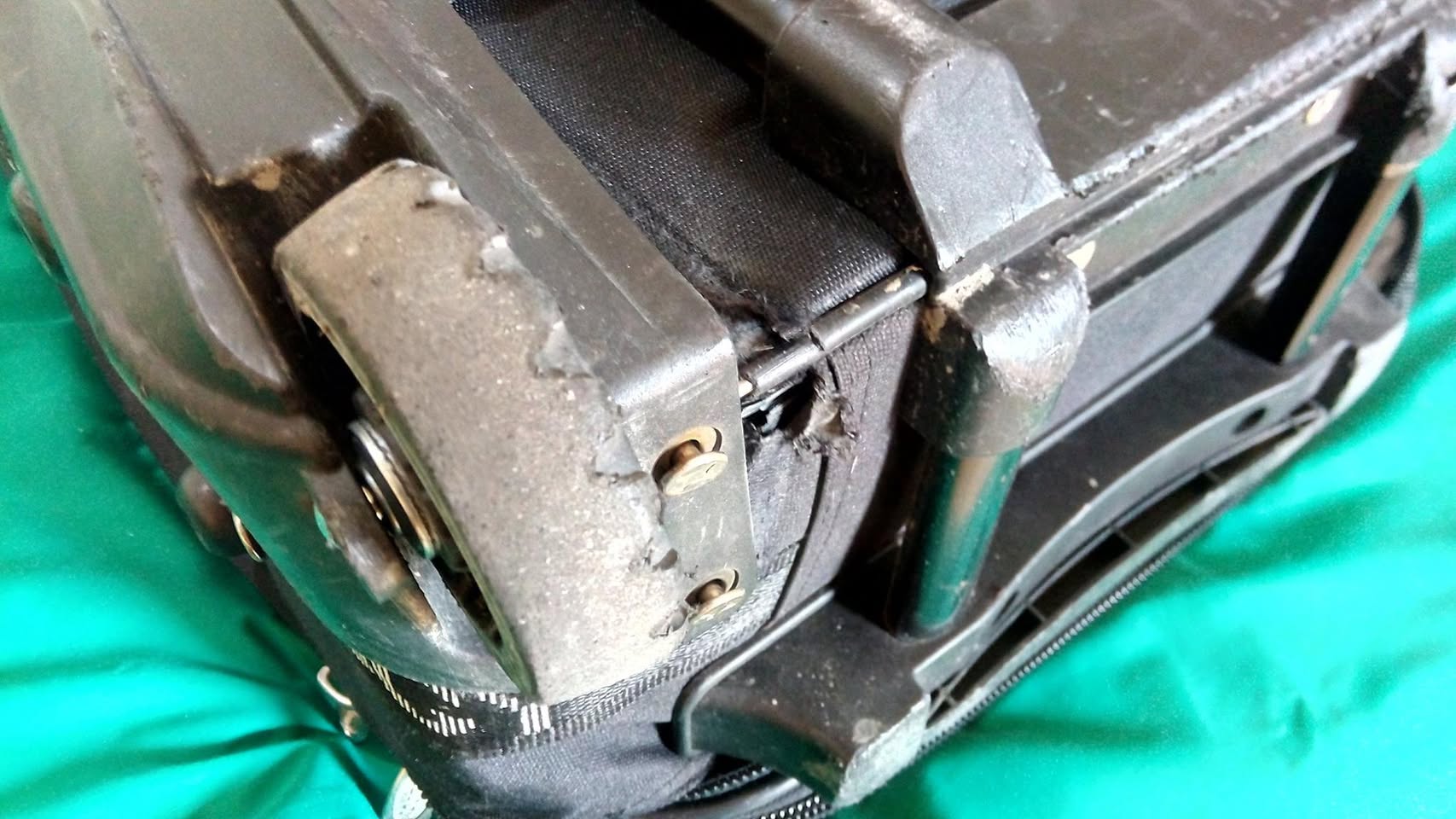
* Suitcase. I’m very happy with the size of my carry-on-sized, 15-kilogram-capacity suitcase. Anything bigger or heavier would have been a burden: in and out of planes and buses and trains, up and down narrow twisty stairs, up and down steep roads. I’m past the years of a massive backpack. Pro tip: do not try to save money on a cheap suitcase! Buy the highest quality you can, this will be your companion for the whole trip so it shouldn’t let you down. Pay special attention to the wheels and wheel mounts. You will almost never find smooth flat sidewalks and roads so wheel strength is paramount. My wheels just barely survived and I should have purchased a better suitcase to begin with. Check out the picture.
* Day pack. I also brought my small laptop backpack which worked well. I carried my laptop and its power supply, USB cables and chargers, headphones, paperback, snacks, tissues, baby wipes, pad of paper, pens and pencils, a small LED flashlight, USB memory sticks and umbrella. It’s easy to keep it at your seat on a plane, train or bus while your suitcase goes somewhere else.
* Packing. Make a list of everything you’ll bring with you. Adjust it over the course of a few days. Then cross off half of them. You will need far less than you think. Remember the difference between want and need. I used tupperware-like holders for my toiletries and bar of soap. They help keep things organized and make it easy when you use shared bathrooms. Bring enough prescriptions and your favourite over-the-counter medicines to sustain you. There are pharmacies everywhere but they may not have exactly what you need.
* Clothes. Pack for the seasons you’ll encounter. Remember that layers are your friend. Bring a waterproof windbreaker and one of those tiny collapsible umbrellas. I had Velcro strips sewn onto the pocket flaps of my shorts and have a zipper pocket in my long pants, this is invaluable for safely holding your passport and wallet. Ladies need to make sure they can cover their hair and shoulders and wear full-length skirts if going to certain places in the Muslim world. Don’t be that guy and wear a beer logo t-shirt and flip flops everywhere.
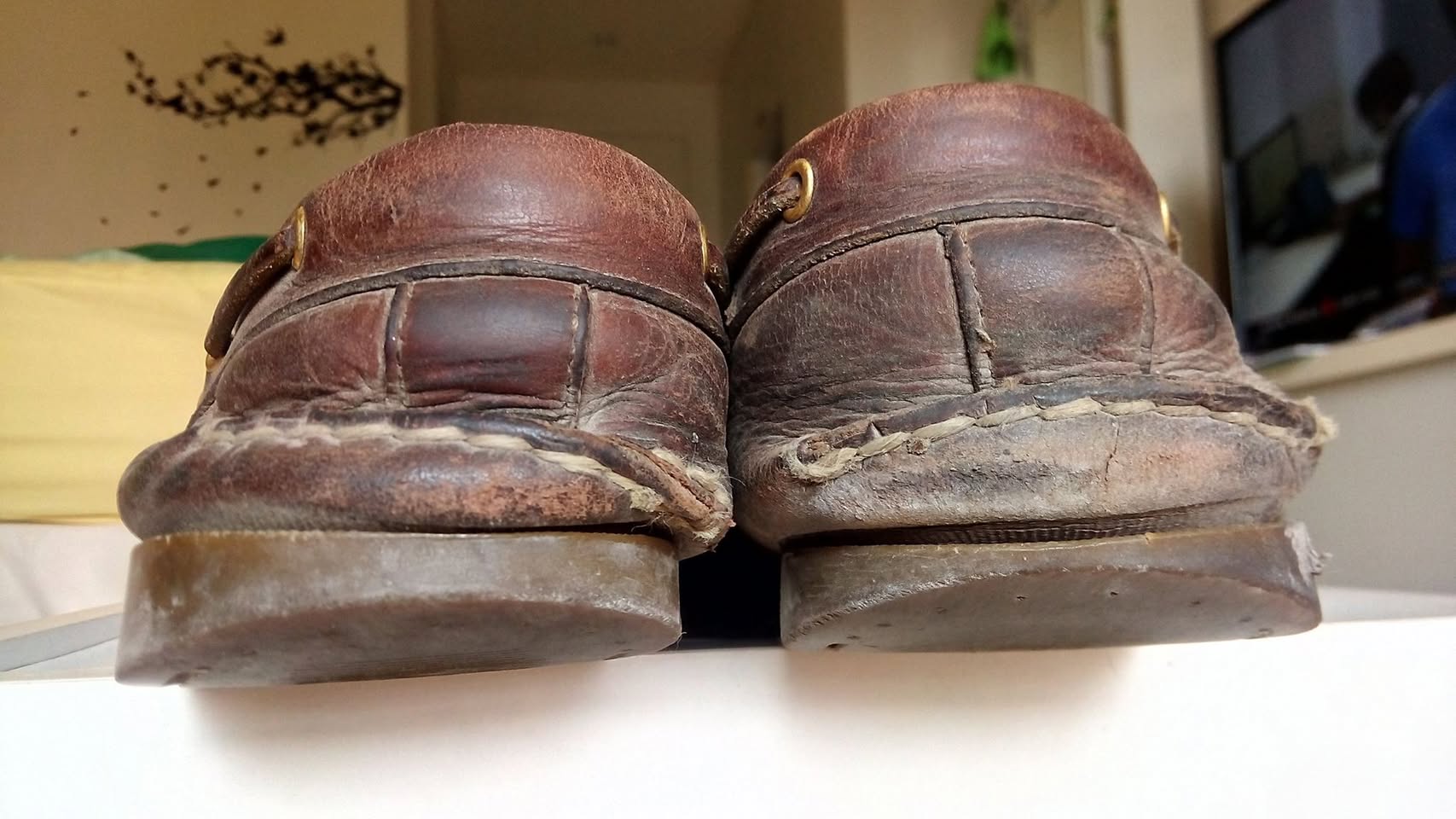
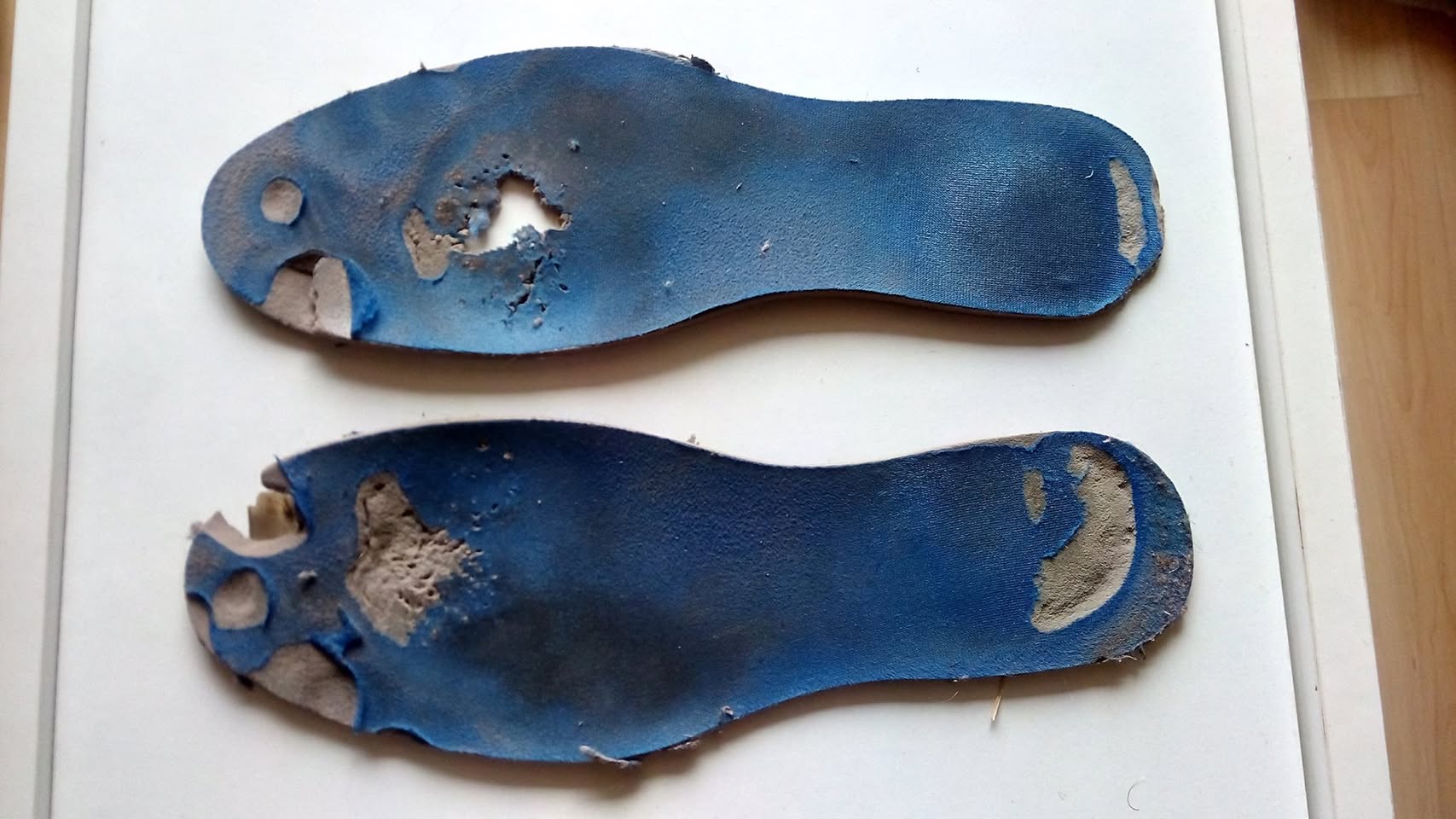
* Shoes. I wore Top Siders / boat shoes with padded insoles inserted. As you can see from the pictures, they both took a beating but never let me down. They can get wet and I can slip them on and off easily and they are classy enough to not cause a problem entering a nice restaurant. Doc Martins would also be good but wearing only sneakers immediately identifies you as an American tourist. I did bring a pair of sneakers for exercise but that was really my only packing mistake, I should have left them at home and saved the space and weight. Ladies, I can’t empathize but you really don’t need 7 pairs of shoes for this kind of travelling!
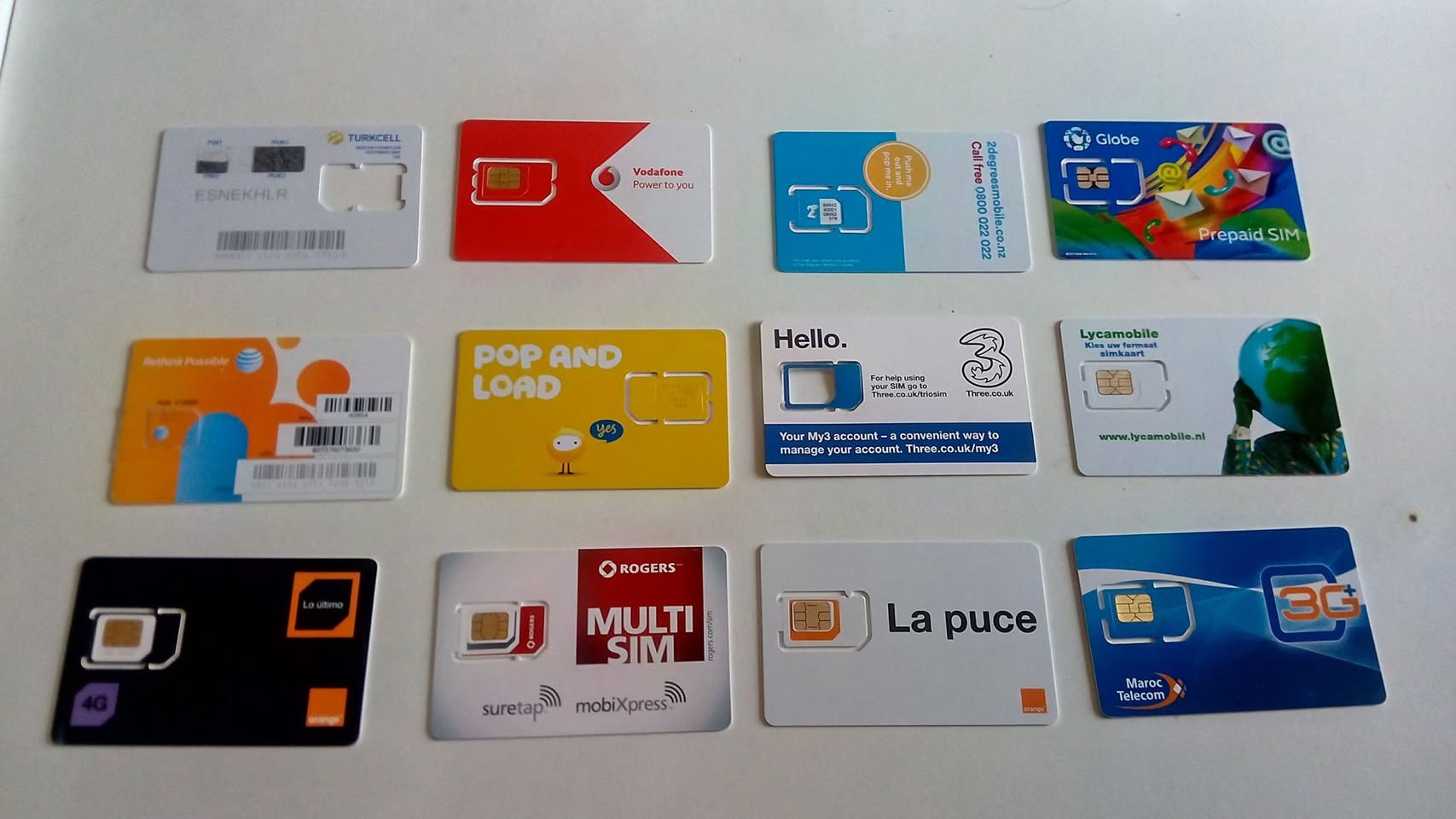
* Mobile Phone. After my passport, this is the most important item I brought with me. You can get a SIM card in every new country. This is good and bad because most places charge you for the SIM card itself and then charge for a voice and data plan. This can really add up especially if you’re only somewhere for 2 weeks but you have to buy a month. I’m talking about you Canada! Make sure your phone is fully unlocked or the SIM cards may not work. I’m talking to you, Apple! Having mobile data allows for constant Internet connection which is important for Google Maps when exploring a new city. You can communicate using various text and video messaging apps. You can also do email in a pinch on the small screen. Wifi is available in many locations but not while you’re walking down the street or on an inter-city bus. I also read several dozen eBooks which helped pass the time while travelling or eating alone.
* Laptop. Bringing a laptop is a bit of a luxury but I found it invaluable. Nearly every place I stayed had Wifi so I could easily manage my future Airbnb bookings, check transport schedules and make bookings, maintain my journal entries, post to Facebook, do email, download and watch videos and everything else a big screen provides. In a pinch I tethered the laptop to the phone’s cellular service but that can burn a lot of your data plan. I had to buy a new power supply after the cable on the original frayed. Also I think due to the stress of travelling I ended up with a dozen or so vertical lines on the screen. It’s mildly annoying but I may be able to get it repaired. The laptop is now three years old so maybe it’s time for a new one, it has served me well.
* Headphones. I have a set of over-the-ear Bose noise cancelling headphones. They’re bulky and make it hard to sleep. Normal ear buds don’t seem to work in my ears, they hurt or constantly fall out. Make sure you’re comfortable with what you’ll bring. I will likely invest in a set that is molded to the shape of my ear when I decide on my next big trip.
* Camera. I used the camera built into my mobile phone which was good enough for me even though it has a crappy zoom function and bad low-light capability. If photos are really important to you, I suggest brining a dedicated camera that fulfills your needs but remember they can be bulky and easy to lose or get stolen.
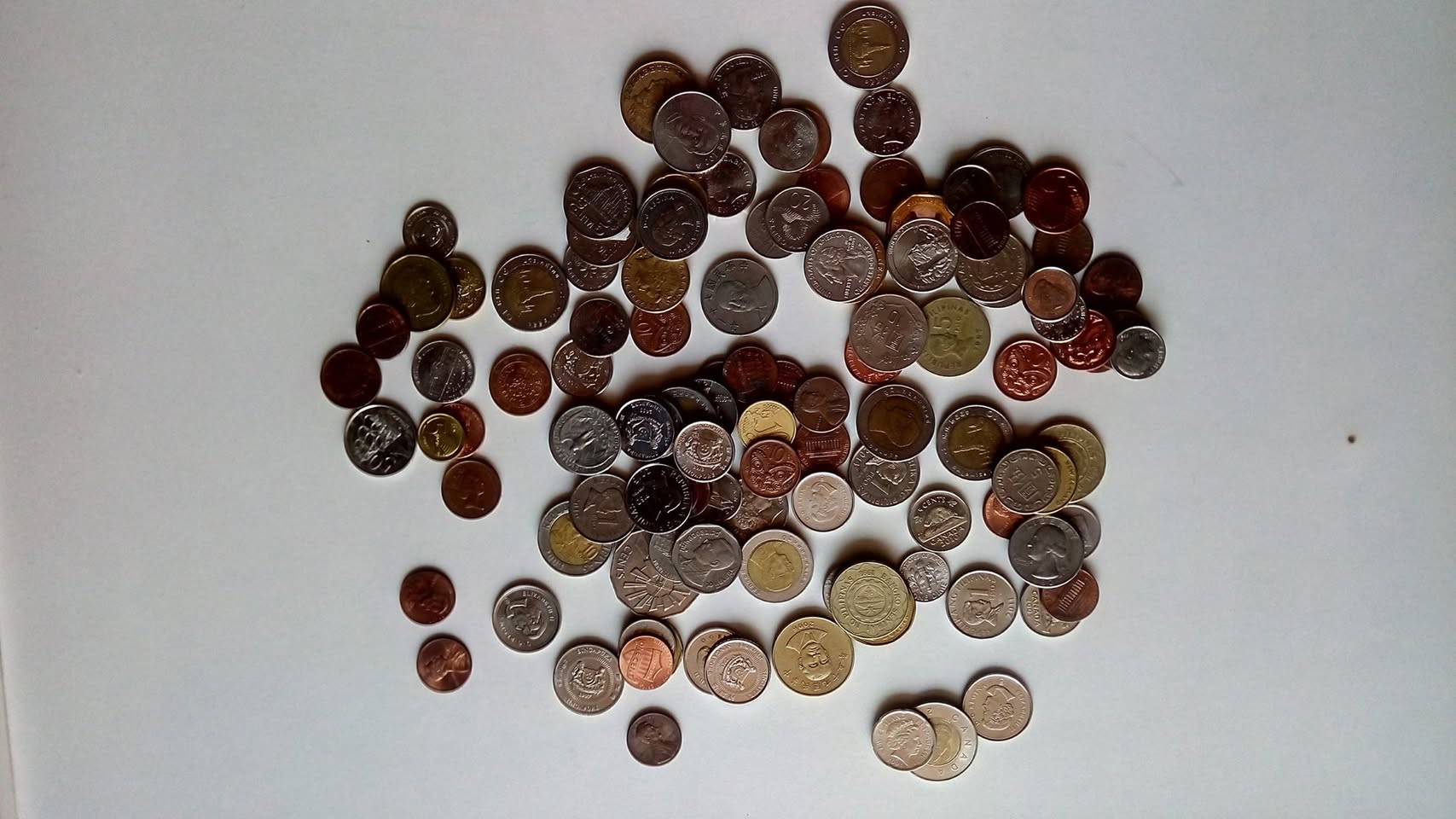
* Money. It sucks that there are so many currencies in the world. The Euro is a good start, at least for travellers. My plan to use an ATM upon arrival at each new currency region worked perfectly. There are ATMs *everywhere*. I spent any remaining currency as I departed, leaving myself with only a handful of coins from around the world. Tell your bank where you’re going so they don’t deactivate your card for foreign fraud. Check with your bank to see if you can avoid foreign ATM charges, but in the end it’s still cheaper than using money changers. There’s a reason why money changers are everywhere – it’s a very profitable business! I avoid them like the plague. Also bring a credit card as a backup way to access your money and charge purchases such as upcoming lodging.
Travel Issues:
————–
* Lodging. As alert readers know, I have a love-hate relationship with Airbnb. In the end, I found it to be a better and cheaper way to see the world and staying with local families gives you insight you just can’t get in a hotel. Boiling things down, here are my tips for a new Airbnb traveller: 1) Make your profile description short and sweet. Aibnb says to give lots of information about yourself, this is a mistake as some hosts can get turned off as I found. Just write something like “I love travelling and meeting local people in each place I stay.” 2) Book only with Super Hosts. Super Hosts have been recognized for their good location, good facilities and good customer support. It’s a crapshoot with non-Super Hosts, unless they have many, many good reviews. They don’t seem to take it seriously that they’re running a business with paying customers. 3) Book only with Instant Book. Airbnb’s standard policy is you submit a “Request” for a room. The host then has 24 hours to respond. If they do respond, which is also a crapshoot, you usually end up in a messaging back-and-forth, wasting time. I didn’t normally know where I wanted to go next any more than 3 or 4 days ahead so I ran into some big problems with non-responsive or request-cancelling hosts. With Instant Book you click and the room is yours. You get the home-feel of Airbnb with the booking style of a hotel. Once booked, put the address into your phone’s address book, it’s easy to get a route there with Google Maps for your initial check-in or after exploring the area. Make sure you get the exact street address from the host, no “call me when you get into town” or “it’s near the medina.”
* Language. English is the world’s universal language so I never really felt helpless. My high school Spanish came in handy, along with a smattering of French and German. The Google Translate app worked well with a couple of my Airbnb hosts. Don’t let a fear of language issues hold you back. Learn Hello, Thank You, Yes and No in each language you encounter.
* Journal. Write down everything that happened that day, either in the evening or the next morning, even just in bullet form. Waiting any longer will make your memory fuzzy from the firehose of travel. Coalesce, edit and post on social media or send to friends and family. It’s hard and tedious but if you stop, you’ll regret it later.
* Spending. Enter all spending into a spreadsheet. OK, this one is just for the anal-retentive among us. Classify by tags such as Transport, Food, Lodging, Entertainment, Communication, Supplies. Calculate exchange rates back to your home currency. Keep a grand total and daily average and category subtotals. Get a sinking feeling in your stomach as your budget slowly drifts off into the sunset.
* Wifi. As noted above Wifi is available in many places but at some of my Airbnb locations the signal was so weak that it was useless. I bought a Wifi Repeater for about $30 in Barcelona and it worked extremely well when I needed it for the rest of the trip. I recommend bringing one with you.
* Laundry. Do laundry whenever available. In Asia there are lots of laundry shops which charge by the kilo and are very cheap. Some cities have coin-op laundry centers. Most Airbnb hosts have a washer but not dryer so you’re at the mercy of the weather to get your clothes dry. Delicates can be washed in a sink if necessary.
* Transport schedules. Don’t trust them! Buses, trains, ferries – nothing is on time. Plan for the best but expect the worst. Take a deep breath and keep your cool.
* Buying stuff. You may be in places in the world with high-pressure street hawking and bargaining. It initially feels bad and rude, but if you don’t want something, just say so and walk away. Don’t make eye contact, don’t get drawn into a conversation. You never have to spend money you don’t want to. The seller will move on to the next potential customer.
* Food. You will find all kinds of food all over the world. Each place will have its own local styles of food, plus common international food, primarily pizza! Choosing to be a vegetarian and having an onion allergy greatly reduced my choices but I could always find something.
* Enthusiasm. Your energy levels will ebb and flow, based on sleep, weather, stress and every other thing you will encounter. Just roll with it. It’s hard to stay jazzed for the whole trip so enjoy things the best you can. If today was shitty, tomorrow will be better. If you can’t stand to go to another museum, then don’t. This is your trip, do what you want and don’t feel guilty.
* Smokers. Smokers are everywhere. I’ve never smoked and have officially lost any tolerance for smokers. I’ve had to skip restaurants and coffee shops full of smokers and get up and leave when a smoker sits down right next to me. This is maybe my biggest gripe. Attention smokers: That part of you that smokes is a fucking idiot. The rest of the parts of you may be quite nice, I don’t know, that’s another discussion, but when you don’t care enough about yourself, others around you or your pollution of our planet, fuck that part of you. And this goes for you “I’m not a smoker, I only smoke when I drink” or “I’m not a smoker, I only smoke with friends” or “I’m not a smoker, I only smoke after I commit genocide” people.
* Walking. I like to walk when I get to a new place. There’s nothing like walking down a street to really see somewhere close-up. I walked several hundred miles, maybe a thousand miles over the course of the trip. Here’s another rant: People are idiots when they walk. Imagine a sidewalk, you going one way and others coming the other way. Would be good to share and avoid collisions and walking from side to side, right? Wrong! Morons! I just don’t understand how people get to this point in their life when they’re so unconscious about simply walking. Ugh. Also, remember that traffic is basically chaos in many places in the world and some places drive on the “wrong” side of the road, so be aware of your surroundings at all times. Look both ways 3 times before crossing the street and keep looking as you cross!
* Toilets. Oh where to start! I’ve seen and used so many human waste systems, and some are certainly better than others. Asia has a lot of squat holes but even in the west there are toilets that seem to be ignorant of the most basic needs of human biology. They should never have been imagined, designed, approved, manufactured, sold or installed. I’m talking about you Netherlands! There’s nothing like the joy of a clean, beautiful, functional toilet. I can empathize at a 50% level with the ladies here. Pro tip: Use the toilet even when you don’t think you have to, it may save you a bit of a panic later. This is especially important on bus and train rides with no on-board toilet. Always have your own toilet paper or wipes available, don’t depend on it being there when it’s desperately needed.
OK, here’s the bottom line. I prepared and executed my trip like an engineering problem. I would give the trip a 95% success rating due to only a few disasters, but I have to say I enjoyed it even more than I hoped, so that’s a huge bonus. I got to experience so many amazing things and met some great people.
My travel style is “Let a new place wash over me.” I normally don’t go somewhere to see a specific thing or do a specific activity, I explore and walk and eat and soak in and observe. I leave with a feeling of being more in touch with a place than if I tried to hit all of the touristy things.
It amazes me that there are people who have never left their home country. The world is a huge and amazing place and you have to get out there and experience it to give yourself some context and make yourself a better person.
My advice is to buy a world map and start sticking pins in it. Map your path, buy the ticket, pack a small suitcase and hit the road!